







Few words capture the spirit of Suzhou’s Pingjiang Lu better than “enchanting”. As a true step back in time, this is the place to relive the old, to find some authenticity that dates back as far as the Song Dynasty.
很少有词比“迷人”更能捕捉到苏州平江路的精神。 作为真正的时光倒退,这是重温旧时光的地方,寻找一些可以追溯到宋朝的真实性。
For many centuries, Pingjiang Lu has been the centre of much of Suzhou’s cultural life. A map from the Song Dynasty produced in 1229 CE teaches us that the road was already the ancient city’s main thoroughfare. Indeed, Pingjiang is one of Suzhou’s former names.
几个世纪以来,平江路一直是苏州文化生活的中心。 公元1229年制作的宋朝地图告诉我们,这条路已经是古城的主要通道。 的确,平江是苏州以前的名字之一。
Despite being just a street away from the commercialism of Guanqian Street, 800 years on, Pingjiang Lu is still well-preserved today.
尽管距离关前街的商业主义只有一条街,但800年过去了,平江路至今仍保存完好。
And that’s what brings in the tourists to this classical Jiangnan water village, communities defined by the intermingling of cobbled paths and canals.
这就是吸引游客来到这个经典的江南水村的原因,这个社区由鹅卵石小路和运河交织在一起定义。

It’s a veritable Chinese painting, one in which typical houses of ancient Suzhou stand simple and unsophisticated by the street, their white walls stained by the rain’s ink brushwork from their black roof tiles.
这是一幅真正的中国画,其中古代苏州的典型房屋被街道简单而不精致地矗立着,它们的白色墙壁被黑色屋顶瓦片上的雨墨笔弄脏。


A shade over 1.6 kilometres long and running parallel with the Pingjiang River, the road is narrow, and with today’s tourists that means even a rickshaw has trouble getting through. On the water, only the slimmest of Chinese gondolas can effectively navigate.
树荫长超过1.6公里,与平江平行,道路狭窄,对于今天的游客来说,这意味着即使是人力车也很难通过。 在水上,只有最薄的中国缆车才能有效航行。
They pass under no less than 18 arched stone bridges. Here, any self-respecting Suzhou bride shall sit for her wedding photos. For those unattached or wed long ago, these bridges provide for the perfect place for contemplation, reflections in the waters that have sat below for 800 years.
他们经过不少于18座拱形石桥。 在这里,任何有自尊的苏州新娘都应该坐下来拍她的婚纱照。 对于那些很久以前就未依附或相依为的人,这些桥梁提供了沉思的完美场所,在800年来一直沉思的水中倒影。
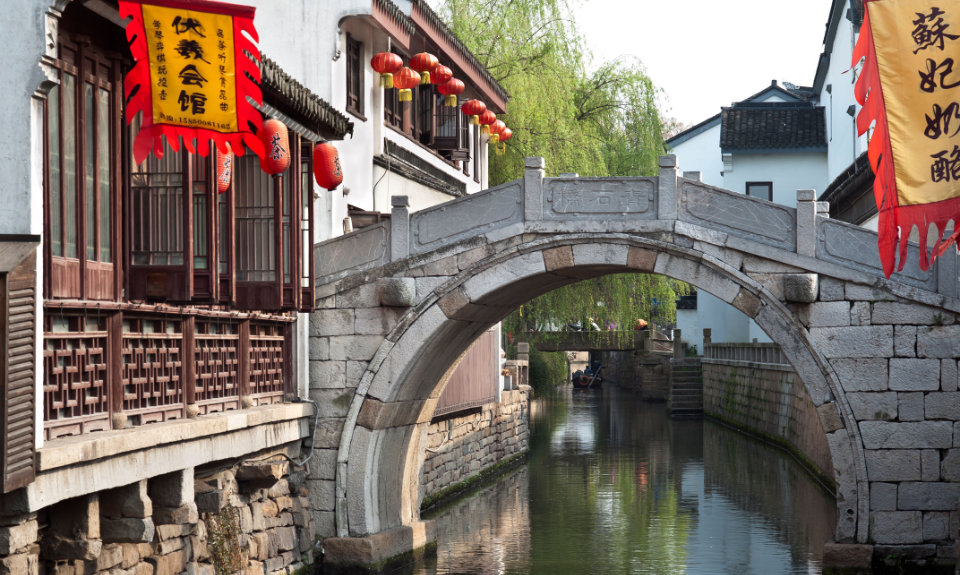
Listed in 2009 as a “Famous Historical and Cultural Street of China”, one of the first of nine such streets in China, Pingjiang Lu had in fact received an honourable mention from UNESCO 4 years earlier, when it scooped the Asia Pacific Heritage Award for Culture Heritage Conservation.
平江路于2009年被列为“中国著名历史文化街道”,是中国九条此类街道中最早的街道之一,实际上在4年前获得了联合国教科文组织颁发的荣誉奖,当时它获得了亚太文化遗产保护奖。
Sounds great, but eager foreign visitors should perhaps be forewarned. There’s a Starbucks. There are shops selling trinkets. There are museums and watering holes. Some are not ancient China, but Pingjiang Lu does know where the limit is to the extent that no one should be put off.
听起来很棒,但也许应该警告急切的外国游客。 有一家星巴克。 有卖小饰品的商店。 这里有博物馆和水坑。 有些不是古代中国,但平江陆确实知道极限在哪里,以至于没有人应该被推开。
And in these old residences there is still no shortage art galleries, cafes, teahouses, opera houses and youth hostels with both dorm rooms and private accommodation for backpackers.
在这些古老的住宅中,仍然不乏艺术画廊、咖啡馆、茶馆、歌剧院和青年旅馆,既有宿舍,也有背包客的私人住宿。


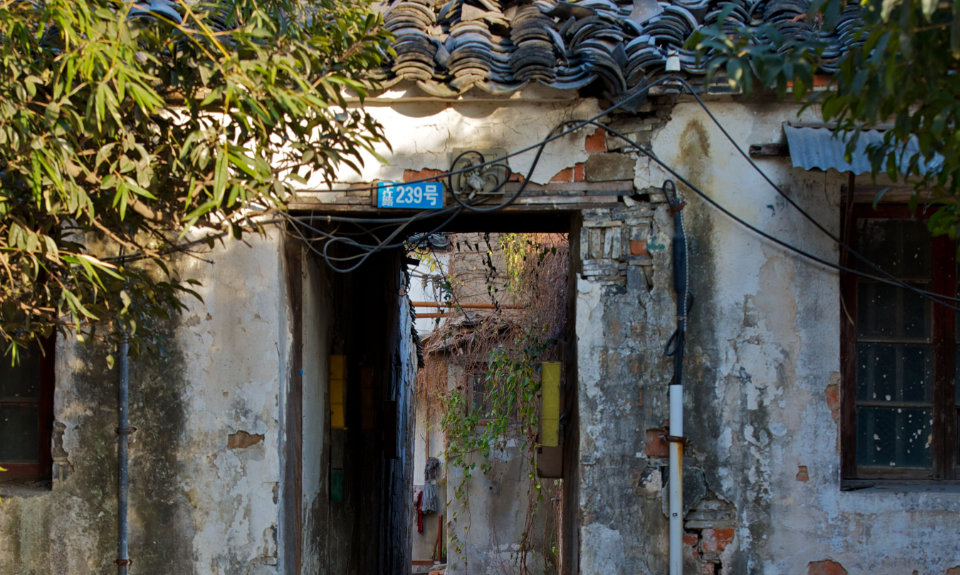
But just as interesting as the road itself are the alleys that lie off it. Some 51 of them, in fact. You won’t find any coffee chains here; instead it’s just simple life going on as it has done for centuries.
但和道路本身一样有趣的是,它旁的小巷。 事实上,其中大约有51个。 你不會在這裡找到任何咖啡連鎖店;相反,它只是像幾個世紀以來一樣簡單的生活。
In these alleys, narrow and winding streets are protected by high walls on both sides to provide privacy for secluded gardens and residences beyond. It’s the very essence of Suzhou culture; a secluded life in the city serving as a contrast between the serenity of the private garden dwelling and the hustle and bustle of city life, with the modernity of everything the 21st century has to throw at it only serving to reinforce the juxtaposition.
在这些小巷里,狭窄蜿蜒的街道两侧被高墙保护,为僻静的花园和住宅提供隐私。 这是苏州文化的精髓;城市中僻静的生活是私人花园住宅的宁静和城市生活的喧嚣之间的对比,21世纪必须抛出一切的现代性只会加强并列。
Of course, Pingjiang Lu is not the only such street in Suzhou. In 2015, it joined Shantang Street in being two of 30 such scenic areas added to another list of national historic and cultural streets.
当然,平江路并不是苏州唯一的这样的街道。 2015年,它与山塘街一起成为被列入另一个国家历史文化街道名单的30个此类风景区中的两个。
But a BBC Travel article has described Pingjiang Lu as perhaps the preferable of the two, it being less touristy than Shantang Street. The article furthermore states that Pingjiang Lu is “lined with houses that embody Suzhou’s style – graceful, simple and timeless. Pingjiang Lu gives an insight into the leisurely existence of the city’s residents. [It is a] centre of Suzhou’s artistic life, lined with bookshops and local opera theatres. There are also several teahouses, where people gather for performances of traditional storytelling and ballad singing”.
但英国广播公司旅游的一篇文章将平江路描述为两者中更受欢迎,它比山塘街的游客更少。 文章进一步指出,平江路“林立着体现苏州风格的房屋——优雅、简单和永恒。 平江路让人们深入了解了这座城市居民的悠闲生活。 [它是]苏州的艺术生活中心,两旁是书店和当地歌剧院。 还有几家茶馆,人们聚集在那里表演传统故事和民谣演唱。”
And let’s not forget the other activity which seems to be taking place at every corner along Pinjiang Lu; painting. In a setting so idyllic and serene, it is most difficult to distinguish whether people are painting or are a part of the painting.
让我们不要忘记平江路沿线每个角落似乎都在进行的另一项活动;绘画。 在如此田园诗般宁静的环境中,最难区分人们是在画画还是画画的一部分。
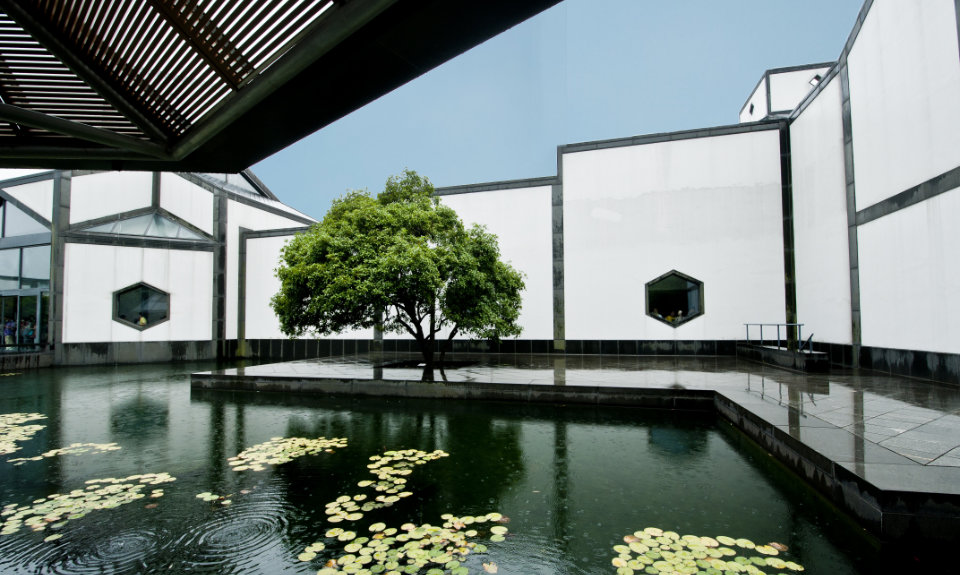
A good place from which to start a visit to Pingjiang Lu is the Suzhou Museum, one of the most visited museums in the world, with its architecture by Pritzker Prize-winning architect, the late I.M. Pei. In addition to the delights therein, the museum also serves as a hint of what is to come.
开始参观平江路的好地方是苏州博物馆,它是世界上参观人数最多的博物馆之一,其建筑由普利兹克奖得主建筑师已故的I.M. Pei设计。 除了其中的乐趣外,博物馆还暗示了未来。
Pei drew inspiration from Suzhou’s very soul; traditional white stucco walls adorned by sloping black roofs and, here and there, a splash of grey.
Pei从苏州的灵魂中汲取灵感;传统的白色灰泥墙装饰着倾斜的黑色屋顶,这里和那里,还有一丝灰色。
Nearby, no visit to the area would be complete by missing the Humble Administrator’s Garden, Suzhou’s largest classical Chinese garden and considered by some to be the finest example of such anywhere in southern China. Therein, the arrangement of rocks and water among the many pavilions and bridges are the very foundations of Feng Shui.
在附近,参观该地区不会完全错过Humble Administrator’s Garden,这是苏州最大的古典中国花园,被一些人认为是中国南部任何地方最好的例子。 在那里,许多亭子和桥梁之间的岩石和水的排列是风水的基础。

Developed over 1,000 years ago as rustic retreats from city life, Suzhou’s gardens became more elaborate over the centuries, designed for entertaining friends and displaying one’s mastery over design and décor.
苏州的花园在1000多年前作为远离城市生活的乡村避风港而发展起来,几个世纪以来变得更加精致,旨在招待朋友,并展示一个人对设计和装饰的掌握。
Suzhou’s Pingjiang Lu is within walking distance from exit 3 of Xiangmen Station on Line 1 of the Suzhou Rail Transit system.
苏州的平江路距离苏州铁路1号线祥门站3号出口仅几步之遥。