





Evocative for many of childhood memories, street food is perhaps at its very heart a comfort. Deep down, we know the chances are it’s phenomenally bad for us, but tough times call for tough decisions. These are the moments best addressed only through the satisfying of fundamental cravings.
街头食品令人回味地回忆起许多童年的记忆,也许其核心是一种舒适。 在内心深處,我们知道这对我们来说非常不利,但困难时期需要做出艰难的决定。 這些時刻最好透過滿足基本的渴望來解決。
Therefore, so as to precisely that which we desire deepest, The Nanjinger has this month turned to its dear patrons for answers. And as you would expect, this publication’s readership are at times an eclectic bunch! For we eschew Confucius Snacks; they’re for tourists. Who on Earth would choose those when one could devour a chicken embryo??
因此,为了正是我们最渴望的,南京人本月向其亲爱的赞助人求助。 正如你所期望的那样,这本出版物的读者群有时是不拘一格的! 因为我们避免吃孔子小吃;它们是给游客的。 当一个人可以吞噬鸡胚时,到底谁会选择那些??
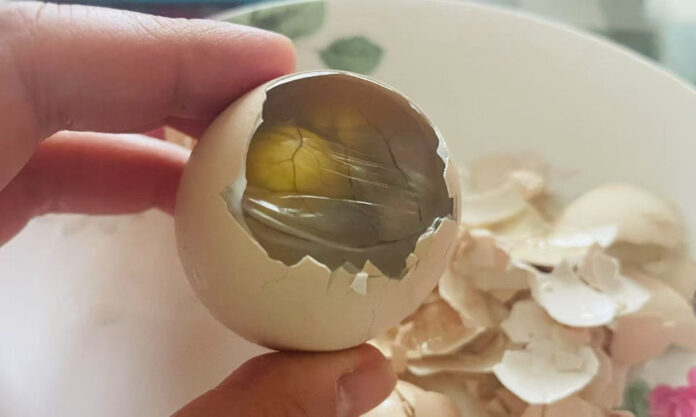
Such a sentiment is shared by reader Kris Zhu, for example. Of the so-called “Lucky Eggs”, (旺鸡蛋 / 活珠子), Zhu, who works for Ford in Nanjing and is also partial to some good old fashioned BBQ, says, “This is very very Nanjing and I just love it!!!”
例如,读者Kris Zhu也认同这种情绪。 在所谓的“幸运蛋”(旺鸡蛋/活珠子)中,在南京的福特公司工作,也喜欢吃一些老式的烧烤的朱说:“这非常非常南京,我只是喜欢它!!!”
Zhu is referring to the fetus of a chicken, unhatched, feathers and all.
Zhu指的是一只未孵化的鸡的胎儿,羽毛和一切。
“When I was in middle school, my classmate took me to a little stand near the school where she introduced this to me. I was very scared to see the unmatured chick and the feather,and I just left it in the bin. But she strongly recommended it to me, and I just gave a second try…. I told my mum when I got home, ‘Please buy some 活珠子 from time to time, I love it so much!'”.
“我上中学的时候,我的同学带我去学校附近的一个小摊位,在那里她向我介绍了这个。 看到未成熟的小鸡和羽毛,我非常害怕,我只是把它放在垃圾桶里。 但她强烈推荐给我,我只是第二次尝试…… 我回家后告诉妈妈,’请时不时地买一些活珠,我太喜欢它了!’”
Zhu’s fetal craving is shared by Sun Xing, coordinator of Clumsy Dad Workshop, who points out that stalls selling the delicacy today are harder to find; with some using stale or low-quality eggs.
笨拙的爸爸研讨会的协调员孙星也对朱对胎儿的渴望有同感,他指出,如今卖这种美食的摊位更难找到;有些摊位使用陈旧或低质量的鸡蛋。
Sun only trusts a few select vendors, suggesting in particular the stall by Nanhu that used to be run by an old lady, where her daughter now sells partially hatched eggs (maodan; 毛蛋).
Sun只相信少数精选的供应商,特别建议南湖的摊位,南湖的摊位曾经由一位老太太经营,她的女儿现在在那里出售部分孵化的鸡蛋(毛蛋)。
Fetus is One Thing; Potato another
胎儿是一回事;土豆是另一回事
Then there is Ali Qadir, studying at Nanjing University of Aeronautics & Astronautics, who has a thing for potatoes. While there is nothing wrong in that of course, Qadir’s thing in particular is “金陵黄金甲土豆”, roughly translated as “Jinling Golden Armour Potatoes”.
然后是南京航空航天大学学习的阿里·卡迪尔,他爱吃土豆。 当然,这没有什么错,特别是Qadir的东西是“金陵黄金甲土豆”,大致翻译为“金陵金甲土豆”。
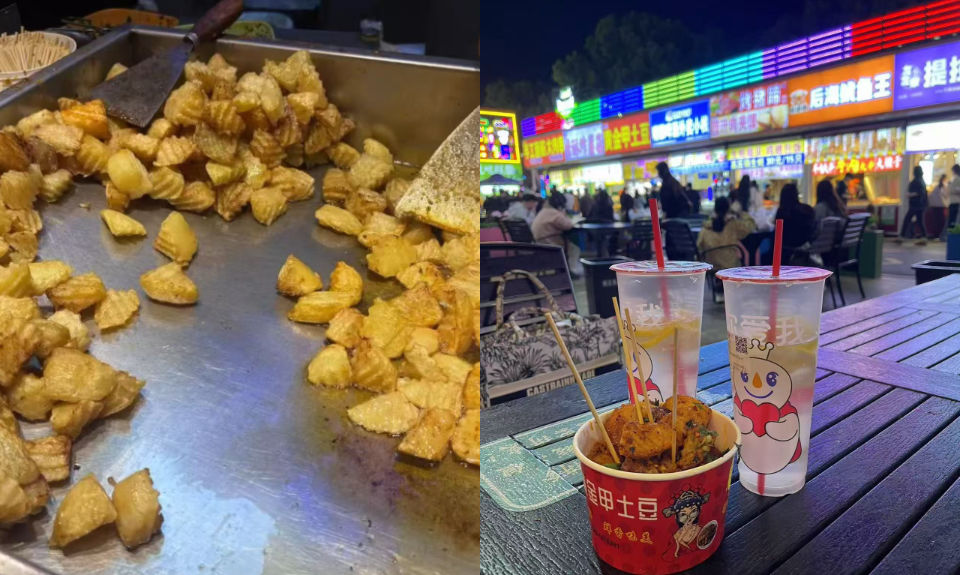
Of the street-food specialty, Qadir says, “The taste is so good. The way it’s sliced ‘zigzag’ is very special and the ‘ayi’ [阿姨], who fries it, is indeed a pro. I always feel nostalgic while trying it. It takes me back to memories of my childhood”.
关于街头小吃特色菜,Qadir说:“味道太好。 把它切成“曲折”的方式非常特别,炸它的“阿姨”确实是专业人士。 在尝试它的时候,我总是感到怀旧。 它把我带回了童年的记忆。”
Recognising that potatoes are, well, everywhere, Qadir’s go to for his treasured potato is the Yiwu Market (江宁义乌店) in Nanjing’s Jiangning District. He says, “[They] always make me ride my e-bike for almost 10 KM, no matter it’s raining cats and dogs or a typhoon!”.
认识到土豆无处不在,Qadir去南京江宁区的江宁义乌市场。 他说:“[他们]总是让我骑电动自行车近10公里,不管是下大雨还是台风!”。
Noodles, Noodles; My Kingdom for a Bowl of Noodles
面条,面条;一碗面条的我的王国
Podcaster and freelance academic advisor Wu Zeyuan knows a thing or two about noodles, specifically “Liangfen”, or “transparent noodle salad”, in the traditional Nanjing style.
播客和自由職業學術顧問Wu Zeyuan對傳統的南京風格的麵條,特別是「梁芬」或「透明面沙拉」有所瞭解。
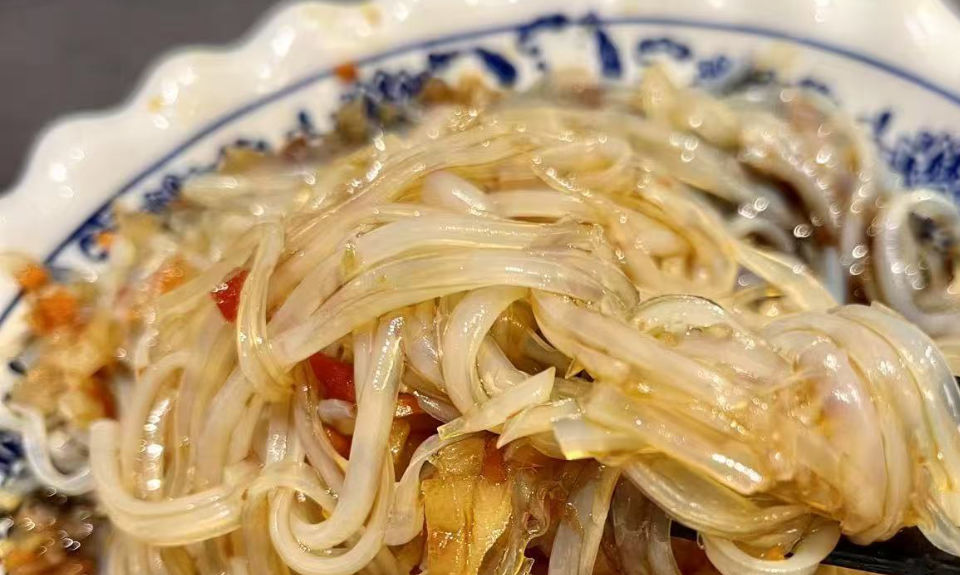
She says, “Liangfen can be found all over the country, but the traditional Nanjing version is a local speciality. The noodles are finely shaved from a chunk of gelled pea starch and seasoned with sweetened vinegar and finely diced pickles. To me, it’s the perfect snack; satisfying your appetite without making you too full for your next meal”.
她说:“梁芬遍及全国,但传统的南京版是当地特色菜。 面条是用一块凝胶豌豆淀粉磨碎的,用甜醋和切丁的泡菜调味。 对我来说,这是完美的零食;满足你的食欲,又不会让你下顿饭太饱。”
Wu also intimates that the best examples of Liangfen Nanjing has to offer are to be found at “Huangqinji” (黄勤记) in Laomendong, or at “Fulinxuan” (富临轩) along Jiqingmen Avenue.
吴还暗示,梁芬南京最好的例子可以在老门洞的“黄勤记”或吉清门大道上的“富临轩”找到。
Lest thee Not Forget the Old Man with the Wonton
以免你忘记那个带着馄饨的老人
The famed Chinese staple also has a place in the heart of several readers of The Nanjinger, notably, Gong Xusheng who is a partner with Beijing Kangda Law firm; and Harold who was not born in Nanjing but has lived here for 30 years.
著名的中国主食也在《南京人》的几位读者心中占有一席之地,特别是北京康达律师事务所合伙人龚旭生;Harold不是出生在南京,但在这里生活了30年。
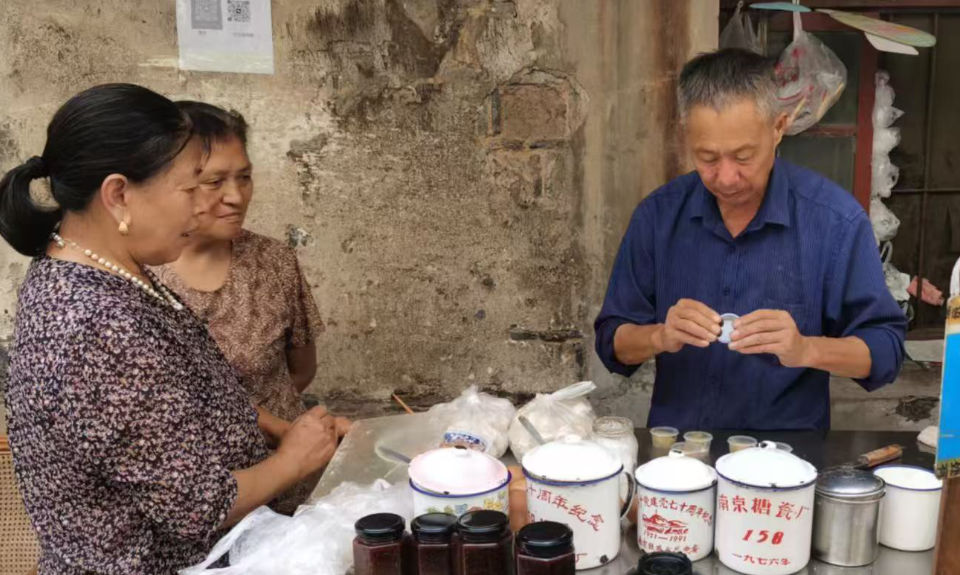
Gong points to his favourite street food that is served up at the Gao Gang Li Old Man Wonton stall (高岗里老头馄饨; see pic), while Harold remembers, “There was a Nanjing dialect rap song published about 20 years ago which is titled “Drink Wonton”(喝馄饨). It was quit a sensational song at that time. I think it is the first rap song I know, and it is the time when rap music just started to be known by the public in China.
Gong指着他在高岗里老头馄饨摊(高岗里老头馄饨;见图)供应的最喜欢的街头小吃,而Harold回忆道:“大约20年前有一首南京方言说唱歌曲,名为《喝馄饨》。 在当时,这是一首耸人听闻的歌曲。 我认为这是我知道的第一首说唱歌曲,也是说唱音乐在中国刚刚开始被公众所熟知的时候。
“To me, street food is not just about the food itself and its taste, it also links to the history and culture of the city”.
“对我来说,街头食品不仅仅是食物本身和味道,它还与城市的历史和文化有关。”