



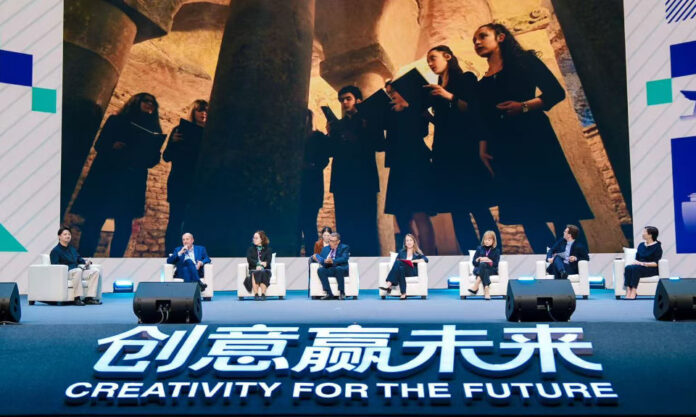



Somewhere between the blue-washed stage lights and the tranquil waters of Lake Li in Wuxi, a bigger question hung in the air last week. Can culture still move cities forward in the age of AI, and can tourism grow into something sustainable but not clichéd without losing its soul?
上周,在被蓝色冲刷的舞台灯光和无锡李湖平静的水域之间,一个更大的问题悬而未决。 在人工智能时代,文化还能推动城市向前发展吗?旅游业能否发展成为可持续但不老生常谈而不失去灵魂的东西?
Inside Studio No. 12 at the Wuxi National Digital Film Industrial Park, that question was given a soundtrack. The “Encounter – Enlighten” Creative Cities Dialogue Wuxi brought together UNESCO officials, city delegates, tourism thinkers and music people under one blunt promise on the screen behind them; Music for Better Cities.
在无锡国家数字电影工业园的12号演播室内,那个问题得到了配乐。 “邂逅-启蒙”创意城市对话无锡汇集了教科文组织官员、城市代表、旅游思想家和音乐人士,在他们背后的屏幕上做出了一个直言不讳的承诺;音乐为更美好的城市。
It was not the sort of slogan that survives long on charm alone. By the end of the day, however, Wuxi had made a fair case that culture can do more than entertain. It can build an economy, sharpen a city’s identity and make tourism more sustainable.
这不是那种仅靠魅力就能生存很久的口号。 然而,到最后,无锡提出了一个公平的理由,即文化可以做的不仅仅是娱乐。 它可以建立经济,提高城市的身份,并使旅游业更加可持续。
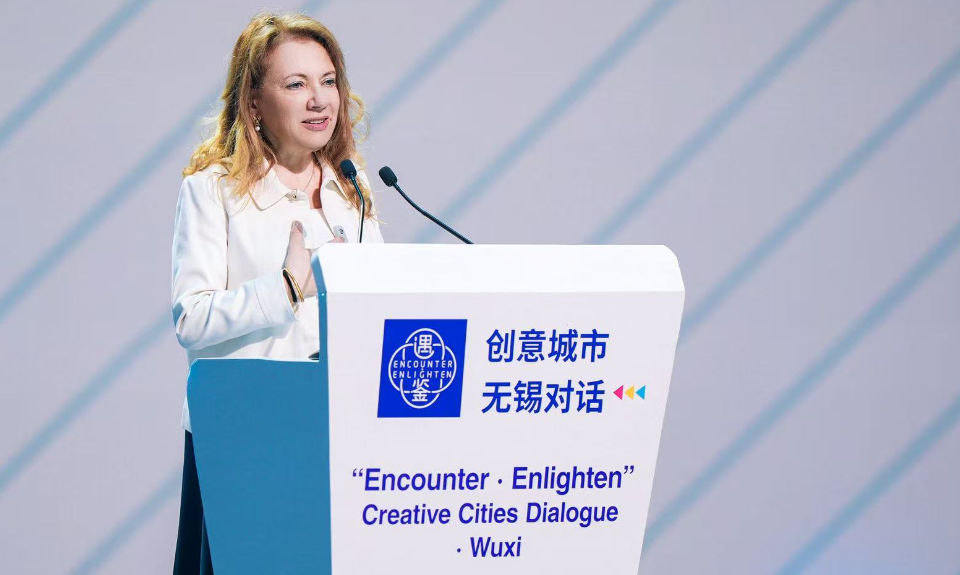
The argument rested on scale as much as mood. Speakers ranged from local officials representing Wuxi’s Binhu District, to international culture heavyweights, such as Denise Bax of the UNESCO Creative Cities Network, together with Jose Chong of UN-Habitat and Sandra Carvão of UN Tourism. Delegates also arrived from Pesaro, Daegu, Ipoh, Metz, Essaouira and Evian. Wuxi, which joined the UNESCO network last October as a Creative City of Music, was not merely showing off a new badge. It was trying to show how music, heritage, film and digital tools might turn a visit into a longer stay and a city into something visitors remember.
争论与情绪一样重要。 演讲者包括代表无锡滨湖区的地方官员,到国际文化重量级人物,如联合国教科文组织创意城市网络的Denise Bax,以及联合国人居署的Jose Chong和联合国旅游局的Sandra Carvão。 代表们也来自佩萨罗、大邱、伊波、梅斯、索维拉和埃维安。 去年10月,无锡作为音乐创意城市加入了联合国教科文组织网络,它不仅仅是在炫耀一个新的徽章。 它试图展示音乐、遗产、电影和数字工具如何将访问变成更长的停留时间,并将城市变成游客记住的东西。
In practical terms, that means delegates were not kept inside a conference bubble. They were sent into the city, onto the Grand Canal, through Huishan and into Yingyue Li, where the point was not simply to admire scenery but to test whether culture can be packaged without being flattened.
实际上,这意味着代表们没有被关在会议泡沫中。 他们被送进城市,进入大运河,穿过惠山,进入盈月里,那里的重点不仅仅是欣赏风景,而是测试文化是否可以被包装而不被夷为平地。
That matters because Wuxi is not selling itself as just another pretty city with a nice old quarter and a convenient high-speed rail stop. After joining the UNESCO Creative Cities Network as China’s first World Music City last year, it now has a title to defend. Wuxi’s smart argument was that a place has to remain messy enough to feel alive. It has to keep a little roughness. Otherwise every destination begins to feel as if they are rolling out the same concept in different weather.
这很重要,因为无锡并不只是把自己推销为另一个拥有漂亮老城区和便利的高速火车站的漂亮城市。 在去年加入联合国教科文组织创意城市网络,成为中国第一个世界音乐城市后,它现在有了要捍卫的称号。 无锡的聪明论点是,一个地方必须保持足够凌乱才能有活力的感觉。 它必须保持一点粗糙度。 否则,每个目的地都会开始感觉自己在不同的天气下推出相同的概念。
Music Gives a City Texture, not Just a Tourist Hook
音乐赋予了城市纹理,而不仅仅是一个游客的钩子
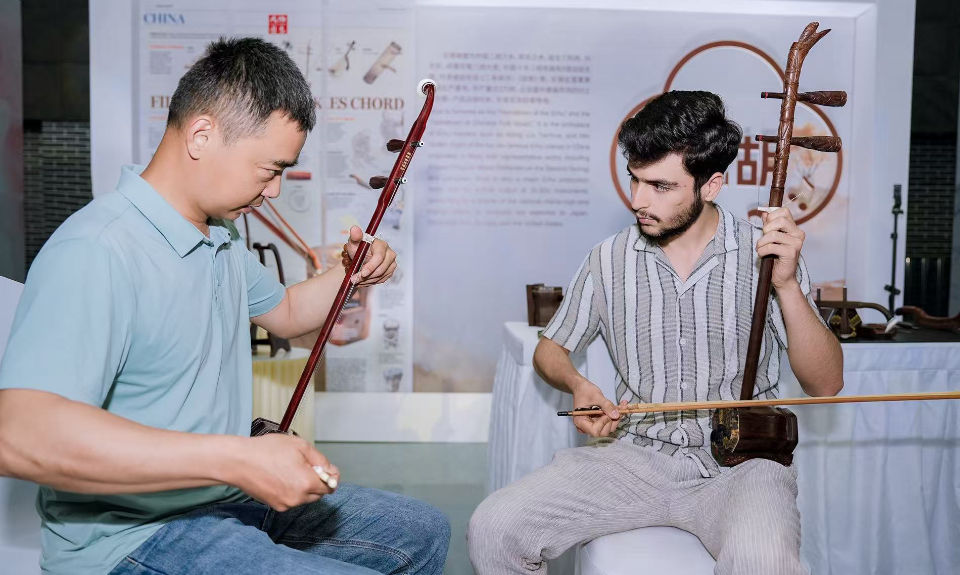
That practical work begins with memory. Wuxi has long in many ways been musical capital of its own, from erhu traditions to wider Jiangnan sensibilities that travel through water, gardens and along cobbled streets. What the city appears to understand is that tourists do not come back for slogans. They return for texture. They return for the feeling that a place has its own rhythm and is not just borrowing one.
实际工作从记忆开始。 长期以来,无锡在许多方面一直是自己的音乐之都,从erhu传统到更广阔的江南风情,这些风情在水、花园和鹅卵石街道上旅行。 这座城市似乎明白的是,游客不会为了口号而回来。 他们回来是为了纹理。 他们回来是为了感觉一个地方有自己的节奏,而不仅仅是借用一个。
Meanwhile, the overseas delegates brought useful proof that this is not only a Chinese question. Essaouira has built a tourism identity around its Gnawa music and layered coastal heritage. Pesaro leans on opera and Rossini without becoming a museum piece. Evian long ago learned how to turn water, landscape and wellness into a full civic brand rather than a single attraction. That which linked those examples in Wuxi was a simple truth; culture works best in tourism when it is not treated as decoration after the main economic decisions have already been made.
与此同时,海外代表们带来了有用的证据,证明这不仅仅是一个中国的问题。 索维拉岛围绕其Gnawa音乐和分层的沿海遗产建立了旅游身份。 佩萨罗依靠歌剧和罗西尼,但没有成为博物馆的作品。 Evian很久以前就学会了如何将水、景观和健康变成一个完整的公民品牌,而不是一个单一的景点。 将无锡的这些例子联系起来的是一个简单的事实;在主要经济决策已经做出后,文化在旅游业中效果最好。



AI Can Help but It Cannot Feel Wonder
人工智慧可以提供幫助,但它不能感到奇怪
That was also where AI entered the room with some force. One of the day’s headline moments was the release of Wuxi Impression, an AI co-created music piece, alongside a global call for theme music inspired by the city. There was a risk that such gestures might feel gimmicky. Instead, they landed as part of a larger question about authorship, participation and whether technology can widen cultural access without draining away mystery.
这也是人工智能以某种力量进入房间的地方。 当天的头条新闻之一是《无锡印象》的发布,这是一首人工智能共同创作的音乐作品,同时全球呼吁以这座城市为灵感的主题音乐。 这种姿态可能会感觉噱头。 相反,他们作为关于作者身份、参与以及技术是否可以在不耗尽神秘感的情况下扩大文化机会的更大问题的一部分。
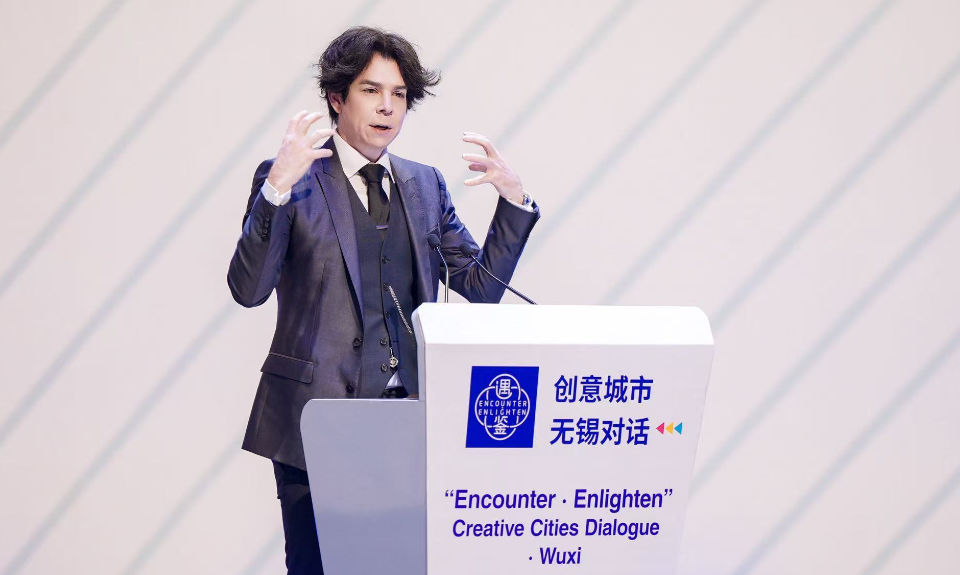
Fernando Garibay, the Grammy and BMI award-winning producer and scholar, gave that issue its clearest human voice. In an interview with this reporter after his speech at the event, he was relaxed but pointed. “So long as that black box of human creativity exists,” he said, “the value proposition remains intact.” It was a striking answer because it did not reject AI. It simply put a limit around what machines can claim.
格莱美奖和BMI获奖制片人兼学者Fernando Garibay为这个问题提供了最清晰的人性声音。 在活动演讲后接受这位记者的采访时,他很放松,但很尖锐。 “只要人类创造力的黑匣子存在,”他说,“价值主张就完好无损。” 这是一个引人注目的答案,因为它没有拒绝人工智能。 它只是限制了机器可以声称的内容。
In a 1 minute plus answer to the question, “Where is the the heartbreak [in AI-generated music]?”, Garibay revealed that he has studied three Ph.Ds on that very subject. By way of response, there was little else to say. Except perhaps, to express respect.
在1分钟多回答“[人工智能生成的音乐]的心碎在哪里?”这个问题时,Garibay透露,他已经就这个主题学习了三个博士学位。 作為回應,沒有什麼可說的。 除了也许,为了表达尊重。
Yet what he was really defending was not job protection or artistic snobbery. It was uncertainty; human creativity still resists full explanation, let alone outright replication. AI may process patterns at extraordinary speed. It may assist, simulate and scale. But the reason a melody wounds, or heals, or suddenly makes a city feel like itself, remains harder to pin down.
然而,他真正捍卫的不是工作保护或艺术的诺斯。 这是不确定的;人类的创造力仍然抵制充分的解释,更不用说彻头彻尾的复制了。 人工智能可能会以惊人的速度处理模式。 它可以协助、模拟和缩放。 但是,旋律受伤、治愈或突然让城市感觉像它自己的原因,仍然更难确定。
Wuxi itself seemed to grasp all this. The city was not presenting AI as a replacement for culture. It was presenting it as an amplifier.
无锡本身似乎掌握了这一切。 这座城市并没有将人工智能作为文化的替代品。 它把它呈现为一个放大器。

The canal night tour, described in local coverage from Wuxi Daily, blended holographic water screens, AR effects and live performance with the older drama of white walls, black tiles and slow water. That mix worked because the technology was there to reveal place, not to bury it.
《無錫日報》本地报道描述的運河夜游融合了全息水屏、AR效果和現場表演,以及白牆、黑瓷磚和慢水的古老戲劇。 这种组合奏效了,因为技术是为了揭示地方,而不是埋没它。
The same principle appeared in the tourism dialogue material. Yingyue Li was framed around the classic music IP of Erquan Yingyue and a broader model of cultural IP, music and national trend art. Yixing’s Yaohu Town it was all presented through intangible heritage, ecology and performance. These are not minor design choices. They suggest a city trying to move tourists from passive sight-seeing into experience shaped by narrative.
同样的原则出现在旅游对话材料中。 李英月围绕二泉英月的古典音乐IP和更广泛的文化IP、音乐和民族潮流艺术模式。 宜兴的尧湖镇都是通过非物质遗产、生态和表演呈现的。 这些不是次要的设计选择。 他们建议一座城市试图将游客从被动的观光转向由叙事塑造的体验。


There is, of course, a danger in all this. Once every city talks about immersion, co-creation and smart cultural experience, the vocabulary itself becomes generic. Visitors can smell that kind of sameness quite quickly. A sustainable-tourism model cannot depend on endless novelty or amplification. At some point, a city has to trust the force of what is already there.
当然,这一切都有危险。 一旦每个城市都谈到沉浸、共同创造和智能文化体验,词汇本身就变得通用了。 游客很快就能闻到那种味道。 可持续旅游模式不能依靠无尽的新颖性或放大。 在某些时候,一个城市必须相信已经存在的力量。

And that is what Wuxi already has a lot of. It has canal memory, industrial memory, musical memory and the visual softness of Jiangnan, but it also has an active film park and a willingness to speak in the language of innovation without sounding completely synthetic. Thursday’s event did not solve the whole problem of modern urban tourism. It did, however, show that Wuxi is asking the right question.
这就是无锡已经拥有的很多东西。 它拥有运河记忆、工业记忆、音乐记忆和江南的视觉柔软,但它也有一个活跃的电影公园,并愿意用创新的语言说话,而不会听起来完全合成。 週四的活動並沒有解決現代城市旅遊的整個問題。 然而,这确实表明无锡在问正确的问题。
By the end, the answer seemed less abstract. Yes, if cities use technology to sharpen identity rather than blur it. Yes, if tourism remains human-scaled enough to leave room for feeling. And yes, if music, memory and place are still allowed to sound like themselves.
最後,答案似乎不那麼抽象了。 是的,如果城市使用技术来锐化身份,而不是模糊它。 是的,如果旅游业仍然足够人性化,可以留下感觉的空间。 是的,如果音乐、记忆和地点仍然被允许听起来像他们自己。