







It’s the place where the lower and upper classes would be required to intermingle ahead of an assuredly somewhat long journey. With air travel a thing of the future, and not a single bridge across the mighty Yangtze River, all journeys to the north and west of China began from here.
这是一个下层阶级和上层阶级在一段相当漫长的旅程之前需要混在一起的地方。 随着航空旅行是未来的事情,没有一座跨越雄大长江的桥梁,所有通往中国北部和西部的旅程都从这里开始。
The Nanjing Port Waiting Room can be found at 21 Jiangbian Lu (the road’s name in Chinese meaning “riverside”), as the point of ticket purchase before waiting to board a train that would then be shunted onto the train ferry nearby.
南京港候车室位于江边路21号(道路名称在中文中意为“河边”),作为购买车票点,然后等待登上火车,然后被分流到附近的火车渡轮上。
And while it might look like a traditional Chinese style palace in many respects, it is nowhere near as old. Built during the Republican era, the palace similarities stem from the classical Chinese patterned lintels, which are concrete imitations thereof. Window awnings, akin to hanging gardens, are richly moulded. Exquisitely decorated, Nanjing Port Waiting Room is a standout example of traditional Chinese decorative art that has been given the benefit of modern materials and processes.
虽然在很多方面它可能看起来像一座传统的中国风格的宫殿,但它远没有那么古老。 这座宫殿建于共和时代,相似之处源于中国古典图案的窗楣,这是其具体的仿制品。 窗户遮阳篷,类似于空中花园,造型丰富。 南京港候车室装饰精美,是中国传统装饰艺术的杰出典范,受益于现代材料和工艺。
Not fit for purpose since the opening of the Nanjing Yangtze River Bridge removed the need for the train ferry, the building languished for many years until the recent revival of the Xiaguan part of Nanjing.
由于南京长江大桥的开通消除了对火车渡轮的需求,该建筑不合目的,直到最近南京下关部分复兴,该建筑才蹒跒多年。
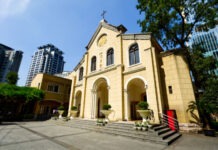


That 2016 transformation for the Waiting Room was twofold; exterior and interior. As for the former, the accompanying image speaks for itself.
2016年候车室的改造是双重的;外部和内部。 至于前者,伴随的图像不言自明。
Inside is now the “Nanjing Xiaguan History Exhibition Hall” and the “Nanjing Binjiang Business District Planning Exhibition Hall”.
里面现在是“南京下关历史展馆”和“南京滨江商务区规划展馆”。
That historical journey begins with the first foot taken inside, as the marble floor tiles of the exhibition hall are engraved with the various names of Xiaguan from different historical periods; the ancient names whispered, as if floating along the long river of history and living the memories of Xiaguan.
历史之旅从迈出第一步开始,展厅的大理石地砖上刻着不同历史时期的夏关的各种名字;古名在低语,仿佛沿着历史的长河漂浮,活在夏关的记忆中。
It’s also something of a waxworks museum today. Herein find Zheng He’s treasure ship sailing to the west and wharf porters bargaining with their rich and powerful clients in surprisingly lifelike scenes.
今天,它也像一个蜡像馆。 在这里,发现郑和的宝船向西航行,码头搬运工在令人惊讶的栩栩如生的场景中与他们富有而有权势的客户讨价还价。
Climbing up to the third floor is a walk from the past to the future. Here, a 200-square-metre panoramic view of the future planning for Nanjing’s riverside business district.
爬到三楼就是从过去走到未来。 这里是南京河畔商业区未来规划的200平方米的全景。