



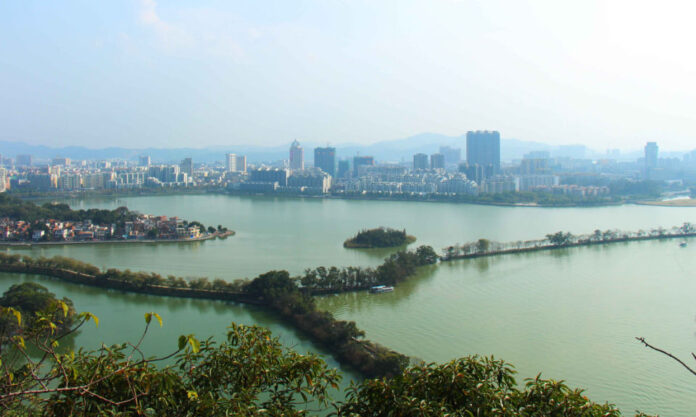



Two Italian Jesuits put on Buddhist monks’ robes and settled beside the West River in Zhaoqing in 1583; above the entrance to their residence hung a plaque calling it Xianhua Temple, written by the local prefect himself.
一五八三年,两名意大利耶稣会士身穿佛门僧袍,在肇庆西江边定居;他们的住所门上悬着一块匾额,题为”仙花寺”,出自当地知府亲笔。
In the early 1580s Zhaoqing was the seat of the Viceroy of Liangguang, who governed Guangdong and Guangxi together. Viceroy Chen Rui summoned Macao’s governor and bishop. Macao sent its auditor, Mattia Penella, and the Italian Jesuit Michele Ruggieri in their place in 1582. Chen Rui was removed from office in January 1583, in the political fallout after the death of the powerful minister Zhang Juzheng, but before he left he gave Ruggieri a letter meant to help the Jesuits secure a home.
十六世纪八十年代初,肇庆是两广总督的驻地,统辖广东与广西两省。总督陈瑞传召澳门的总督与主教。一五八二年,澳门改派市审计官马蒂亚·佩内拉与意大利耶稣会士罗明坚前往。一五八三年一月,陈瑞在权臣张居正去世后的政治风波中被免职,但离任前他给了罗明坚一封信,以助耶稣会士觅得居所。
Ricci’s account of the mission, later edited and published in Latin by Nicolas Trigault as On the Christian Expedition among the Sinae, records a succession of false starts. Ricci joined Ruggieri, and the prefect, Wang Pan, had heard of Ricci’s skill as a mathematician and mapmaker. In September 1583 he let both men settle in Zhaoqing, near a Buddhist temple. It was the first permanent Jesuit establishment on mainland China.
利玛窦对这次传教的记述,后由金尼阁(尼古拉·特里戈)编订并以拉丁文出版,即《基督教远征中国史》,其中记下了一连串的反复与挫折。利玛窦与罗明坚会合,知府王泮听闻利玛窦精通数学与制图。一五八三年九月,王泮准许两人在肇庆定居,地点毗邻一座佛寺。这是中国内地第一座长期性的耶稣会驻所。
The Plaques and the Map that Spoke Chinese
匾额,与那幅会说中文的地图
Wang Pan wrote two plaques himself. Xianhua Temple hung above the gate, and Pure Land from the West hung inside the chapel. Both were Buddhist phrases, and so were the robes the priests wore. An article in Yangcheng Evening News notes that Wang Pan arrived in 1580 and spent his early years fighting the floods that plagued Zhaoqing, and asks whether he chose the names out of conviction or as strategy.
王泮亲自题写了两块匾额。”仙花寺”悬于大门之上,”西来净土”悬于圣堂之内。这两个词都属佛门用语,两位神父所穿的僧袍也是如此。《羊城晚报》刊文指出,王泮一五八〇年到任,最初几年忙于治理肇庆频发的水患,并追问他取这些名字,究竟出于信念还是出于策略。
The house stood beside the Chongxi Pagoda, whose construction Wang Pan began in 1582 with donations from local people. It is 57.5 metres tall, with nine storeys outside and seventeen inside. Not everyone welcomed the neighbours. One Chinese biographical account says children were urged to climb the pagoda and throw stones at the house. Wang Pan took his plaques down under pressure, another account says, and later hung them again. Ricci judged that China was not ready for a harvest; in words Chinese biographers still quote, it was not even the season for sowing.
这座宅子紧挨崇禧塔,王泮于一五八二年开始主持兴建该塔,资金来自民间捐助,塔高五十七点五米,外观九层,内分十七层。并非所有人都欢迎这对新邻居。一部中文传记称,曾有人怂恿孩童登上宝塔,向宅中投掷石块。另一说法称,王泮迫于压力曾摘下匾额,后来又重新挂了回去。利玛窦断定,中国尚未到收获的时节,用中国传记作者至今引用的话来说,甚至还不是播种的季节。


Inside, visitors saw things they had never seen. Scholars, officials and even Buddhist monks came to see the unfamiliar objects displayed there, including a mechanical striking clock and an image of the Virgin Mary.
宅内的陈设,是访客前所未见的。士人、官员乃至僧人都前来观看陈列其中的新奇物件,包括一座机械自鸣钟与一幅圣母像。
In 1584 Wang Pan visited the reception hall and noticed a world map on the wall. Ricci owned a small Italian one. According to one scholarly study of the episode, the prefect asked him to “make the map speak Chinese”. Ricci did it with Chinese collaborators, and the result was the first modern European-style world map in Chinese, with China drawn at its centre. Wang Pan was delighted, offered to pay for the printing and gave copies to friends.
一五八四年,王泮来到会客厅,看见墙上挂着一幅世界地图。利玛窦手中只有一幅意大利的小幅地图。据一项学术研究对此事的记述,知府请他让这幅地图”说中文”。利玛窦与中国合作者共同完成了这项工作,成果是第一幅现代欧式中文世界地图,中国被绘于图的中央。王泮大为欣喜,主动出资刻印,并将印本赠予友人。
No copy of the 1584 Zhaoqing map is known to survive. Later versions do, culminating in Ricci’s much larger 1602 Kunyu Wanguo Quantu. In the same year, Ruggieri printed the Tianzhu Shilu, regarded as the first Chinese-language book written by a European.
一五八四年肇庆版地图,至今未见存世印本;其后的版本则得以流传,最终形成利玛窦一六〇二年绘制的更大幅《坤舆万国全图》。同年,罗明坚刊印了《天主实录》,一般被视为欧洲人撰写的第一部中文著作。
Ruggieri and Ricci also worked in Zhaoqing on a Portuguese-Chinese dictionary, the first known bilingual dictionary pairing Chinese with a Western language, complete with a system for representing Chinese pronunciation in the Latin alphabet. The manuscript disappeared into the Jesuit archives, was rediscovered there in 1934 and was finally published in 2001.
罗明坚与利玛窦还在肇庆编写了一部葡汉辞典,这是已知第一部将汉语与西方语言对照的双语辞典,并附有用拉丁字母标注汉语读音的方案。手稿湮没于耶稣会档案馆,一九三四年在那里被重新发现,直到二〇〇一年才终于出版。
Ruggieri left China for Europe in 1588. Ricci stayed until 1589, when the new viceroy Liu Jiwen expelled the Jesuits from Zhaoqing. They moved north to Shaozhou, now Shaoguan.
罗明坚于一五八八年离华赴欧。利玛窦留至一五八九年,新任总督刘继文将耶稣会士逐出肇庆,他们北迁至韶州,即今日的韶关。
Zhaoqing Today, from Ink Stones to Electric Cars
今日肇庆,从端砚到电动汽车
Today Zhaoqing makes electric cars. XPeng put its first self-built vehicle plant in the city’s high-tech zone, started construction at the end of 2017 and rolled out its first P7 in May 2020. According to Southern Daily, the plant built 130,000 cars in 2022, worth more than ¥32 billion, making XPeng the first company in the city to pass ¥30 billion in annual output value. The battery maker CATL followed in 2021, agreeing to build what was planned as South China’s largest lithium battery plant in the same zone, with a first phase costing ¥12 billion.
如今,肇庆造电动汽车。小鹏汽车把首个自建整车工厂设在肇庆高新区,二零一七年底动工,二零二零年五月首台P7下线。据《南方日报》报道,该工厂二零二二年产车十三万辆,产值超过三百二十亿元,小鹏成为肇庆首家年产值突破三百亿元的企业。电池制造商宁德时代于二零二一年随后落户同一园区,规划兴建华南最大的锂电池制造基地,一期投资一百二十亿元。
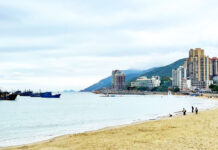
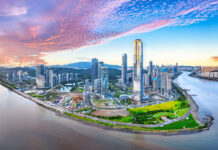
Zhaoqing had 4.11 million residents at the 2020 census. According to the city’s 2026 government work report, its GDP reached ¥297.48 billion in 2025, up 3.1 percent. Foreign trade rose 21.1 percent to ¥46.3 billion, while fixed-asset investment fell 41.6 percent.
肇庆常住人口在二零二零年人口普查时为四百一十一万。据肇庆市二零二六年政府工作报告,二零二五年全市地区生产总值为二千九百七十四点八四亿元,同比增长百分之三点一;外贸进出口总额增长百分之二十一点一,达四百六十三亿元,固定资产投资则下降百分之四十一点六。
The city’s most famous product is older than any of this. Zhaoqing was once called Duanzhou, and its Duan inkstones, quarried from the hills along the West River since the early Tang dynasty, rank first among China’s four famous inkstones. Xinhua says the Song emperor Huizong, who held Duanzhou as a fief before taking the throne, loved the stones; after he became emperor the city was renamed Zhaoqing. Xinhua reported in 2022 that more than nine in ten families in Baishi village still make them. Wang Jianhua, head of the Guangdong Duan Inkstone Association, told the agency that a good stone stays damp long after a hand presses it, which is why people speak of grinding ink with a breath.
这座城市最有名的产物,比这一切都古老。肇庆古称端州,出产的端砚自唐初开采于西江沿岸山中,位列中国四大名砚之首。据新华社报道,宋徽宗登基前受封端王,端州为其封地,他极爱端砚,即位后端州改名肇庆。新华社二零二二年报道称,端州区白石村九成以上的家庭仍在制砚。广东省端砚协会会长王建华对该社表示,好砚用手按压砚堂,水气久久不干,故有”呵气研墨”之说。
Getting there is easy now. Zhaoqing East station is where the Guiyang–Guangzhou and Nanning–Guangzhou high-speed lines meet, the first stop in Guangdong on both, and the Guangzhou–Foshan–Zhaoqing intercity railway has run since 2016. According to a 2021 report on the Greater Bay Area portal, the high-speed train reaches Guangzhou in 30 minutes, Shenzhen in an hour and Hong Kong in an hour and 20 minutes. According to 21st Century Business Herald, XPeng’s then president, Xia Heng, named transport, along with government service and supply chains, among the reasons for choosing the city.
如今前往肇庆很方便。肇庆东站是贵广高铁与南广高铁的交汇处,也是两条线路在广东境内的第一站;广佛肇城际铁路自二零一六年起通车。据粤港澳大湾区门户网站二零二一年的报道,乘高铁三十分钟可到广州,一小时到深圳,一小时二十分钟到香港。据《21世纪经济报道》,小鹏汽车时任总裁夏珩曾把交通基建,连同政府服务与产业配套,列为选择肇庆的原因。
The plaques that called the Jesuits’ house a Buddhist temple are long gone, but the Chongxi Pagoda beside the site still stands above the West River.
仙花寺的匾额早已不存,但当年宅院旁的崇禧塔依然矗立在西江之畔。