



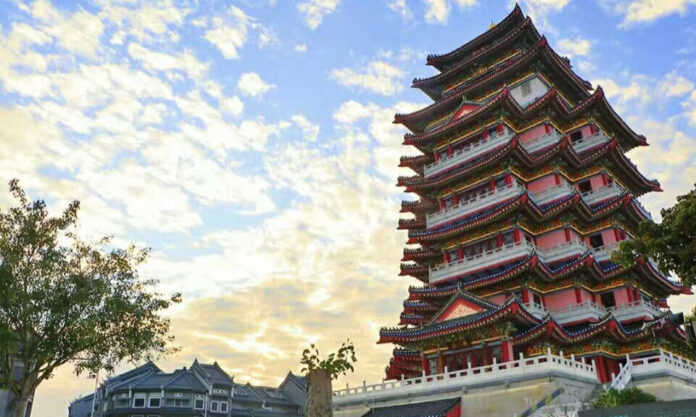



Song dynasty court rivals had the poet Su Shi banished to Huizhou in 1094 after years of factional infighting at court; over the nearly three years that followed, he helped finance two bridges by donating an imperial rhinoceros-horn belt, brewed his own wine, and left the city’s lake with a name still in use today.
一零九四年,苏轼因朝中党争失势,被贬至惠州;此后近三年间,他捐出一条御赐犀带协助修桥,亲自酿酒,并为这座城市的湖泊留下一个沿用至今的名字。
Two bridges needed rebuilding when Su arrived. The Daoist Deng Shou’an built the floating Dongxin Bridge from 40 boats arranged into 20 paired units, secured with iron chains and stone anchors, while the monk Xigu oversaw the Xixin Bridge across the lake west of the city, using shiyan timber, a wood said to resist termites. When funds ran short, Su donated an imperial rhinoceros-horn belt and wrote to his younger brother, Su Zhe, for help; Su Zhe’s wife contributed gold she had received from the imperial household.
苏轼抵达时,当地有两座桥急需重修。道士邓守安以四十艘船组成二十舫,用铁链相连、石碇固定,建成东新浮桥;僧人希固则主持修建城西丰湖上的西新桥,采用白蚁不蛀的石盐木。资金短缺时,苏轼捐出了一条御赐犀带,并写信向弟弟苏辙求助;苏辙之妻史氏捐出了此前从宫中所得的黄金。
The bridges were finished the following June, and Su celebrated with villagers who brought food and drink for three days, an occasion he later described in verse — three days of drinking without pause, and nothing left of the chickens in the western village.
两座桥于次年六月竣工,苏轼与村民共庆三日,村民携酒食赴宴;他后来在诗中写道——三日饮不散,杀尽西村鸡。


West Lake Gets Its Name
西湖,因苏轼而得名
The lake was then known as Fenghu, but Su began calling it West Lake in his own writing; the new name gradually displaced the old one and has survived to the present day. The causeway he helped fund later became known as Su Causeway, echoing the name of an earlier one he had built in Hangzhou.
这片湖泊当时名为丰湖,苏轼在自己的诗文中开始称其为西湖;新名称逐渐取代旧名,并沿用至今。他协助出资修建的堤坝,后来被称为苏堤,与他此前在杭州修建的堤坝同名。
Su produced 587 surviving poems, essays, prefaces, letters and other writings during his 940 days in Huizhou, compared with 753 attributed to his earlier Huangzhou period. One poem, composed near Mount Luofu after tasting the region’s lychees, contains a line still quoted today; eating three hundred lychees a day, he would not mind remaining a southerner for life.
苏轼在惠州九百四十天内留下诗文、序、书信等作品共五百八十七篇,相比之下,他此前贬谪黄州时期留下的作品为七百五十三篇。他在罗浮山下品尝当地荔枝后写下一首诗,其中”日啖荔枝三百颗,不辞长作岭南人”一句至今仍常被引用。
He also experimented with wine, writing about ten varieties and making four himself — Luofu Spring, gui wine, Wanjia Spring and Zhenyi wine — while recording his methods in the Dongpo Wine Classic and other short texts.
他还尝试酿酒,寓惠期间品评过约十种美酒,并亲自酿造了其中四种——罗浮春、桂酒、万家春与真一酒——并将酿酒心得记录于《东坡酒经》等短文中。
What Remains of Su’s Huizhou
苏轼留在惠州的痕迹
Su’s companion Wang Chaoyun died in Huizhou in 1096, aged 34, and was buried beside the lake. After her burial, monks from nearby Qichan Temple built a small memorial pavilion, named Liuru Ting after the six likenesses verse of the Diamond Sutra that tradition records her reciting before her death.
苏轼的伴侣王朝云一零九六年在惠州病逝,享年三十四岁,葬于湖畔。她下葬后,附近栖禅寺的僧人为她修建了一座纪念亭,取《金刚经》中”六如”偈语之意,命名为”六如亭”,相传她临终前曾诵读此偈。
The wooden Xixin Bridge has long since been replaced by a five-arch reinforced-concrete crossing, though it keeps the old name and still stands on Su Causeway.
西新桥的木质结构早已被一座五孔钢筋混凝土桥取代,但仍沿用旧名,如今依然坐落在苏堤之上。
Nearly eight centuries later, the Qing-dynasty Huizhou poet Jiang Fengchen reduced Su’s effect on his city to a single line — once Master Su was banished to the southern sea, the empire no longer dared look down on Huizhou.
近八百年后,清代惠州诗人江逢辰将苏轼对这座城市的影响,浓缩成一句话——一自坡公谪南海,天下不敢小惠州。