



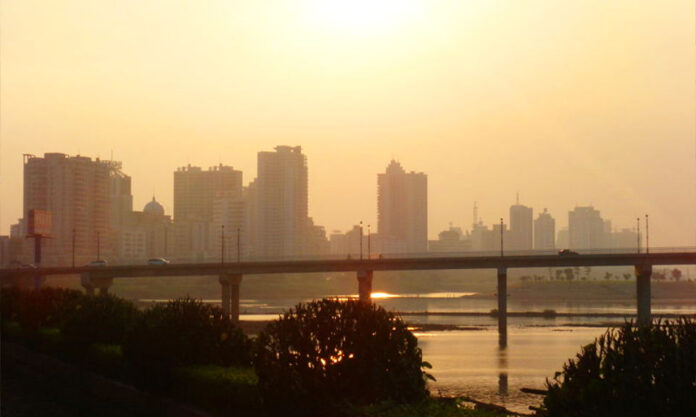



Historical tradition in Qingyuan links a single riverside gorge to four of the most consequential figures in the history of Chinese Buddhism, whose lives spanned more than two centuries of the religion’s development in China and beyond.
清远当地的历史传说,将一处江畔峡谷,与中国佛教史上四位举足轻重的人物联系在一起,他们的一生,跨越了佛教在中国及其以外地区发展的两百余年。
Bodhidharma, traditionally regarded as the First Patriarch of Chan in China, Sengcan, its Third Patriarch, Huineng, its Sixth Patriarch, and Jianzhen, the monk whose journey to Japan helped establish its formal Buddhist ordination tradition, are all associated with the same gorge in local historical accounts.
菩提达摩被尊为禅宗初祖,僧灿为禅宗三祖,惠能为禅宗六祖,而后来东渡日本、协助建立当地正式受戒传统的鉴真和尚,据当地历史记载,皆与这同一处峡谷有所渊源。
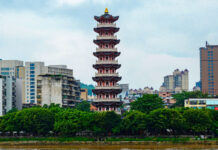
Feilai Temple was first built in 520 AD, during the Liang dynasty, on the mountainside above the gorge, when Emperor Wu himself inscribed its original name; a separate temple was later built down by the riverbank during the Song dynasty specifically to make the site easier for worshippers to reach.
飞来寺始建于公元五二零年,即南朝梁代,最初建于峡谷之上的山腰间,梁武帝曾亲自题写寺名;后至宋代,又在江边另建一座寺院,专为方便香客前来参拜之用。
Disasters have forced repeated reconstruction ever since, most severely after catastrophic flooding struck the site in May 1997; the temple standing beside the Bei River today is accordingly a much later structure than the name’s ancient origins might suggest.
此后天灾不断,寺院屡毁屡建,其中一九九七年五月的一场特大洪水造成的破坏尤为严重;因此,如今矗立在北江之畔的这座寺院,实际建成年代要比其古老的名号所暗示的晚得多。

According to local tradition, Bodhidharma once preached at a rock formation within the gorge still known today as Bodhidharma Preaching Rock, and Huineng is said to have stopped at the same temple centuries later while travelling from Guangzhou to Caoxi’s Baolin Temple, an episode now commemorated with a Sixth Patriarch Hall among the temple’s shrines.
据当地传说,菩提达摩曾在峡谷内一处岩石上讲经说法,这处岩石至今仍被称为”达摩谈经石”;数百年后,惠能由广州前往曹溪宝林寺途中,相传也曾在同一座寺院驻足,如今寺内的殿堂建筑群中,仍设有一座六祖殿以为纪念这段渊源。
Guangdong’s “Number One Underground River”
广东”地下第一河”
Lianzhou Underground River, 26 kilometres northeast of Lianzhou within Qingyuan’s borders, is promoted locally as Guangdong’s number one underground river, a three-level limestone karst cave whose tourist route runs some 1,860 metres; it was rated a national 5A scenic area in 2011, and its interior holds a temperature of around 18 degrees Celsius year-round.
清远境内、位于连州市东北二十六公里处的连州地下河,当地宣传中称其为”广东地下第一河”,这座喀斯特溶洞分为三层,游览路线全长约一千八百六十米;二零一一年被评为国家5A级旅游景区,洞内常年温度约为摄氏十八度。
Further south, in the lowland districts around the city itself, Qingyuan is known across Guangdong for a rather different local product, Qingyuan chicken, a small local breed traditionally raised free-range and prized for its tender meat; it was designated a national livestock genetic resource protection breed in 2006 and granted geographical-indication protection in 2010.
而在市区周边的低地地区,清远则以另一样截然不同的本地特产闻名全省——清远麻鸡,这是一种本地小型鸡种,传统上以散养方式饲养,以肉质细嫩著称;二零零六年被列为国家级畜禽遗传资源保护品种,并于二零一零年获得地理标志产品保护。
A Population Gap that Runs the Opposite Way to Its Factory-Town Neighbours
一座人口流向与工业城镇邻居恰恰相反的城市
According to the city’s own 2024 economic communiqué, Qingyuan’s GDP reached ¥225.3 billion that year, up 3.8 percent; the permanent population stood at 3.989 million, while the number of residents holding local household registration reached 4.522 million, a gap of more than half a million that makes Qingyuan a striking demographic contrast with the migrant-heavy factory cities elsewhere in the province.
据该市自身发布的二零二四年经济统计公报显示,当年清远市GDP达二千二百五十三点零七亿元,同比增长百分之三点八;常住人口为三百九十八点九万人,而户籍人口则达四百五十二点二万人,二者相差逾五十万人,这与省内其他以外来移民为主的工业城市形成了鲜明对比。
Dongguan, further south in the Pearl River Delta, records more than seven million more permanent residents than registered ones; Qingyuan runs in precisely the opposite direction, its registered population outnumbering the people actually living there.
珠三角更靠南的东莞,常住人口比户籍人口多出逾七百万;清远的情形则恰恰相反,户籍人口反而多于实际居住的常住人口。
Getting to Qingyuan means a high-speed rail journey of under 30 minutes from Guangzhou, or a longer drive north into the mountainous counties where Lianzhou and its underground river sit.
前往清远,可乘坐高铁,从广州出发车程不到三十分钟;若要前往连州及其地下河所在的山区县份,则需继续北上驱车而行。