



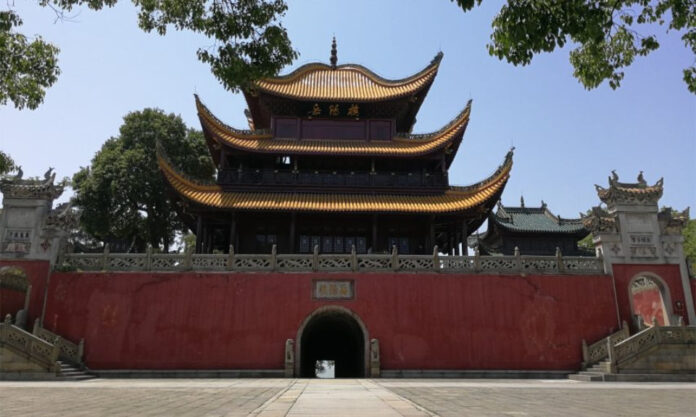



Fan Zhongyan never once stood inside Yueyang Tower before writing the essay about it that every Chinese schoolchild has since memorised, working instead from a single painting his exiled friend mailed him along with a request for a few commemorative words.
范仲淹在写下那篇后来令每个中国学生都能背诵的名篇之前,从未亲身登临过岳阳楼;他所依据的,仅仅是被贬谪的友人寄来的一幅画,以及一封请他题写几句纪念文字的信。
That friend, Teng Zijing, had been demoted to govern Baling Prefecture in 1044 after a corruption scandal, and used a scheme collecting old private debts through the local government to fund the tower’s restoration. Once the work was finished, he sent Fan a painting titled Autumn Evening on Dongting Lake and asked him to compose an inscription; Fan, himself recently exiled after his own reform programme collapsed, wrote the essay from that single image on 15 September 1046.
这位友人滕子京,因贪腐丑闻于一零四四年被贬至巴陵郡任职,他借助官府代为追讨民间旧债的方式筹集资金,重修了这座楼阁。工程竣工后,他寄给范仲淹一幅题为《洞庭秋晚图》的画作,并请其题写纪念文字;而范仲淹本人,当时也因主导的改革方案失败而遭贬谪,便据这幅画,于一零四六年九月十五日写下了这篇文章。
According to the Song dynasty scholar Wang Bishi’s own account of the episode, neither man’s political fortunes appear in the essay itself; instead it closes with the line still quoted across China today, to worry before the world worries and rejoice only after the world rejoices.
据宋代学者王辟之对此事的记述,文中并未直接提及二人的政治遭遇;取而代之的,是那句至今仍在全中国广为传诵的名句——”先天下之忧而忧,后天下之乐而乐”。
A River that Gave China Its Dragon Boats
一条为中国带来龙舟的河流
Fifty kilometres east of the tower, the poet Qu Yuan is said to have drowned himself in the Miluo River in 278 BC, in protest at the Qin conquest of his home state of Chu; local people reportedly paddled out afterward beating drums and throwing rice into the water to keep fish from his body, customs that became the dragon boat races and rice dumplings of today’s Duanwu festival.
在岳阳楼以东五十公里处,相传诗人屈原于公元前二七八年投汨罗江自尽,以抗议秦国攻灭其祖国楚国;当地百姓闻讯后划船出江,击鼓投米入水,以防鱼虾侵扰其遗体,这些习俗后来演变为如今端午节的赛龙舟与吃粽子传统。
Some historians note that dragon boat races and rice-dumpling customs likely predate Qu Yuan’s death by centuries, and that his story was folded onto an older midsummer festival rather than the other way around; Miluo nonetheless remains widely regarded as the festival’s spiritual home.
部分历史学者指出,赛龙舟与包粽子的习俗,很可能早在屈原去世前数百年便已存在,他的故事更可能是后来被附会到一个更古老的仲夏节日之上,而非节日源于他的故事;尽管如此,汨罗至今仍被普遍视为这一节日的精神发源地。
A Port City that Outgrew Both Its Legends
一座早已超越自身传说的港口城市
According to the city’s own 2024 economic communiqué, Yueyang’s GDP reached ¥512.8 billion that year, up 4.9 percent, with per capita output at ¥102,770; the permanent population stood at 4.9875 million, continuing a gradual decline recorded since 2021.
据该市自身发布的二零二四年经济统计公报显示,当年岳阳市GDP达五千一百二十七点六六亿元,同比增长百分之四点九,人均产值为十万二千七百七十元;常住人口为四百九十八点七五万人,自二零二一年以来持续缓慢下降。
Chenglingji Port, where the Yangtze meets Dongting Lake, handled 75,400 standard containers in January alone in a recent year, up 17.3 percent on the same month before, making it one of the busier inland river ports feeding trade along the Yangtze corridor.
长江与洞庭湖交汇处的城陵矶港,近年某一年仅一月份就完成集装箱吞吐量七点五四万标箱,同比增长百分之十七点三,是长江沿线贸易走廊中较为繁忙的内河港口之一。
Getting to Yueyang means a high-speed rail journey of around 40 minutes from Changsha, on a line that continues north to Wuhan, or a direct route along the Beijing-Guangzhou corridor that has run through the city for well over a century.
前往岳阳,可乘坐高铁,从长沙出发车程约四十分钟,该线路继续向北可通往武汉;也可经由贯穿此地已逾百年的京广铁路干线直达。
Visitors now climb the same three storeys Fan Zhongyan described entirely from a painting, reading his best-known line carved into a screen inside, in a building the essay’s own author never once set foot in.
如今,游客们攀登的,正是范仲淹当年仅凭一幅画作便描绘出的那三层楼阁;楼内屏风上镌刻着他那句最为人熟知的名句,而这位作者本人,却从未踏足过这座建筑分毫。