






Ever heard that Nanjing is commonly known as one of the “three furnaces” of China?
听说过南京被称为中国的“三炉”之一吗?
Ever heard others say, “No, China has five furnaces; not just Nanjing, Wuhan and Chongqing, but also Xi’an and Changsha”. Still there are others who claim Nanjing is but one of seven furnaces.
有没有听过别人说:“不,中国有五个炉子;不仅有南京、武汉和重庆,还有西安和长沙”。 仍然有人声称南京只是七炉之一。
It’s a bit like that with dynasties. Most will remember not long after arriving in Nanjing being told our city has been capital of 10 dynasties.
王朝有点像那样。 到达南京后不久,大多数人都会记得,被告知我们的城市是10个王朝的首都。
Or is it six? Seems no one can make up their mind. Even China Daily is confused, saying that Nanjing is, “Known as the Capital City of Six or Ten Dynasties in China’s history”.
还是六点? 似乎没有人能下定决心。 甚至《中国日报》也感到困惑,称南京是“中国历史上被称为六代或十代的首都”。
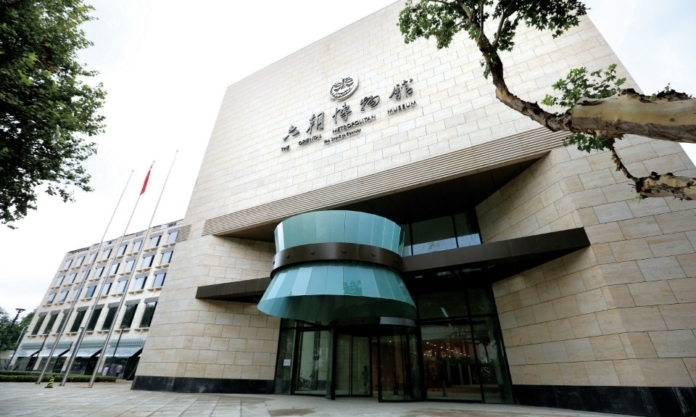
Some go looking for answers in Nanjing’s “Six Dynasties Museum”. Wait a minute, that’s what the sign says outside in Chinese. Its English accompaniment, however, is “The Oriental Metropolitan Museum; The 3rd-6th Century”. Go figure.
有些人去南京的“六朝博物馆”寻找答案。 等一下,这就是外面的中文标志。 然而,它的英文伴奏是“东方大都会博物馆;3-6世纪”。 去想吧。
Rather than dwell on this dilema, The Nanjinger instead wonders which of these many dynasties would be the greatest of them all? For that answer, we need look up north, to the present-day capital of Beijing.
南京人没有纠结于这个二难的问题,而是想知道这些王朝中哪个王朝是最伟大的? 为了得到这个答案,我们需要向北看,看看今天的北京首都。
There of course, we find the marvellous and world-famous Forbidden City. Yet, what not many people outside of Nanjing know, is that the Imperial Palace version 1.0 was actually built right here in Nanjing with Zhongshan Dong Lu running through its centre. The old Ming Palace of Nanjing was the blueprint for the later construction of the emperor’s splendid home in the Northern Capital. That, obviously, should be our focus.
当然,在那里,我们发现了奇妙而世界著名的紫禁城。 然而,南京以外没有多少人知道的是,皇宫1.0版实际上是在南京这里建造的,中山东路穿过其中心。 南京的旧明宫是后来在北方首都建造皇帝华丽的家园的蓝图。 顯然,那应该是我们的重点。
The Ming Palace was constructed in the 14th century but sadly did not survive numerous clashes with history, falling victim to destruction and gradual dismantling.
明宫建于14世纪,但不幸的是,在与历史的多次冲突中没有幸存下来,成为破坏和逐渐拆除的受害者。
In 1367 CE, the future founder and first emperor of the Ming Dynasty, Zhu Yuanzhang, initiated the construction of the magnificent palace to coincide with his appointment of Nanjing as the capital of Ming China. In 1368, only a year later, construction was completed, and Zhu became the self-proclaimed ruler of the Ming kingdom, to be known as Emperor Hongwu.
公元1367年,未来的明朝创始人和第一任皇帝朱元璋开始建造宏伟的宫殿,以配合他任命南京为明朝中国首都。 1368年,仅仅一年后,建设完成,朱成为自称明朝的统治者,被称为洪武帝。
In 1373 and 1392, Hongwu commissioned extensive refurbishment and expansion of the palace in order to preserve its imperial splendor. However, the steady decline of the palace began after the death of the Hongwu emperor. His grandson ascended the throne but immediately fell victim to the machinations of his uncle, Zhu Di, who felt he was the rightful heir to the throne. Upon his entering Nanjing, the imperial palace was torched and the charred body of what was presumed the Emperor was recovered.
1373年和1392年,洪武委托对宫殿进行大规模翻新和扩建,以保留其帝国的辉煌。 然而,红武皇帝去世后,宫殿的稳步衰落开始了。 他的孙子登上了王位,但立即成为他叔叔朱迪的阴谋的牺牲品,朱迪认为自己是王位的合法继承人。 当他进入南京时,皇宫被烧毁,被推测为皇帝的烧焦的尸体被找到了。
After Zhu’s seizing of the throne as the Emperor Yongle, he decided to move the capital to Beijing in 1421, for strategic purposes relating to the threat of a Mongolian invasion. While Nanjing still remained the reserve capital of the country, its loss of status resulted in neglect of the city and its architecture.
在朱永乐皇帝夺取王位后,他决定在1421年将首都迁至北京,以应对蒙古入侵的威胁为战略目的。 虽然南京仍然是该国的储备首都,但其地位的丧失导致城市及其建筑被忽视。
A series of fires destroyed parts of the palace during the 15th century, such as in 1449, when the three main halls of the Outer Court (the ceremonial seat of government) burned down. Due to disinterest in the former Imperial Palace, the parts of the palace that had been consumed by the fire were never rebuilt.
在15世纪,一系列火灾摧毁了宫殿的部分地区,例如在1449年,外院(政府的礼仪所在地)的三个主厅被烧毁。 由于对前皇宫不感兴趣,被大火烧毁的宫殿部分从未重建。
For a very brief moment from 1644 to 1645, the Imperial Palace once again became the home of an Emperor, the Emperor Hongguang, who proclaimed the Southern Ming Dynasty in a futile attempt to resist the rise of the Qing Dynasty.
从1644年到1645年,在很短的一瞬间,皇宫再次成为皇帝洪光皇帝的家,洪光皇帝宣布南明,徒劳地试图抵抗清朝的崛起。
While Hongguang spent some of the little time he had as a ruler on rebuilding the already decrepid palace, his attempts were in vain as the Qing army reached the interim capital in 1645, bringing with them the Manchu army of the “Eight Banners”.
虽然洪光花了他作为统治者的少量时间重建本已破旧的宫殿,但随着清朝军队于1645年抵达临时首都,带来了“八旗”的满族军队,他的尝试是徒劳的。
In the following years, the palace was gradually demolished by the Manchu, with any material that could be transported being removed to be used in the construction and decoration of other buildings. During the second half of the 17th century the former grand palace, which had housed a number of regents, became uninhabitable; its mere ruins remaining.
在随后的几年里,宫殿逐渐被满族人拆除,任何可以运输的材料都被拆除,用于其他建筑的建造和装饰。 在17世纪下半叶,曾经居住过许多摄政的前大皇宫变得无法居住;它只剩下废墟。
Those parts of the palace not stripped bare under the Manchus later fell victim to the Taiping Rebels, who used every stick and stone they could find in the ruins for the construction of their headquarters; the Presidential Palace. Ironically, the Ming Palace layout model can today be viewed in the very same building that caused the final demise of one of Nanjing’s and China’s historically most important buildings.
宫殿的那些在满族人手下没有剥光的部分后来成为太平叛军的受害者,他们用他们在废墟中能找到的所有棍子和石头来建造他们的总部;总统府。 具有讽刺意味的是,明宫的布局模型今天可以在导致南京和中国历史上最重要的建筑之一最终消亡的同一栋建筑中看到。
The Nanjinger therefore proclaims the Ming Dynasty to be tops among the six or 10. Not only did it provide the blueprint for the Forbidden City, it also saw the construction of our rather splendid Nanjing City Wall, the longest in the world. And that’s another pretty big piece of proof.
因此,南京人宣称明朝是六大或十大中的佼佼者。 它不仅为故宫提供了蓝图,还见证了我们相当宏伟的南京城墙的建设,是世界上最长的城墙。 这是另一个相当大的证据。