







Zhang Wulang, the Meishan hunting god still worshipped in temples around Loudi, is depicted standing on his hands, upside down, the only deity in the entire Chinese pantheon shown that way; a legacy, locals say, of the Meishan Man who resisted imperial rule here for centuries.
娄底一带的庙宇中,至今仍供奉着梅山文化中的狩猎神张五郎,其塑像双手撑地、倒立而立,是整个中国神灵谱系中独一无二的倒立神像;当地人说,这正是”梅山蛮”曾在此长期抗拒朝廷统治的历史遗痕。
That territory, known to imperial administrators simply as Meishan, remained largely outside direct government control until the Song dynasty, when it was finally brought under the rule of Shaoyang Commandery; the Lengshuijiang area in particular kept the old designation long afterwards. Local legend goes further still, claiming Loudi as the birthplace of Chiyou, the mythical tribal leader and god of war, and crediting him with forging the region’s first metal weapons.
这片地域,在历代朝廷的行政记载中一直被简单地称作”梅山”,直至宋代才真正纳入邵州的管辖范围;其中冷水江一带,此后仍长期沿用”梅山”这一旧称。当地传说更进一步,称娄底是上古部落首领、传说中的”战神”蚩尤的诞生地,并将此地最早的金属兵器铸造归功于他。
According to Hunan’s provincial statistics bureau, Loudi’s permanent population stood at 3.7277 million at the end of 2024, with GDP reaching ¥213.163 billion, up 5.4 percent on the previous year and the fourth-fastest growth rate of any prefecture in the province; per capita output came to ¥57,064.
据湖南省统计局公布的数据显示,截至二零二四年底,娄底市常住人口为三百七十二点七七万人,GDP达二千一百三十一点六三亿元,同比增长百分之五点四,增速位居全省第四;人均地区生产总值为五万七千零六十四元。

The Mine that Poisoned a Hillside and then Rebuilt It
一座曾令山体中毒、后又将其复原的矿山
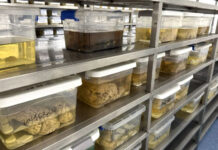
Xikuangshan, near Lengshuijiang in the south of the prefecture, holds the largest known antimony deposit in the world, first mined for what were thought to be tin ores at the end of the Ming dynasty, in around 1591; the ore was not correctly identified as antimony until 1896, and China’s first antimony smelting plant opened on the site the following year. According to China Daily, nearly 2 million metric tonnes of antimony metal have been produced there over the past century, accounting for roughly a third of the country’s total output.
冷水江附近的锡矿山,是世界上已知储量最大的锑矿床;明代末年,约一五九一年,人们最初以为此处所产为锡矿,直至一八九六年才确认其真身为锑矿,次年,中国第一座锑冶炼厂便在此建成。据《中国日报》报道,过去一个世纪间,该矿累计产出锑金属近二百万吨,约占全国总产量的三分之一。
Decades of intensive mining stripped the surrounding hills bare and coated them in toxic slag, according to residents who lived through it; the site has since been rehabilitated closely enough that it was showcased as an ecological restoration case at the UN Convention on Biological Diversity’s COP15 meeting in Kunming in 2021, and drew more than 20,000 tourists during a single Labour Day holiday in recent years.
据亲历者回忆,数十年高强度开采曾令周边山体寸草不生、遍布有毒尾渣;此后这片矿区经过修复治理,成效显著,二零二一年在昆明举行的联合国《生物多样性公约》第十五次缔约方大会(COP15)上,被作为生态修复的典型案例向世界展示,近年更曾在单个五一假期内吸引游客逾两万人次。
Terraces that Have Never Needed a Single Reservoir
一片从未修建过一座水库的梯田
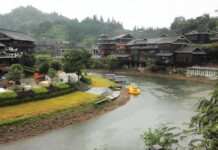
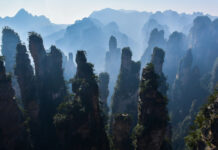
Ziquejie, in the west of Xinhua county, holds terraced rice fields cut into the hillsides over roughly 2,000 years, entirely without the reservoirs or major irrigation channels that similar terraces elsewhere depend on; farmers instead rely on natural spring water rising through the mountain’s own rock strata, channelled downhill field by field.
新化县西部的紫鹊界,梯田依山势开凿,历经约两千年之久,却从未依赖其他同类梯田常见的水库或大型灌溉渠道;当地农民依靠的,是山体岩层中自然涌出的泉水,顺势逐级引流至各层稻田之中。
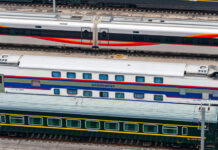
Getting to Loudi means passing through one of Hunan’s busiest rail junctions; the Hunan-Guizhou railway and the Shanghai-Kunming high-speed line cross here on an east-west axis, while the Luoyang-Zhanjiang line and a dedicated Loudi-Shaoyang railway run north to south. Loudi Xinhua Airport, some 110 kilometres from downtown Loudi in Xinhua county, opened to scheduled flights in 2024, giving the prefecture its first commercial air link.
前往娄底,通常要途经湖南最繁忙的铁路枢纽之一;沪昆高速铁路与湘黔铁路在此呈东西向交汇,而洛湛铁路与专门修建的娄邵铁路,则呈南北向贯穿全境。距市区约一百一十公里、位于新化县境内的娄底新化机场,已于二零二四年开通定期航班,这也是娄底首次拥有商业航空运输通道。
The temples that still house Zhang Wulang’s upside-down likeness sit largely undisturbed by any of this traffic; the god of hunting keeps his place on his hands, in villages the railways and the airport mostly pass by rather than through.
至今仍供奉着张五郎那尊倒立塑像的庙宇,大多不受这些交通往来的打扰;这位狩猎之神依旧倒立守望着乡间村落,而铁路与机场,大多只是从这些村落一侧掠过,而非穿村而过。