


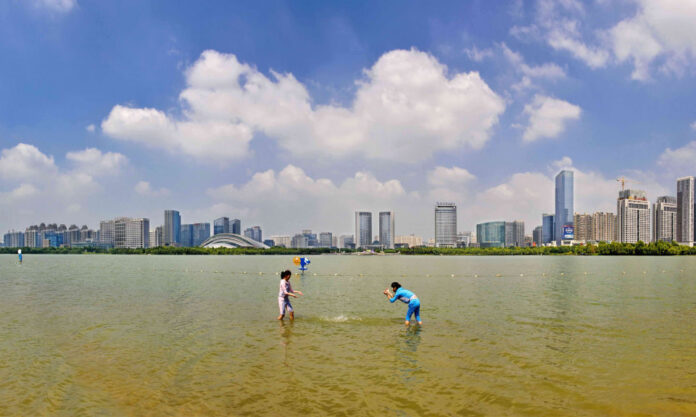
Set beside one of China’s great freshwater lakes, yet increasingly known for chips, cars and quantum dreams, Hefei is the sort of city that has spent just enough time being underestimated to turn reinvention into a civic habit there today. Long in the shadows of not-so-distant Nanjing, Hefei has truly now come of age.
坐落在中国最大淡水湖之一旁边的合肥,如今却越来越因芯片、汽车与量子梦想而被人提起。这是一座曾长期被低估的城市,也正因此,它把自我更新变成了一种城市习惯,甚至像一种日常本能。
For centuries, Hefei was better known as a strategic place than a glamorous one. Its older name, Luzhou, still hangs in the air, while its position between the Huai and Yangtze river systems made it important to armies, officials and traders long before it became fashionable to speak of innovation corridors.
几个世纪以来,合肥更出名的不是风雅,而是分量。它的旧称庐州至今仍有余韵,而它处在淮河与长江两大水系之间的地理位置,也让这里在成为“创新之城”之前,早已是兵家、官员与商旅都看重的地方。
That old heft still shows. Hefei is one of the places most closely tied to the stories of the Three Kingdoms, while the city also claims Bao Zheng, the incorruptible Song Dynasty official better known as Bao Gong. If one wants a gentler Hefei, there is also Sanhe Ancient Town, where the pace drops and the water does some of the talking.
这种历史重量至今仍在。合肥与三国故事关系极深,而这座城市也以包拯,也就是人们熟知的包公,为傲。若想看另一面的合肥,则还有三河古镇,水慢下来,日子也跟着慢下来。
Culture here has never been only about monuments. Lu Opera, born of the wider Luzhou cultural world, carries the earthy sound of central Anhui, while the city’s character still feels like a meeting point between north and south. Hefei can be blunt, but it also knows how to charm when it chooses.
这里的文化从来不只靠古迹支撑。诞生于更广义庐州文化圈的庐剧,带着皖中土地特有的烟火气,而整座城市的气质,也始终像南北相逢之地。合肥可以很直接,但真要温柔起来,也并不费力。
According to Chinese-language city profiles and current local reference material, the modern turn in Hefei’s story came when it grew from provincial capital into a science city with national ambition. The arrival of the University of Science and Technology of China, together with major Chinese Academy of Sciences institutes, helped give the place a sharper mind and a longer horizon.
根据中文城市资料与本地最新参考信息,合肥现代故事的转折点,在于它从省会城市一步步长成了一座有国家级雄心的科学之城。中国科学技术大学的到来,再加上中国科学院相关院所的布局,让这座城市有了更锋利的脑子,也有了更长远的眼光。
That intellectual weight now feeds directly into the economy. Hefei has become one of inland China’s most talked-about manufacturing success stories, with new energy vehicles, integrated circuits, new display technology, artificial intelligence, household appliances and biomedicine all jostling for room. BOE helped put the city on the map for displays; JAC and NIO did the same for cars; iFlytek gave it a voice in AI.
这种知识分量,如今已直接转化为经济力量。合肥已成为中国内陆最受关注的制造业成功样本之一,新能源汽车、集成电路、新型显示、人工智能、家电与生物医药等产业彼此簇拥。京东方让合肥在显示产业中被全国看见;江汽和蔚来让它在汽车赛道上更有存在感;科大讯飞则让它在人工智能领域发出了自己的声音。
What makes Hefei especially interesting, however, is that it has not tried to become Shanghai. It has instead become more Hefei. The city’s style has been to back big industries hard, take risks on new sectors and build an identity around laboratories, factory floors and applied science rather than skyline vanity.
更有意思的是,合肥并没有试图把自己变成上海。它只是把自己变得更像合肥。这里的发展方式,是重押重点产业,敢在新赛道上下注,把城市身份更多建立在实验室、生产线与应用科学之上,而不是建立在天际线上。
Its international links follow that same logic. Hefei may not flaunt global pedigree as loudly as some coastal rivals, but its supply chains, research ties and export industries are deeply outward-looking. Foreign firms have long found their way into the city’s industrial orbit, while Hefei’s science community has made the name travel well beyond Anhui.
它的国际联系也遵循同样的逻辑。合肥或许不像一些沿海城市那样高调展示“国际范”,但它的供应链、科研合作与出口产业早已向外延伸。外资企业长期参与这座城市的产业版图,而合肥的科研圈,也早已让这座城市的名字走出安徽。
Recent years have brought the sort of growth that changes daily life as much as balance sheets. The metro network has kept spreading, Hefei Xinqiao International Airport continues to expand and the city’s rail role is only getting bigger. The Shanghai-Nanjing-Hefei high-speed railway under construction promises to pull Hefei even tighter into the Yangtze River Delta, while new airport rail connections should make the city feel less inland in every practical sense.
近些年的建设,则更多改变了普通人的日常。地铁网络不断延伸,合肥新桥国际机场持续扩容,铁路枢纽地位也越来越重。正在建设中的沪宁合高铁,将把合肥更紧地拉入长三角,而通往机场的新轨道交通,也会让这座内陆城市在实际意义上变得更近。
Still, perhaps Hefei’s real trick is psychological. It remains a city that many outsiders think they already understand, right up until they arrive. Then they find not a grey administrative capital, but a place where old battlefields, honest magistrates, lakefront leisure, research institutes and electric cars somehow fit together without too much fuss.
但合肥真正高明的地方,也许还是心理层面的。很多外地人以为自己早就懂它,直到真正来到这里,才发现这里并不是一座灰扑扑的省会城市,而是一处能把古战场、包公、湖边闲适、科研机构与电动车都装进同一张城市脸谱里的地方。
So that great freshwater lake still matters, not only for environmentalists. It softens the city, even as Hefei charges ahead on science and industry.
所以,开头那片湖依然重要。它让这座城市在加速奔跑时,仍保留一点柔和。
Hefei is served by Hefei Xinqiao International Airport, is about 2 hours by high-speed train from Shanghai and about 4 hours from Beijing.
合肥由合肥新桥国际机场服务,乘高铁到上海约2小时,到北京约4小时。