






Government planners closed Shaanxi’s centuries-old Fu brick tea factory in 1958, ruling its supply chain too inefficient for a tea already being produced successfully in Yiyang’s Anhua county since 1953, and handed the entire industry to Hunan for good.
一九五八年,政府主管部门以供应链效率低下为由,关停了陕西泾阳那座历史悠久的茯砖茶厂;而此时,湖南益阳安化早在一九五三年便已试制成功同类茶品,于是整个产业就此彻底转交湖南。
That which makes the tea worth an entire relocated industry is a fungus, Eurotium cristatum, deliberately grown inside each pressed brick during a fermentation stage timed to the hottest days of summer; without it turning the tea’s characteristic golden-yellow, the brick is considered a failure. For centuries, nomadic communities across Xinjiang, Tibet and Mongolia relied on this tea, transported in 36-kilogramme logs by mule caravan along the Tea Horse Road, as one of their only sources of vitamins in diets otherwise heavy on meat and dairy.
而让整个产业不惜异地重建、也要保住的,正是一种真菌——冠突散囊菌;它在发酵阶段被特意培育进每一块压制成型的茶砖之中,发酵时间则专门选在一年中最炎热的伏天。若茶砖未能因此长出标志性的金黄色斑点,便被视为次品。数百年间,新疆、西藏与蒙古的游牧民族,全靠骡马商队沿茶马古道驮运的三十六公斤茶砖,作为肉食与乳制品之外几乎唯一的维生素来源。
According to microbiologists who sampled ninety batches of the tea at different production stages, the fungus does not simply survive the fermentation; it actively drives it, converting bitterness into sweetness as it spreads through the compressed leaves over one to twenty days of bloom.
据对这种茶叶不同生产阶段共九十份样本进行取样研究的微生物学家介绍,这种真菌并非只是在发酵过程中存活下来,而是主动推动了整个发酵进程;在长达一至二十天的”发花”期间,它在压制成块的茶叶中不断蔓延,将苦涩转化为回甘。
A Lake that Keeps Failing Its Own Water Test
一片持续未能通过自身水质检测的湖泊
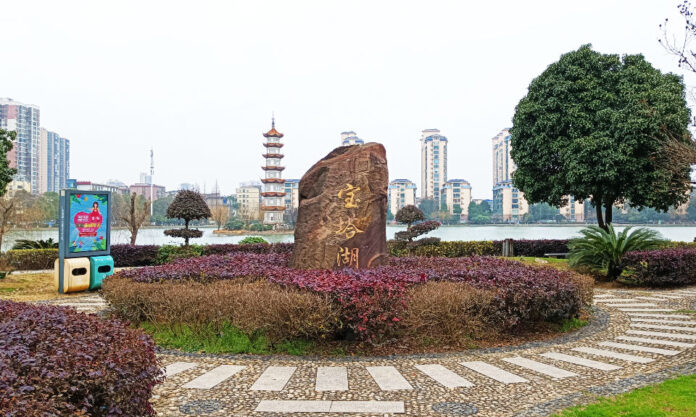
Datong Lake, part of the wider Dongting Lake wetland system that borders Yiyang to the north, has held Grade IV water quality, the second-lowest of China’s five-tier scale, for five consecutive years running, even as the nearby South Dongting Lake section has maintained the higher Grade III over the same period.
大通湖是紧邻益阳北部的洞庭湖湿地系统的一部分,已连续五年维持四类水质,这是中国五级水质标准中倒数第二的等级;而与此同时,相邻的南洞庭湖水域,同期却一直保持着更高的三类水质。
According to the city’s own 2024 economic communiqué, Yiyang’s permanent population stood at 3.7352 million at the end of that year, down 24,000 on the year before; GDP reached ¥226.8 billion, up 4.7 percent, with per capita output at ¥60,530.
据该市自身发布的二零二四年经济统计公报显示,截至当年底,益阳市常住人口为三百七十三点五二万人,较上年减少两点四万人;GDP达二千二百六十八点一八亿元,同比增长百分之四点七,人均产值为六万零五百三十元。
Getting to Yiyang means relying almost entirely on road and rail rather than air; the city has no airport of its own, and travellers typically fly into Changsha’s Huanghua International Airport before completing the roughly hour-long journey by expressway or intercity train.
前往益阳,几乎完全依赖公路与铁路,而非航空运输;这座城市本身并无机场,旅客通常需先飞抵长沙黄花国际机场,再转乘高速公路或城际列车,车程约一小时即可抵达。
Warehouses in Anhua still stack Fu brick tea by the thousand, waiting for the same golden fungus to bloom through each one before it can be sold, exactly as it has since the industry arrived here from a shuttered factory nearly seven decades ago.
安化的仓库中,至今仍层层码放着成千上万块茯砖茶,等待着同一种金色真菌在每一块茶砖中”发花”,唯有如此方可出售;近七十年前,这一产业自那座停产的茶厂迁至此地以来,情形便一直如此。