



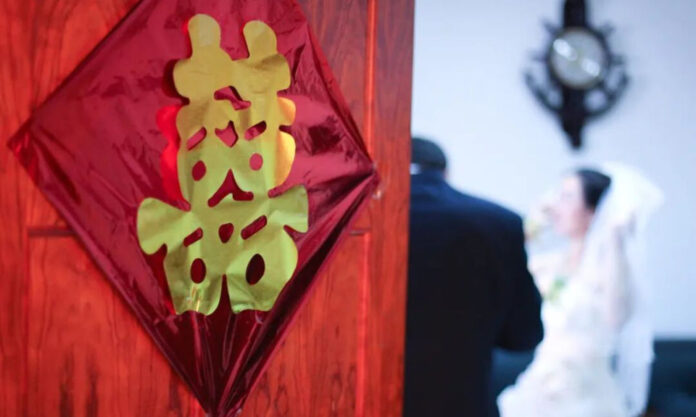



Susu has sold wedding banquets at one of the biggest hotels in her small town in northern China for a decade, and every year the run-up to China’s National Day holiday was her busiest season. This year, only two of the eight-day break’s dates were booked, and nothing has moved since.
苏苏在中国北方一座小县城的酒店做婚礼销售,已经干了十年,往年临近国庆假期,都是她一年中最忙的日子。今年,八天假期里只排满了两天,之后再没有新单。
Weddings used to fill up months in advance at her hotel, sometimes before the Spring Festival rush even ended. This year, dates were still open as Mid-Autumn Festival approached — something Susu says hasn’t happened in seven or eight years.
以前,婚礼档期往往在春节前后就被订满。而今年,眼看中秋将至,档期还空着——苏苏说,这种情况已经七八年没见过了。
Trying to drum up business, Susu taught herself to use AI tools, posting three or four short videos a day made with the app Doubao, animating old wedding photos and adding captions like “happily married.” Some of the captions came out warped; Susu didn’t notice, and no one in the comments pointed it out either.
为了招揽生意,苏苏现学用AI工具,每天在朋友圈发三四条用豆包生成的短视频,让老照片里的人动起来,配上”喜结连理”的字幕。有些字幕生成得歪歪扭扭,苏苏自己没发现,评论区也没人提醒她。
A Hall Built for Weddings, Now Hard to Sell
曾经一席难求,如今婚宴难卖
“No one’s having weddings anymore,” Susu says, describing her own most direct impression. The slowdown ripples through the whole local wedding economy — emcees, photographers, makeup artists, even real estate agents have started asking her if she knows of any couples getting married.
“没人办婚礼了。”这是苏苏最直观的感受。婚庆产业链上下游都感受到了寒意——司仪、摄影师、化妆师,甚至房产中介都跑来问她,有没有认识要结婚的新人。
Her hotel has tried everything: 20 percent off drinks, free wedding planning thrown in. Still, bookings haven’t picked up. The venue, a grand hall that opened in 2011 as the town’s most luxurious address, still carries prestige with the older generation, even if its décor now looks dated.
酒店方也使出了浑身解数:酒水打八折,婚礼策划直接白送,但依然卖不动。这家开业于2011年的酒店,曾是小城里最豪华的地标,如今装潢虽有些老旧,在老一辈人心中仍然是”有面子”的选择。



For years, that kind of sentimental pull was enough to keep the hall full. Now, Susu says, young couples show up with photos from social media, asking for lighting setups and ceiling designs the venue simply can’t replicate — and pushing back when she tells them so.
多年来,这种情怀足以让酒店顾客盈门。但苏苏说,如今的新人拿着社交媒体上的照片来问,能不能做出同样的灯光效果和吊顶造型——听到”做不了”,他们还会反问:”这有什么难的?”
Other weddings have simply shrunk. Banquets that used to run 40 or 50 tables have come down to as few as 20, with couples saying they no longer have enough local friends or relatives they still see regularly to fill the room — bookings the hotel once would have turned down.
有的婚礼规模则直接缩水。过去动辄四十桌、五十桌的婚礼,如今降到了二十桌,新人说自己在老家没那么多朋友,也不想请不常来往的亲戚——这种规模,以前大酒店是不接的。
Are Young People Skipping the Big Banquet?
年轻人真的不办婚礼了吗?
It would be easy to conclude that young people have simply stopped marrying, but the national numbers tell a more complicated story. Marriage registrations actually rose 10.8 percent in 2025, to 6.76 million, after plunging in 2024, before falling 7.5 percent year on year in the first half of 2026. Susu’s hotel bookings, in other words, have collapsed far more sharply than marriage itself has.
“年轻人不结婚了”——这个结论似乎顺理成章,但全国数据呈现出的情况要复杂得多。2025年,全国结婚登记数量在2024年大幅下滑后反而回升了10.8%,达到676万对;到了2026年上半年,又同比下降7.5%。换句话说,苏苏所在酒店婚宴订单的萎缩,远比结婚人数本身的变化更加明显。
Scrolling through her social media feed, Susu still sees plenty of wedding photos and invitations — they’re just increasingly set elsewhere: a grand hotel in the provincial capital, a “wild luxury” camping site on the edge of town, or nowhere at all.
刷朋友圈时,苏苏还是能看到年轻人晒婚纱照、发请柬——只是场地变了:省城的大酒店、县城郊区新开的”野奢露营营地”,或者根本没有实体婚礼。
Her own niece skipped the banquet entirely last year, opting for a “travel wedding” instead — photos taken in western Sichuan, posted to social media, no guests, no hall. A 2025 survey of 1,357 wedding-service consumers found only 41 percent chose a hotel banquet, with 22 percent opting for outdoor lawn weddings and 7 percent for destination weddings.
苏苏的表侄女去年干脆没办婚宴,改成了”旅行结婚”,在川西拍下婚纱照发到朋友圈,没有宾客,也没有婚宴现场。2025年一项针对1357位婚庆消费者的调查显示,只有41%的人选择酒店婚礼,22%选择户外草坪婚礼,7%选择目的地婚礼。



The hotel has kept its hardware reasonably updated over the years, Susu points out. Susu has come to think that what young couples are increasingly rejecting may be the old-style wedding itself — the crowd of half-known relatives and neighbors, the banquet built around elders rather than the couple.
苏苏说,这些年酒店的硬件设施其实一直在更新。她渐渐觉得,年轻人真正想摆脱的,或许是老式婚礼本身:一屋子不太熟络的亲戚邻居,一场以长辈为主角、而非新人自己的宴席。
She still remembers one local legend in particular: a steel-mill owner’s son whose family rented out the entire hotel for three days, feeding and housing every guest, even handing red envelopes to passersby. In the gossip that followed, the bride and groom were never named — only ever “the steel boss’s son and daughter-in-law.”
她还记得一个在当地流传的传说:一个钢材厂老板的儿子结婚,一家人包下整座酒店办了三天三夜,宾客管吃管住,连路过的人都能领到红包。而在那段八卦里,新郎新娘从来没有名字,只被叫作”钢材厂老板的儿子儿媳”。
These days, there are fewer weddings at her hotel — but Susu says the ones that still happen feel warmer, more personal. She remembers one couple who made an animated tribute to their own relationship, ending with the bride walking out in a dress that matched a life-size cartoon drawn from the video.
如今,酒店里的婚礼少了,但苏苏说,留下来的这几场反而更温暖、更私人。她记得有一对新人做了一支纪念片,讲述他们相识相恋的过程,视频结尾,新娘穿着和画中等比例的婚纱走出来。
Susu hasn’t thought about leaving her job. “I wouldn’t know what else to do,” she says. For now, with two young children and no urgent financial pressure, she’s staying put — at least until they’re old enough to go off to college, and she needs to think about it again.
苏苏还没想过离开这份工作。”走了也不知道能干啥。”眼下家里经济压力不算大,两个孩子也占据了她大部分精力,也许等两个孩子长大上了大学,她才会重新考虑这些问题。