



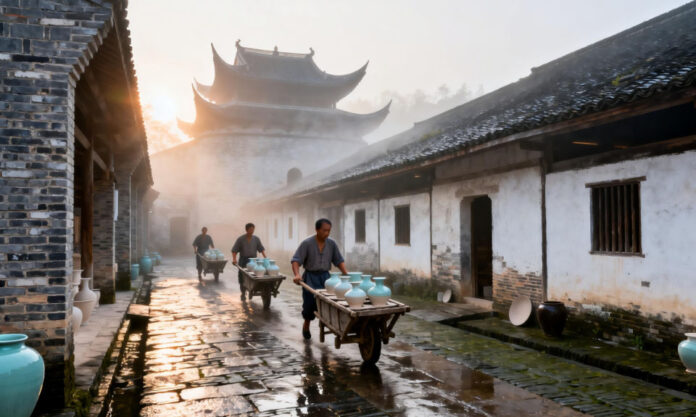



Emperor Zhenzong of the Song dynasty was so impressed by the local porcelain in 1004 that he ordered the town, then called Changnan, renamed after his own reigning era, Jingde, an honour historians describe as rare among Chinese cities.
宋代真宗皇帝于公元一零零四年,因十分赞赏当地所产瓷器,下令将这座原名”昌南”的小镇,以自己的年号”景德”重新命名;史学界认为,这样的殊荣,在中国城市之中实属罕见。
Porcelain fired there ever since has carried the mark “made in the Jingde era”, and the name has stuck for more than a thousand years; from the Ming dynasty onward, the city’s official kilns produced almost exclusively for the imperial court, supplying palaces, temples and the emperor’s own gifts abroad.
自那时起,此地所产瓷器便一直烙有”景德年制”的款识,而这一名称,也就此沿用了逾千年;自明代起,这座城市的官窑几乎完全为宫廷烧制,供应皇家宫殿、庙宇,乃至皇帝馈赠海外的礼品。
According to an academic profile of the city published in the journal Habitat International, it was rare for any Chinese city to be named after an emperor’s reign title at all, making Jingdezhen something of an outlier among the thousands of settlements renamed, merged or abolished over the course of Chinese history.
据学术期刊《Habitat International》发表的一篇关于该市的研究介绍,以帝王年号命名一座城市,在中国历史上本就极为罕见,这使景德镇,在中国历史上历经更名、合并或撤销的成千上万个聚落之中,显得格外特殊。


Nine Thousand Kilns, Destroyed in a Single Rebellion
九千座窑炉,毁于一场战乱
According to Sotheby’s own account of Chinese imperial porcelain, all 9,000 of Jingdezhen’s kilns were destroyed during the Taiping Rebellion in 1855, so central was the city to the Qing court that most were rebuilt once the war ended in 1866, restoring a production base that had, for a time, simply ceased to exist.
据苏富比拍卖行对中国宫廷瓷器历史的介绍,一八五五年太平天国运动期间,景德镇境内的九千座窑炉悉数被毁;正因这座城市对清廷至关重要,一八六六年战事平息后,大部分窑炉得以重建,恢复了这一度彻底中断的生产基地。
A City Refusing to Drop the Word for Town
一座拒绝舍弃”镇”字的城市
Ordinarily, once a town became a prefecture-level city, the word zhen, meaning town, disappeared from its official name, replaced by shi, meaning city; Communist forces took Jingdezhen on 29 April 1949, and the following week, on 4 May, it was formally upgraded, yet Jingdezhen was allowed to keep zhen regardless, an exception made specifically to honour its history.
按惯例,一座城镇升格为地级市后,原有地名中意为”镇”的字通常会被意为”市”的字取代;共产党军队于一九四九年四月二十九日攻占景德镇,一周后的五月四日,该地正式升格,然而景德镇却依旧保留了”镇”字,这一例外,正是特意为了向其历史致敬。
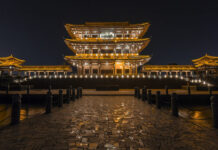
During a visit in 2023, President Xi Jinping told local officials to make the city’s card as the millennium porcelain capital shine even brighter, according to the city’s own statistics bureau; GDP reached ¥117.9 billion in 2024, up 4.1 percent, with a permanent population of 1.618 million, one of the smallest of any prefecture-level city in Jiangxi and one of the most stable, having barely changed in size over the previous three years.
据该市统计局介绍,习近平主席二零二三年考察景德镇时,曾嘱托当地官员要把”千年瓷都”这张名片擦得更加亮丽;二零二四年,该市GDP达一千一百七十九点三亿元,同比增长百分之四点一,常住人口为一百六十一点八万人,是江西省内规模最小的地级市之一,也是人口最为稳定的城市之一,过去三年间几乎未有变化。
Getting to Jingdezhen means a high-speed rail journey of around an hour and a half from Nanchang, on a line serving three stations across the city’s districts, or a flight into Luojia Airport, the city’s sole commercial airfield, some 5.5 kilometres from the centre.
前往景德镇,可乘坐高铁,从南昌出发车程约一个半小时,该线路在市内各区设有三座车站;也可乘飞机抵达距市中心约五点五公里的罗家机场,这是该市唯一一座商用机场。
A thousand years after Emperor Zhenzong lent his reign title to a town called Changnan, kilns across Jingdezhen still fire porcelain bearing his name, and the town he renamed still refuses to stop calling itself one, even after officially becoming a city.
一千年前,真宗皇帝将自己的年号,赐予了那座名叫”昌南”的小镇;千年之后,景德镇的窑炉依旧在烧制刻着他年号的瓷器,而这座他重新命名的小镇,即便早已正式升格为城市,却依旧拒绝不再称自己为”镇”。