






Wei Yuan published a book in 1843 urging China to master Western technology to defeat the West with its own weapons; Chinese officials mostly ignored it, but Japanese readers importing copies 10 years later treated it as a founding text of their own modernisation.
一八四三年,魏源出版了一部著作,主张中国应当掌握西方的技术,以彼之道反制彼身;此书在中国国内大多无人问津,但十年后传入日本的读者,却将其奉为日本自身现代化运动的奠基之作。
The book, Haiguo Tuzhi, coined the phrase that would outlive its author, to learn the superior techniques of the barbarians in order to control the barbarians; Japanese scholars imported it in the early 1850s and read it widely once Commodore Perry’s ships forced the country open, feeding directly into the reforms of the Meiji Restoration.
这部著作《海国图志》,提出了一句流传至今、远比作者本人更为人所知的名言——”师夷之长技以制夷”;日本学者在一八五零年代初将此书引入,并在佩里舰队叩开国门之后广泛研读,这些思想后来直接融入了明治维新的改革之中。
Within four decades, the modernised Japanese navy that emerged from that reform programme defeated Qing China’s own fleet in the First Sino-Japanese War of 1894-95, a war Wei Yuan did not live to see and whose outcome his own book had, in a roundabout way, helped Japan prepare for.
不到四十年后,由这场改革运动催生的现代化日本海军,便在一八九四至九五年的甲午战争中击败了清朝自己的舰队;魏源未能亲眼见证这场战争,而他自己的著作,却以一种迂回的方式,间接助力日本为这场战争做好了准备。


Iron Baoqing and the General Who Saved a Republic
铁打的宝庆,与一位挽救共和的将军
Shaoyang was known for centuries as Baoqing, a walled prefecture ringed by the Zi River and mountain forts thought so difficult to besiege that it earned the nickname Iron Baoqing; the name Shaoyang itself dates back more than 2,500 years to the late Spring and Autumn period.
数个世纪以来,邵阳曾被称为宝庆,城池被资江环绕、四周炮台林立,素以易守难攻著称,因而赢得”铁打的宝庆”之名;而”邵阳”这一名称本身,则可追溯至二千五百多年前的春秋末期。
Cai E, born in what is now Shaoyang’s jurisdiction, led the military uprising in Yunnan that forced Yuan Shikai to abandon his attempt to restore the monarchy in 1915-16, an episode later folklore credited partly to the cover provided by his companion Xiao Fengxian while he evaded surveillance in Beijing.
蔡锷生于今日邵阳辖区之内,他在云南领导的武装起义,迫使袁世凯放弃了一九一五至一六年恢复帝制的图谋;后世民间传说中,还提到他在北京躲避监视期间,得到了红颜知己小凤仙的暗中相助。
A UNESCO Landscape and an Economy Still Losing People
一处世界遗产,与一个人口仍在流失的经济体
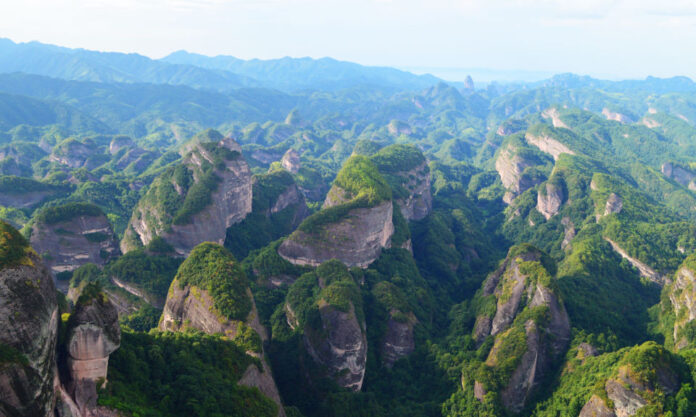
Mount Langshan, in Xinning county, holds some of the most striking Danxia red-sandstone formations in China, recognised by UNESCO as part of the China Danxia World Natural Heritage listing and rated a national AAAAA scenic area.
新宁县境内的崀山,拥有中国最为壮观的丹霞地貌之一,已被联合国教科文组织列入”中国丹霞”世界自然遗产名录,并评为国家5A级旅游景区。
According to the city’s own 2024 economic communiqué, Shaoyang’s GDP reached ¥292.6 billion that year, up 5.1 percent, with per capita output at ¥46,234; the permanent population stood at 6.30 million, down 59,000 on the year before.
据该市自身发布的二零二四年经济统计公报显示,当年邵阳市GDP达二千九百二十六点三亿元,同比增长百分之五点一,人均产值为四万六千二百三十四元;常住人口为六百三十万人,较上年减少五点九万人。
Getting to Shaoyang means a high-speed rail journey of around two hours from Changsha, with a dedicated station under construction in Longhui county as of 2024, or Shaoyang Wugang Airport, which handles domestic routes to most of China’s major cities.
前往邵阳,可乘坐高铁,从长沙出发车程约两小时,截至二零二四年,隆回县境内正在建设一座专门的高铁客运枢纽站;也可经由邵阳武冈机场,该机场开通了通往中国大多数主要城市的国内航线。
Wei Yuan’s former residence still stands in Shaoyang today, a modest wooden building holding almost nothing to suggest that the ideas written inside it once travelled further, and did more damage to China, than anything its author could have intended.
魏源故居至今仍矗立在邵阳,这座朴素的木构建筑内,几乎看不出任何痕迹,能让人联想到当年在此写就的思想,后来传播得如此之远,给中国带来的伤害,又远超其作者本人的初衷。