



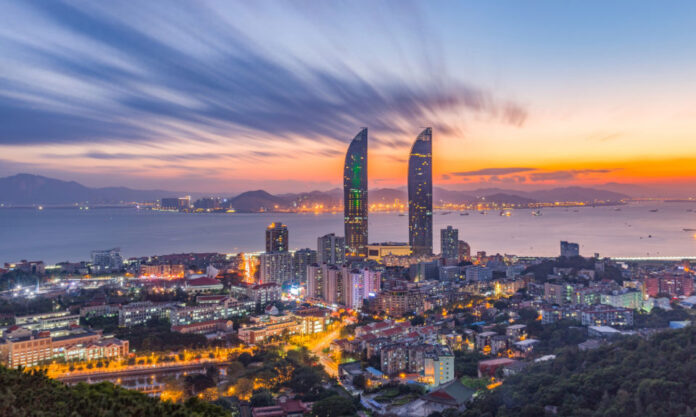



Ferries, not slogans, are what make Xiamen feel like Xiamen. The city wakes with salt on its hands, then spends the day balancing island calm against port noise, polished promenades against crowded lanes and a modern economy against its older habit of looking out to sea. It is rarely spotless, and that is part of the charm.
厦门让人记住的,往往不是口号,而是渡轮。城市一早就带着咸味醒来,接着整天在岛上的安静和港口的喧闹之间来回,在修整过的滨海步道和挤得发热的老街之间来回,也在现代经济和向海而生的旧习惯之间来回。它从来不算“完美”,可这正是它好看的地方。
Xiamen sits on the southeast coast of Fujian Province, facing Kinmen across the strait, and the city still carries the old nickname Egret Island with some ease. The official outline says it has a land area of 1,700.61 square kilometres and a sea area of 390 square kilometres, with six districts and more than five million permanent residents. That is a compact big city, which is one reason it can feel both busy and manageable.
厦门位于福建省东南沿海,与金门隔海相望,旧称“鹭岛”至今还很顺口。官方概况显示,这座城市陆域面积1700.61平方公里,海域面积390平方公里,辖6个区,常住人口超过500万。这是一座“体量不小、轮廓却很紧”的城市,所以它既显得忙,也显得还能握得住。
According to Xiamen’s 2024 statistical bulletin, GDP reached ¥858.9 billion, up 5.5 percent year on year. Services still made up 63 percent of output, and fixed asset investment jumped 40.8 percent. The numbers matter, but they do not tell the whole story. Xiamen is still a port city first, then a place that learned to dress itself up for trade, exhibitions and international business.
厦门市2024年国民经济和社会发展统计公报显示,地区生产总值达到¥8589.01亿元,增长5.5 percent。第三产业占比仍达63 percent,固定资产投资增长40.8 percent。数字当然重要,但还不够说明这座城。厦门首先还是一座港口城市,然后才是一座学会为贸易、会展和国际商务打扮自己的城市。



Gulangyu Keeps The City Slightly Off Balance
鼓浪屿让厦门始终保留一点失衡感
Gulangyu still does the best job of explaining Xiamen to first-time visitors. UNESCO describes it as a tiny island facing the city across a narrow strait, with 931 historical buildings and a rare blend of Southern Fujian, colonial veranda and early modern styles. Yet the island is not all heritage nerves and museum hush. A TripAdvisor reviewer recently called it a “A romantic little island”, while another praised how the wind felt “very gentle”. Those are small remarks, but they catch the place rather well.
鼓浪屿至今仍是最会替厦门说话的地方。联合国教科文组织把它描述为一座与厦门隔着窄窄海峡相望的小岛,岛上有931处历史建筑,混合了闽南传统、廊柱殖民风格和早期现代风格。可这座岛并不只是遗产、秩序和安静。TripAdvisor上一位游客把它叫作“浪浪漫漫的小岛”,另一位则说这里的风“very gentle”。话不大,但很贴切。
Anyone who has taken the ferry out there knows the island has its own pace. Tour groups shuffle past tea rooms and old lanes; cats sprawl where they like; people stop longer than they planned at the edge of a balcony or a railing. It is famous, yes, but it is also a place where a city’s leisure habits become visible, and slightly awkward, in public.
坐船上岛的人都知道,鼓浪屿有自己的节奏。旅行团从茶室和老巷口挤过,猫趴在自己愿意趴的地方,人们会在阳台边、栏杆旁比原计划多停一会儿。它当然有名,但它也把一座城市的休闲习惯摊开给所有人看,难免有点笨拙,却真实。
Numbers, Expos And The Work Behind The Shine
数字、会展与光鲜背后的辛苦
Away from the island, Xiamen works hard at being useful. The city is still one of China’s first special economic zones and still behaves like a place that knows how to sell, show and ship. In 2024, industrial enterprises above a designated size saw added value rise 9 percent, and the city hosted 193 exhibitions and events. It is hard to keep that kind of calendar going by accident.
离开小岛,厦门就开始认真做事。它仍然是中国最早的经济特区之一,也仍然像一座很会卖、很会展示、也很会发货的城市。2024年,规模以上工业增加值增长9 percent,全年举办展会和活动193场。这样的日程,不可能靠运气撑起来。


The city’s official language now leans heavily on the digital economy, the free trade zone and the BRICS innovation base. That may sound polished, but the feeling on the ground is more practical than glamorous. Office towers, port facilities, convention halls and new industrial parks all feed the same ambition; Xiamen wants to keep its old role as a gateway while looking more like a place that makes things happen, not just happen to be beautiful.
厦门官方现在很爱谈数字经济、自贸区和金砖创新基地。这些说法听起来很整齐,但地面的感觉其实更务实,不太华丽。写字楼、港口设施、会展中心和新产业园区都在服务同一个目标;厦门想继续做门户,也想更像一座真正能把事做成的城市,而不只是长得好看的城市。
That is why Zhongshan Road feels so right to walk. It is busy without being brutal, commercial without being soulless, and full of the sort of snacks that make a city feel fed rather than decorated. Shacha noodles, oyster omelettes and peanut soup all sit comfortably beside restored shopfronts and the steady flow of people who know exactly where they are going.
这也是为什么中山路特别适合慢慢走。它忙,但不逼人;商业味很重,却并不空;街边小吃也让这座城市显得“吃得很实在”,不是只靠摆设。沙茶面、海蛎煎和花生汤,和修缮过的骑楼、熟门熟路的人流摆在一起,特别顺。
Transport keeps pulling Xiamen outward. Gaoqi International Airport remains a major regional hub with two terminals, a 3,400-metre runway and links to more than a hundred cities and airports. The Fuzhou-Xiamen high-speed railway has made the coast feel shorter too; the fastest services get from Xiamen to Fuzhou in about 1 hour 46 minutes, and from Xiamen North to Fuzhou in about 1 hour 22 minutes. The city still moves as if it has somewhere to be.
交通也继续把厦门往外推。高崎国际机场至今仍是区域性重要枢纽,拥有两座航站楼、3400米跑道,并联通百余座城市和机场。福厦高铁也把海岸线拉短了;厦门到福州最快约1小时46分,厦门北到福州最快约1小时22分。厦门的移动方式,始终像是它还有下一站。
Xiamen works because it never quite settles on one mood. It can be postcard neat, then suddenly noisy; it can look outward, then become intensely local in the space of one ferry crossing. The opening scene still holds; the city is at its most convincing when the salt is still on it.
厦门之所以成立,是因为它从来不会只停留在一种情绪里。它可以上一秒还像明信片,下一秒就突然吵起来;可以刚刚还在向外看,转眼就在一次轮渡的时间里变得很本地。开头那一幕依然成立:这座城最有说服力的时候,往往是盐味还留在身上的时候。