






China’s People’s Liberation Army, now the world’s largest standing military force with more than two million personnel, traces its founding to an uprising that held Nanchang, its own capital city, for barely three days before being driven out.
中国人民解放军,如今是世界上现役规模最大的常备军事力量,兵力超过二百万人;而它的建军之日,却可追溯至一场仅仅守住南昌这座自己的核心城市三天,便被击退的武装起义。
At 2am on 1 August 1927, some 20,000 troops under Zhou Enlai, He Long, Zhu De and Ye Ting seized Nanchang after more than four hours of fighting, mutinying against the Kuomintang in response to a purge that had already killed an estimated 10,000 communists and leftists across the country. Nationalist forces recaptured the city within days, and the rebels scattered south, but the date stuck; the characters 八一, meaning August 1, still appear on the PLA’s flag and emblem today.
一九二七年八月一日凌晨两点,周恩来、贺龙、朱德、叶挺率领约两万人的部队,经过四个多小时的激战占领南昌,发动了这场针对国民党的武装起义,以回应此前已致全国约一万名共产党人与左翼人士遇害的清党行动。数日之内,国民党军队便夺回了这座城市,起义部队随即向南分散撤离,但这一日期却从此被铭记;”八一”二字,至今仍印在解放军的军旗与军徽之上。
According to Britannica’s account of the episode, the uprising succeeded in holding the city for only a few days, yet it provided the core of troops and organisational method from which the PLA later developed, a defeat that nonetheless became the founding myth of the army that would eventually govern the world’s most populous country.
据《大英百科全书》对这段历史的记述,这场起义虽仅坚守城池数日,却为日后解放军的发展提供了核心兵力与组织方式;这场失败的起义,后来却成为了这支最终执掌全球人口最多国家的军队的建军神话。
A Poet Crashed a Banquet and Wrote Immortality in One Sitting
一位诗人闯入宴席,一挥而就写下不朽
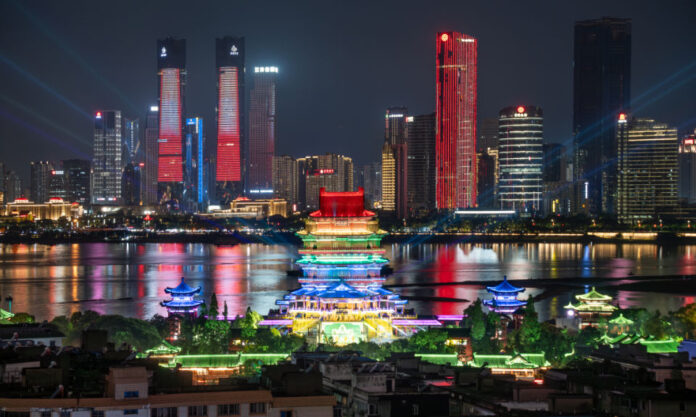
Roughly thirteen centuries earlier, in the autumn of 675, the governor of Nanchang hosted a banquet at the newly restored Pavilion of Prince Teng intending to showcase a pre-written essay by his own son-in-law; a 26-year-old travelling poet named Wang Bo, apparently unaware of the arrangement, volunteered to compose something himself.
大约十三个世纪之前,公元六七五年秋,南昌都督在重修落成的滕王阁设宴,原本打算借此机会,展示自己女婿事先备好的一篇文章;不料一位途经此地、年仅二十六岁的诗人王勃,似乎并不知情,竟自告奋勇当场挥毫。
Wang Bo wrote the Preface to the Pavilion of Prince Teng in one continuous sitting, a piece now regarded as one of the finest works of classical Chinese prose; the governor, initially dismissive, reportedly fell silent with admiration as each new line was read aloud to him. Wang Bo drowned the following year, aged 27, when his boat capsized in a storm off the coast of what is now Vietnam, and the pavilion itself has since been destroyed and rebuilt at least 29 times, most recently in 1989, with his essay outlasting every version of the building it describes.
王勃一气呵成写下《滕王阁序》,这篇文章如今被视为中国古典散文中的巅峰之作;据传,都督起初对此并不以为意,但随着文章一句句被诵读呈报,他渐渐陷入沉默,继而心悦诚服。次年,王勃在渡海前往今越南途中,遭遇风暴,坐船倾覆溺水身亡,年仅二十七岁;而滕王阁此后屡遭毁坏,历经至少二十九次重建,最近一次重建于一九八九年,他的这篇文章,却比这座建筑的每一个版本都更为长久。
A City Growing Faster than Almost Any Other in China
一座人口增速几乎冠绝全国的城市
According to the city’s own 2024 economic communiqué, Nanchang’s permanent population reached 6.6704 million that year, up 102,200 on the year before, a growth rate that ranked first among major Chinese cities nationwide; GDP reached ¥780 billion, up 4.9 percent.
据该市自身发布的二零二四年经济统计公报显示,当年南昌市常住人口达六百六十七点零四万人,较上年增加十点二二万人,人口增速在全国主要城市中位居第一;GDP达七千八百点三七亿元,同比增长百分之四点九。
Getting There Is No Longer the Hard Part
抵达这座城市,早已不再是难事
Getting to Nanchang means flying into Changbei International Airport, some 28 kilometres from the city centre, or taking a high-speed train that connects the city to both Beijing and Guangzhou along the Beijing-Kowloon corridor, a route that runs directly past the site of the 1927 uprising itself.
前往南昌,可选择飞抵距市区约二十八公里的昌北国际机场,也可乘坐沿京九铁路运行的高铁,直达北京或广州;而这条铁路线,恰好途经一九二七年那场起义的发生地。
The command headquarters of the Nanchang Uprising still stands in the city today, a modest building now kept as a museum, a few kilometres from the sixth reconstruction of a pavilion whose most famous line was written by a man who lived barely a year longer to enjoy it.
南昌八一起义指挥部旧址至今仍矗立在城中,如今已辟为一座朴素的纪念馆;距其数公里之外,便是那座历经数次重建的滕王阁,而写下其中最为著名词句的那位诗人,享受这份声名的时间,却不过区区一年有余。