



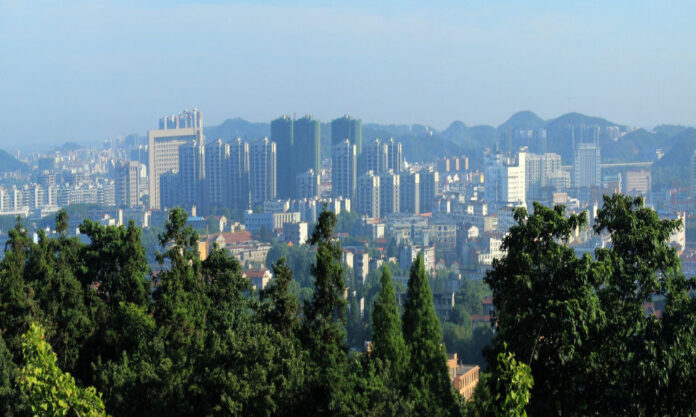



Hubei calls Xianning its “southern gate”, a reference to it being that last stretch of the province before the Yangtze’s south bank opens up to give way to Hunan Province and Jiangxi Province in the southern distance.
湖北人称咸宁为”湖北南大门”,这里是长江南岸进入湖南、江西之前的最后一段。
Administratively, Xianning covers just over 10,000 square kilometres, split between one urban district, four counties and the county-level city of Chibi, with a registered population of around 3.04 million.
咸宁全市面积略超1万平方公里,下辖1个市辖区、4个县,另代管1个县级市赤壁市,户籍人口约304万。
In 2024, the city’s GDP reached ¥194.5 billion, up 6.1 percent on the year, with per capita output of ¥74,665.
2024年,全市地区生产总值达到1944.57亿元,同比增长6.1%,人均地区生产总值74665元。
Forest cover stands at just over 53 percent, enough to earn Xianning the official title of National Forest City.
森林覆盖率超过53%,咸宁也因此获得”国家森林城市”的官方称号。
The Beijing–Guangzhou high-speed line and the separate Wuhan–Xianning intercity railway both put Wuhan under an hour away by rail, alongside the older, slower Beijing–Guangzhou line still running on the same corridor.
京广高铁与另一条武咸城际铁路,都能将咸宁与武汉之间的车程缩短到一小时以内,速度较慢的老京广铁路则仍在同一走廊内运行普速列车。
By road, the city sits on the Beijing–Hong Kong–Macau Expressway, and bridges at Chibi and Jiayu have ended its long history as a Yangtze-side city with no way across the river. There is no operating civil airport within Xianning itself; most travellers fly into Wuhan Tianhe International, around 90 minutes away by road, with a dedicated Xianning airport still at the planning stage.
公路方面,咸宁地处京港澳高速沿线,赤壁长江大桥与嘉鱼长江大桥的建成通车,也结束了这座临江城市长期无桥可过的历史。咸宁本地目前尚无在运营的民用机场,出行者多经武汉天河国际机场中转,车程约90分钟,咸宁本地机场项目仍处于规划阶段。


Water and Blossom
水与花
The hot springs come first in most local accounts. Xianning holds the official title of China’s Hot Spring City, with a dozen or so distinct spring sites across the urban district alone, owed to a fault line running beneath it.
在本地的介绍中,温泉总是排在最前面。咸宁拥有”中国温泉之城”的官方称号,仅市辖区一带就分布着十余处温泉,这是地下断裂带带来的地质巧合。
Local use of the springs predates the tourism now built around them by centuries; today they remain the city’s most-marketed asset.
本地人使用温泉的历史,远早于如今围绕它建立起来的旅游产业;如今温泉仍是这座城市推广力度最大的名片。
Xianning is also China’s recognised home of osmanthus. More than 2,000 osmanthus trees over a century old grow within city limits, upward of 90 percent of the national total for trees that age.
咸宁同时也是中国公认的桂花之乡。全市有百年以上古桂花树2000余株,占全国同类古树的90%以上。
Tea occupies a similar position. Xianning’s Qingzhuan brick tea, a dark tea pressed into bricks at the old trading town of Yangloudong for easier transport, was for centuries a staple of the overland tea routes into Mongolia, Central Asia and Russia, a trade that continues today.
茶叶产业的地位与此类似。咸宁的青砖茶因压制成砖便于长途运输,几百年来一直是经陆路茶道销往中亚和俄罗斯的重要出口商品,这一贸易延续至今。
The Battle of Red Cliff and the Cadre School
赤壁之战与五七干校
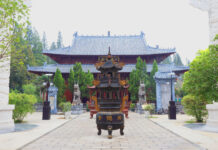
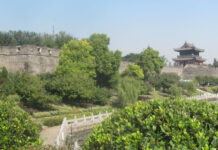
The county-level city of Chibi under Xianning’s jurisdiction was called Puqi for more than a thousand years, from its founding in 223 CE under the Eastern Wu, until 1998, when the city renamed itself Chibi, or “Red Cliff”, after decades of scholarly dispute with Huangzhou, some 200 kilometres downriver, over which town could rightfully claim the site of the famous battle.
咸宁下辖的县级市赤壁,自公元223年东吴设县以来的一千多年间一直名为蒲圻,直到1998年才更名为赤壁。此前,蒲圻与下游约200公里外的黄州,就谁才是那场著名战役的真正发生地,争论了数十年。
Huangzhou’s claim rests on the poet Su Shi, exiled there in the Song dynasty, who wrote his celebrated Red Cliff verses about a riverside cliff he mistook for the battlefield; Puqi’s rests on a rock inscription reading “Red Cliff” on its own riverbank, and on Tang-dynasty gazetteers that place the battle there. Most historians side with Puqi, now Chibi, where in 208 CE the allied forces of Sun Quan and Liu Bei, heavily outnumbered, used fire ships to destroy the fleet of the warlord Cao Cao, ending his campaign to unify China under Han rule and setting the stage for three centuries of division between the Wei, Shu and Wu kingdoms.
黄州的依据是宋代文豪苏轼被贬谪于此期间,将当地一处江边峭壁误认作古战场,写下了著名的赤壁词赋;蒲圻的依据则是本地江岸上刻有”赤壁”二字的摩崖石刻,以及唐代地方志中对战场位置的记载。多数历史学家认同蒲圻(今赤壁市)之说:公元208年,孙权与刘备联军在此以少胜多,用火攻大破曹操水军,终结了曹操统一天下的企图,也由此开启了此后魏、蜀、吴三国鼎立的时代。
More recently, the marshland around Xiangyang Lake in Xianning’s Xian’an district became one of the Ministry of Culture’s “May Seventh Cadre Schools”, to which around 6,000 staff, writers and artists were sent between 1969 and 1974 for manual labour and political re-education. Among those sent to Xiangyang Lake were the writer Bing Xin, the novelist and former antiques scholar Shen Congwen, and the writer and translator Xiao Qian; former residences and a small museum on the site now record that period.
时间线拉近一些,咸宁咸安区向阳湖一带的湖滩地,曾是原文化部的”五七干校”之一,1969年至1974年间,约6000名文化部干部、作家和艺术家被下放至此从事体力劳动、接受政治改造。作家冰心、曾任文物研究工作的作家沈从文,以及作家兼翻译家萧乾,都曾在向阳湖下放期间生活劳动;如今旧址上留有部分名人故居和一座小型纪念馆,记录着那段历史。
Diversified enough today to support 59 identified mineral types alongside tea, citrus and bamboo, Xianning’s economy has grown well past hot springs and tea bricks; tourism, with the springs still its most prominent draw, recorded over 81.5 million visits in 2023.
如今的咸宁经济结构多元,已探明矿种达59种,农业上也不止桂花与茶叶,还包括柑橘、楠竹等产业,早已不再局限于温泉与砖茶;而温泉依然是当地旅游业最突出的招牌,2023年全年接待游客超过8156万人次。