






Never far from the media’s headlines these past few years has been China’s property market and its falling off a cliff. However, much of it was predestined, thanks to a sure-to-fail systemic structure. And all the signs are it’s a real-estate situation about to get worse.
过去几年,中国房地产市场的断崖式下跌一直是媒体的头条新闻。然而,由于注定会失败的系统结构,其中大部分都是注定的。所有迹象都表明房地产形势即将变得更糟。
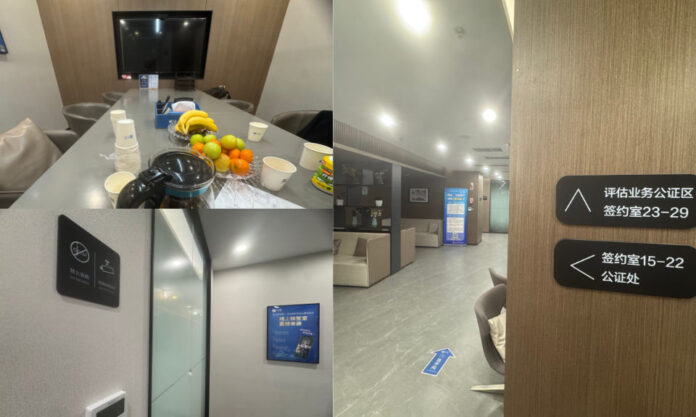
On the 6th floor of IFC in Nanjing’s Xinjiekou is to be found a today somewhat deserted, yet remarkable office. This is the Contract Service & Transaction Service Centre for Beike (贝壳), a transformative force in the Chinese real-estate sector, thanks to a technology-driven platform revolutionising how housing transactions are conducted in China.
在南京新街口国际金融中心的六楼,有一间如今显得有些冷清却又不凡的办公室。这就是贝壳的合同服务与交易服务中心,贝壳是中国房地产行业的一股变革力量,其技术驱动的平台彻底改变了中国住房交易的方式。
Therein, buyers and sellers are kept segregated in two out of a total of 29 negotiation rooms, with the property agents shuttling back and forth to haggle terms, all watched over by the omnipresent surveillance cameras. Had the surrounding colour scheme been a bit more oppressive, it would have frankly been Orwellian.
其中,买家和卖家被隔离在总共 29 间谈判室中的两间,房地产经纪人来回穿梭讨价还价,所有一切都受到无处不在的监控摄像头的监视。如果周围的配色方案更压抑一些,坦率地说,它会是奥威尔式的。
Once upon a time, this place was heaving with buyers and sellers together with their agents, usually until 01:00 every night. Those were the good-old days when everyone made a lot of money. How times have changed.
曾几何时,这个地方挤满了买家、卖家及其代理人,通常每晚一直持续到 01:00。那是每个人都赚了很多钱的美好时光。时代已经变了。


But there are other factors to China’s collapsing property market. In something of a never ending circle, the price plummet has meant that many people have cut back on their spending in general, sparking paranoia and accelerating the decline.
但中国房地产市场的崩溃还有其他因素。在一个永无休止的循环中,价格暴跌意味着许多人总体上削减了支出,引发了偏执并加速了下降。
The trend in fact began as long as 10-15 years ago, as this correspondent attempted to sell a property in Pukou District of Nanjing. With offers not in the ballpark of that expected, when neighbours got wind of the selling price, their displeasure was immediately made clear. My selling of the property was going to push down the value of their dwellings.
这种趋势其实早在10-15年前就开始了,当时记者试图出售南京浦口区的一处房产。由于报价未达到预期,当邻居得知售价时,他们的不满立即表达出来。我出售房产将会压低他们住宅的价值。
Then there is another of the major reasons for the collapse; the unusual situation in China whereby properties are priced solely on a square-metre basis, which varies by location; more expensive near to a good school, etc. But unlike in western countries whereby property owners invest heavily in decoration and innovative features in order to retain or push up value, in China there is no such incentive.
还有一个导致崩溃的主要原因:中国的不寻常情况是,房产仅按平方米定价,且因地点而异;但与西方国家不同的是,在西方国家,业主在装修和创新功能上投入巨资以保持或推高价值,而在中国则没有这样的激励措施。
As such, the bulk of dwellings are usually left to deteriorate. Plaster and paint peeling off cracked walls, often the result of inadequate foundations leading to subsidence; plus leaking roofs and dirty stairwells littered with scrap and clutter, are commonplace.
因此,大部分住宅通常都处于恶化状态。石膏和油漆从开裂的墙壁上剥落,通常是由于地基不牢固导致下沉;再加上屋顶漏水和肮脏的楼梯间散落着废品和杂物,这些都是司空见惯的事。


The fact that, post 1949, buildings in China have tended to last for a far shorter time than their western equivalents, has obviously not helped. The office bought by this correspondent on Dongbao Lu in Nanjing’s Hexi area in 2012, was a decrepit mess by 2017; I personally one day fell a floor and a half in an elevator as it gave way, in part thanks to the property management’s, well, mismanagement.
1949 年后,中国建筑的使用寿命往往比西方同类建筑短得多,这一事实显然无济于事。记者2012年在南京河西区东宝路购买的办公室,到了2017年已经破烂不堪;有一天,我个人在电梯塌陷时从一层半的电梯上摔了下来,部分原因是物业管理的管理不善。
It can therefore be argued that China’s property market is partly collapsing under its own weight of slumminess.
因此可以说,中国的房地产市场在自身低迷的重压下正在部分崩溃。
So yes, today, much has changed; the aforementioned agents told The Nanjinger that they are still up until 01:00 very often, only now a whole lot more effort is required to make a sale, with concessions made at every turn. More shuttling back and forth…
所以,是的,今天,很多事情都发生了变化。上述代理商告诉《南京人》,他们经常熬夜到凌晨1:00,只不过现在需要付出更大的努力,动不动就做出让步。更多来回穿梭……
The situation is all the more concerning when, as a seller close to The Nanjinger explained she was this month in the process of selling a property for a little over ¥2.5 million which she had owned for 10 years.
一位与《南京人》关系密切的卖家解释说,本月她正以略高于 250 万日元的价格出售自己拥有 10 年的房产,情况更加令人担忧。
With the buyer continuing to press for further discounts, the evening and sale closed out hours later with the seller’s concession for a further ¥10,000 off the price.
由于买家继续要求进一步折扣,几个小时后,当晚的促销活动结束了,卖家做出了进一步优惠 10,000 日元的让步。
Put another way, that’s ¥1,000 of debate every year, or ¥2.7 per day, until 01:00 every night.
换句话说,每年辩论费用为 1,000 日元,或者每天 2.7 日元,每晚 01:00 为止。
Tough market? You bet.
市场艰难?你打赌。