






How will we manage to feed a planet with approaching 10 billion people when the majority are under nourished? And what systems can be put in place to somehow perhaps address this? They are good questions. Hence a recent forum in Nanjing.
当大多数人营养不良时,我们如何才能养活一个拥有近 100 亿人口的星球?可以建立哪些系统来以某种方式解决这个问题?这些都是好问题。因此最近在南京举办了一次论坛。
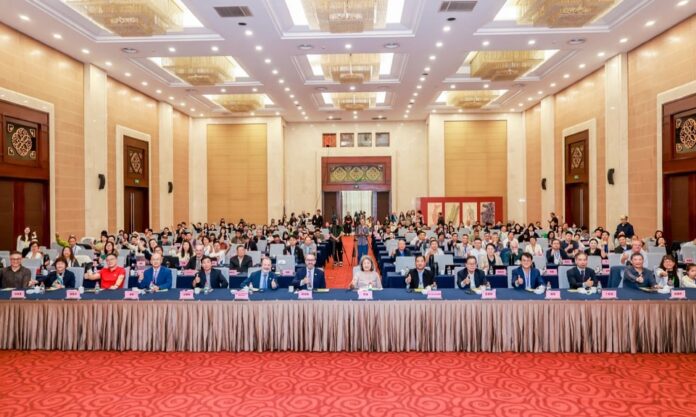
Held in the spacious and lush grounds of the Huadong Hotel next to the Jiangsu provincial government headquarters in Nanjing, the 9th Annual Good food Summit took place from 15-17 October, with the theme of “Embracing Frontier Science with Eastern Dietary Wisdom”.
第九届好食峰会于10月15日至17日在南京江苏省政府总部旁的华东宾馆宽敞葱郁的场地举行,主题为“以东方饮食智慧拥抱前沿科学”。
At the heart of the issue is even if a global-energy transition away from fossil fuels occurs, food systems will cause the world to breach the Paris Climate agreement.
问题的核心是,即使全球能源从化石燃料转向,粮食系统也会导致世界违反巴黎气候协议。
That’s problem A. Problem B is that a Planetary Healthy Diet (PHD) needs to be available, affordable, convenient, aspirational, appealing and delicious.
这就是问题 A。问题 B 是行星健康饮食 (PHD) 必须是可用的、负担得起的、方便的、令人向往的、有吸引力的和美味的。



Shedding light on this possible food-systems transformation was the highlight of the Summit, namely recommendations from the EAT–Lancet Commission which could lead to a less resource and labour-intensive food system able to supply a healthy diet to 9·6 billion people, with modest impacts on average food costs.
阐明这种可能的粮食系统转型是本次峰会的亮点,即 EAT-Lancet 委员会的建议,这些建议可能会导致资源和劳动力密集型的粮食系统减少,从而能够为 9·60 亿人提供健康的饮食,同时对平均粮食成本影响不大。
However, such a transformation would have profound implications for what, how, and where food is produced, and for the people involved in these processes. For example, as a part of this restructuring, some sectors would need to contract (a 33 percent reduction in ruminant meat production) and others would need to expand (a 63 percent increase in fruit, vegetable, and nut production) compared with 2020 levels.
然而,这样的转变将对粮食的生产内容、方式和地点以及参与这些过程的人们产生深远的影响。例如,作为此次重组的一部分,与 2020 年的水平相比,一些行业需要收缩(反刍动物肉类产量减少 33%),而其他行业则需要扩张(水果、蔬菜和坚果产量增加 63%)。
But it will come at a cost. Substantial financial resources, estimated between US$200 billion and 500 billion per year, shall be needed to support the transformation to such healthy and sustainable-food systems.
但这是有代价的。预计每年需要 2000 亿至 5000 亿美元的大量财政资源来支持向此类健康和可持续粮食系统的转型。
The recommendations also call for the eliminating of support for polluting practices or for foods, the over production of which drives poor health.
这些建议还呼吁消除对污染行为或食品的支持,因为食品的过度生产会导致健康状况不佳。



Appearing during the summit were representatives from progressive good-food initiatives such as the United Nations, World Health Organisation and the Global Food Banking Network, while The Nanjinger was also among the media, including others such as Southern Weekend, invited to field questions to some of the experts present.
出席峰会的有联合国、世界卫生组织、全球粮食银行网络等先进美食倡议组织的代表,《南京人》等媒体也受邀向与会的部分专家进行提问。
But it was the reality of what a PHD would look like that hit hardest, putting the 3-day summit in to perspective.
但最受打击的是博士学位的现实,这让我们重新审视为期三天的峰会。
The recommendations, for example, call for red meat to only be consumed as an 80–100 gram serving once a week or as small amounts in mixed dishes or soups, as is customary in many Asian recipes. As a reference point, 200 grams is a common weight for a steak.
例如,这些建议要求红肉只能每周食用一次,每次 80-100 克,或者在混合菜肴或汤中少量食用,这是许多亚洲食谱中的惯例。作为参考,200 克是牛排的常见重量。
It’s a sobering thought. But there can be little doubt that a fundamental shift in what we eat and how much it we consume is on the horizon. Only one question remains; can the change come quickly enough for global catastrophe to be averted?
这是一个发人深省的想法。但毫无疑问,我们的饮食和消费量即将发生根本性转变。只剩下一个问题了:这种变化能否来得足够快,以避免全球灾难?