



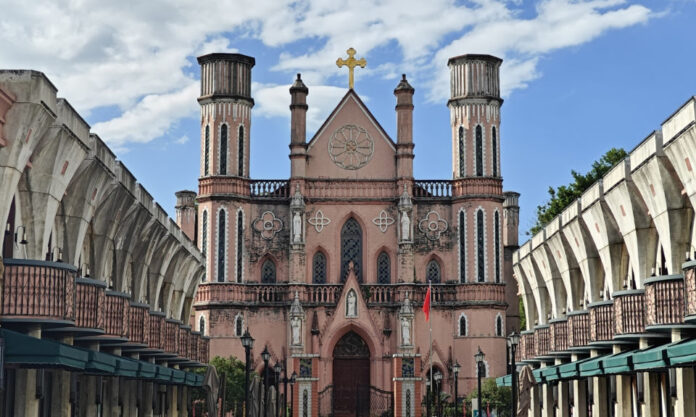



Chinese sources tracking the imperial examination system estimate that roughly 100,000 jinshi degrees, the highest a scholar could earn, were awarded across the entire history of the exam; nearly 3,000 of them came from Fuzhou alone, a single prefecture in what is now Jiangxi.
据追溯中国科举制度的相关资料估算,历代科举考试中,取得”进士”这一最高功名者约十万人;其中近三千人,均出自抚州这一片地域。
Fuzhou shares its English spelling with Fujian’s much larger provincial capital, though the two names are entirely unrelated in Chinese; Fujian’s capital is written 福州, Fú Zhōu, meaning fortune prefecture, spoken in the second tone, while Jiangxi’s Fuzhou is written 抚州, Fǔ Zhōu, meaning to comfort or pacify prefecture, spoken in the third tone. Drop the tone marks, as most airline bookings, shipping labels and casual romanisations do, and both collapse into the same six letters.
抚州与规模大得多的福建省会,在英文拼写上完全一致,尽管这两个名字在中文里毫无关联;福建省会写作”福州”,意为”福气之州”,声调为第二声,而江西的”抚州”,则意为”安抚之州”,声调为第三声。一旦省去声调符号——航空订票、快递单据以及日常罗马拼音书写中通常都会如此——这两个字便会归并成同样的六个英文字母。
Even Wikipedia’s own English-language articles reflect the confusion at an institutional level, routinely appending a parenthetical, Fuzhou, Jiangxi, to distinguish the smaller city from its far more famous coastal namesake in every article title that concerns it.
就连维基百科自身的英文条目,也在制度层面反映出这种混淆;每当涉及这座较小城市的词条,标题中通常都要加上”Fuzhou, Jiangxi”这样的括注,以便与其更为知名的沿海同名城市相区分。



Wang Anshi, the Song dynasty chancellor whose sweeping economic reforms reshaped 11th-century China, and Zeng Gong, ranked among the Eight Great Prose Masters of the Tang and Song dynasties, were both born in what is now Fuzhou; the philosopher Lu Jiuyuan, founder of a major school of Neo-Confucian thought, and the father-son poets Yan Shu and Yan Jidao came from the same prefecture.
宋代宰相王安石——其大刀阔斧的经济改革重塑了十一世纪的中国——以及位列”唐宋八大家”之一的曾巩,均出生于今日的抚州;创立心学一派的哲学家陆九渊,以及词人晏殊、晏几道父子,也均出自这片土地。
The Playwright Who Died the Same Year as Shakespeare
与莎士比亚同年逝世的剧作家
Tang Xianzu, born in Fuzhou in 1550, wrote The Peony Pavilion and three other plays now collectively known as the Four Dreams of Linchuan; he died in 1616, the same year as William Shakespeare, a coincidence Chinese scholars have compared in academic literature since at least the 1930s.
出生于抚州的汤显祖,一五五零年生人,创作了《牡丹亭》以及其他三部戏剧,合称”临川四梦”;他于一六一六年逝世,与莎士比亚同年,这一巧合早在二十世纪三十年代便已被中国学者在学术著作中提及并加以比较。
In 2017, Fuzhou’s municipal government donated a pair of statues showing Tang Xianzu and Shakespeare standing shoulder to shoulder to Stratford-upon-Avon, Shakespeare’s own hometown, a gesture that now sits at the opposite end of the same coincidence that keeps confusing the city’s own name with that of Fujian’s capital.
二零一七年,抚州市政府向莎士比亚的故乡英国斯特拉福德镇,捐赠了一座汤显祖与莎士比亚并肩而立的雕像;这一举动,恰与这座城市自身名字与福建省会长期被混淆的巧合,构成了同一枚硬币的两面。


An Economy Smaller than Its Literary Reputation Suggests
一个经济体量与其文化声誉并不相称的城市
According to the city’s own 2024 economic communiqué, Fuzhou’s GDP reached ¥217.3 billion that year, up 5.9 percent, with per capita output at ¥61,236; the permanent population stood at 3.5348 million, down 27,800 on the year before.
据该市自身发布的二零二四年经济统计公报显示,当年抚州市GDP达二千一百七十三点零八亿元,同比增长百分之五点九,人均产值为六万一千二百三十六元;常住人口为三百五十三点四八万人,较上年减少二点七八万人。
Getting to Fuzhou means a high-speed rail journey of around 30 minutes from Nanchang, on the Xiangtang-Putian line, or a longer connection south towards Fujian’s own Fuzhou, a journey that takes considerably more effort than the two cities’ shared English name would suggest.
前往抚州,可乘坐高铁,经由向莆铁路,从南昌出发车程约三十分钟;若要前往南边福建的那座同名”福州”,则需要更长的转乘时间,远比这两座城市共用的英文名称所暗示的那般便捷。
Nearly 3,000 scholars once carried the name of this prefecture into the imperial examination halls of Beijing, at a time when nobody there would have confused it with the coastal city sharing its name today.
曾几何时,近三千名学子怀揣着这片土地的名字,走进北京的科举考场;而在那个年代,绝不会有人将它与如今这座同名的沿海城市混为一谈。