



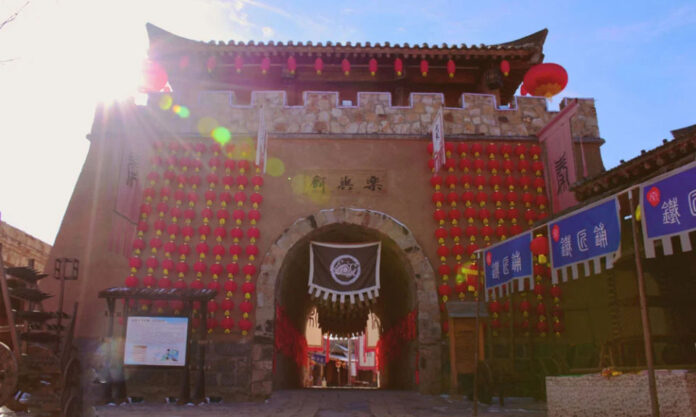



Tongchuan was once called the city that satellites could not see. Coal, cement and aluminium put so much dust in the air that a news report described it that way in 1993. By the end of 2017, nearly half the city was covered by forest.
铜川曾被叫作“卫星上看不见的城市”。煤炭、水泥和电解铝让空气里满是粉尘,一九九三年,一篇新闻报道就是这样形容它的。到二〇一七年底,全市近一半的土地已被森林覆盖。
Its other fire has burned for a thousand years.
它的另一团火,已经烧了一千年。
That fire belongs to the Yaozhou kilns at Huangbao, less than 100 kilometres from the Tang capital, Chang’an. They began in the Tang and reached their peak under the Northern Song.
那团火属于黄堡的耀州窑,离唐都长安不到一百公里。耀州窑始烧于唐,到北宋时达到鼎盛。
The Kilns of Yaozhou
耀州的窑
Potters there created a “sky-blue” glaze in the Five Dynasties period that influenced the Song imperial kilns, Xinhua’s Sun Zhenghao reported. The Northern Song wares were praised as “skilled as cast metal, fine as carved jade”, and the kilns went on firing through the Yuan, Ming and Qing.
据新华社记者孙正好报道,五代时期,这里的窑工烧出了“天青釉”,影响了后来宋代的官窑。北宋耀州瓷有“巧如范金、精比琢玉”之誉;此后,窑火历经元、明、清,一直延续下来。
Excavations since the 1950s have covered 20,000 square metres, Sun writes, uncovering more than 200 workshops, 200 kilns and over three million pieces and shards. The site was named one of China’s 100 major archaeological discoveries of the 20th century.
孙正好写道,二十世纪五十年代以来,考古发掘面积达两万平方米,发现作坊两百多处、窑炉两百座,出土瓷器标本和残片三百多万件。耀州窑遗址被评为二十世纪中国百项考古大发现之一。
The Monk and the Medicine King
高僧与药王
Two famous men belong to Tongchuan’s hills. Xuanzang, the monk who brought Buddhist scriptures back from India, moved to Yuhua Temple in 659, translated scriptures there and died in 664, according to the National Museum of China. The temple had been an early Tang imperial summer palace, and in a little over four years there he translated 14 works in 682 fascicles, the Shaanxi Provincial Cultural Heritage Administration says.
铜川的山里,有两位名人。据中国国家博物馆介绍,从印度取回佛经的玄奘于公元六五九年移居玉华寺,在那里译经,直至六六四年圆寂。陕西省文物局称,玉华寺原是唐初的皇家避暑离宫;玄奘在这里的四年多时间里,译出佛经十四部、六百八十二卷。
The other is Sun Simiao, the “King of Medicine”, from Huayuan, in today’s Yaozhou District. China News Service reported that his Qianjin Yaofang is regarded as China’s earliest clinical encyclopaedia. Claims about his age range from 101 to 165; the New Tang History says only that he lived past a hundred.
另一位是华原人孙思邈,人称“药王”;华原就在今天的耀州区。中新社报道,他的《千金要方》被视为中国最早的临床百科全书。关于他的寿数,说法从一百零一岁到一百六十五岁不等;《新唐书》只说他“年百余岁”。
From Black Dust to Green
从黑尘到绿色
The coal came later. Tongchuan was built on what Economic Reference called “one black and two whites”: coal, cement and electrolytic aluminium. In the 12th Five-Year Plan period it closed 21 coal mines and cut 10.58 million tonnes of outdated capacity, more than a third of Shaanxi’s total, the paper reported in 2018.
煤是后来的事。据《经济参考报》报道,铜川靠“一黑二白”起家,即煤炭、水泥和电解铝。该报二〇一八年报道,“十二五”期间,铜川关闭煤矿二十一处,淘汰落后产能一千零五十八万吨,占全省三分之一以上。
The economy grew 6.1 percent in 2025 to ¥60.72 billion, according to the city’s statistical bulletin, with services accounting for nearly 60 percent of output. The year-end population was 703,600.
据铜川市二〇二五年统计公报,全市生产总值六百零七亿一千五百万元,增长百分之六点一;第三产业占生产总值的近六成。年末常住人口七十万三千六百人。
Getting there is now quick. The Xi’an–Yan’an high-speed railway, opened on 26 December 2025, serves Tongchuan and Tongchuan North, with the fastest trains reaching Tongchuan station from Xi’an North in 27 minutes, Xinhua reported. Flights use Xi’an Xianyang International Airport.
如今到铜川很快。新华社报道,二〇二五年十二月二十六日开通的西延高铁设有铜川站和铜川北站,从西安北到铜川站最快只要二十七分钟。坐飞机要去西安咸阳国际机场。
The dust has largely settled. The kiln fire, Sun writes, has passed down the generations since the Song, and in a thousand years it has not gone out.
粉尘已大多散去。孙正好写道,窑火自宋代代代相传,千年不息。