



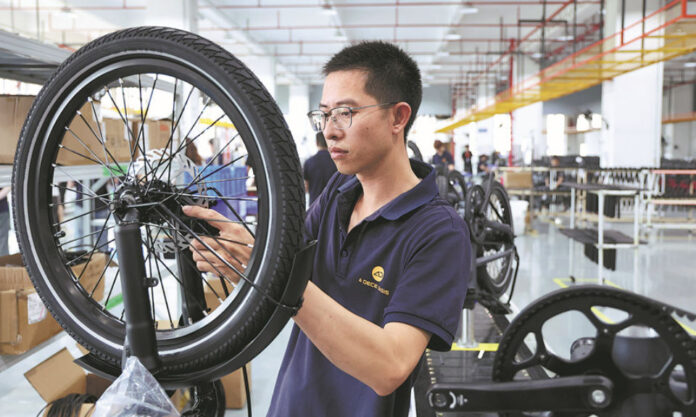



China’s e-bikes are turning up in bike lanes far from home, quietly reshaping how people get around cities abroad. Manufacturers there exported 26.7 million electric two-wheelers worth $6.829 billion in 2025, with e-bikes driving much of that growth.
中国的电动自行车正悄然出现在远离本土的自行车道上,改变着海外城市的出行方式。2025年,中国制造商出口了2670万辆电动两轮车,总价值达68.29亿美元,其中电动自行车是增长的主力。
Walk along the canals of Amsterdam, through the streets of Munich, or on the greenways of Portland, Oregon, and the bikes are hard to miss. China was once known as the “bicycle kingdom,” when bikes were the most common way for residents to get around.
漫步在阿姆斯特丹的运河边、慕尼黑的街道上,或是美国俄勒冈州波特兰的绿道上,这些自行车随处可见。中国曾被称为”自行车王国”,那时自行车是国人最常见的出行工具。
Today, according to China Daily, the country is rapidly growing into a global e-bike powerhouse. At the center of that shift is a machine that looks much like an ordinary bicycle but pairs pedals with sensors, a battery, and a quiet motor, turning steep bridges and long commutes into manageable rides.
据《中国日报》报道,如今,中国正迅速成长为全球电动自行车强国。这一转变的核心,是一种外形与普通自行车相差无几的车辆——它将踏板与传感器、电池和静音电机结合起来,让陡坡和长距离通勤都变得轻松许多。
“The best thing about having an electric bike is that you just go past people,” one reviewer of Shenzhen-based brand DYU said in an Instagram video. “Put it on high assist, and it helps with the pedaling. You can take the hills, miss all the crowds.”
深圳品牌DYU的一位测评者在Instagram视频中说:”拥有一辆电动自行车最棒的地方,就是你能轻松超过别人。开启高助力模式,它能帮你蹬车,爬坡不在话下,还能避开拥挤的人群。”
More Than a Battery
不只是加了块电池
For many riders, the appeal goes beyond convenience. Studies show e-bikes encourage more people to cycle regularly, particularly older adults and those with limited mobility or knee pain.
对许多骑行者来说,吸引力不止于便利。研究显示,电动自行车能让更多人愿意经常骑车,尤其是老年人和行动不便、膝盖疼痛的人群。



“This isn’t just a bike with a battery,” said Lu Jinlong, honorary chairman of the Jiangsu Bicycle and Electric Vehicle Association. “It’s a response to how people want to live — healthier, greener and less dependent on cars.”
江苏省自行车电动车行业协会名誉会长陆金龙表示:”这不仅仅是一辆装了电池的自行车,它回应的是人们想要的生活方式——更健康、更环保,也不再那么依赖汽车。”
The market reflects that shift. The number of e-bike brands in the US doubled from about 100 in 2021 to roughly 200 by 2022, with most new entrants being Chinese companies. In Southeast Asia, rising fuel prices and worsening traffic congestion are accelerating demand too.
市场数据印证了这一趋势。美国的电动自行车品牌数量从2021年的约100个,翻倍增长到2022年的约200个,其中大多数新品牌来自中国企业。在东南亚,油价上涨和交通拥堵加剧,也在推动需求增长。
Europe’s e-bike market was worth 15 billion euros ($17.3 billion) in 2024 and is projected to reach 21.2 billion euros by 2029, according to consulting firm Frost & Sullivan. Globally, Fortune Business Insights expects the market to grow from $50.14 billion in 2024 to $148.7 billion by 2032.
据咨询公司弗若斯特沙利文(Frost & Sullivan)数据,欧洲电动自行车市场规模在2024年已达150亿欧元(约合173亿美元),预计到2029年将增至212亿欧元。而据Fortune Business Insights预测,全球市场规模将从2024年的501.4亿美元增长到2032年的1487亿美元。
Chasing the Premium Market
冲击高端市场
While Chinese consumers have largely embraced low-cost electric mopeds for short trips, European cities offer something different: extensive cycling infrastructure, government subsidies and a deeply rooted cycling culture — making the region an ideal testing ground for premium e-bikes.
虽然中国消费者更多选择价格较低的电动两轮车应对短途出行,但欧洲城市的情况截然不同:完善的骑行基础设施、政府补贴,以及根深蒂固的骑行文化,使这里成为高端电动自行车的理想试验场。
That opportunity drew Shenzhen entrepreneur Xiaoling Liang into the European market. In 2021, Liang founded TENWAYS with a simple idea: pairing China’s manufacturing efficiency with European design and software-driven intelligence.
正是这样的机遇,吸引了深圳创业者梁霄凌进军欧洲市场。2021年,梁霄凌创立了TENWAYS,理念很简单:将中国的制造效率与欧洲的设计和软件智能结合起来。


Backed by investors including Hillhouse, Tencent and L Catterton, TENWAYS now sells more than 96 percent of its e-bikes to Europe. Its flagship commuter model has sold more than 50,000 units in just four years.
在高瓴、腾讯和L Catterton等投资方的支持下,TENWAYS如今超过96%的电动自行车销往欧洲。其旗舰通勤车型在短短四年内已售出超过5万辆。
Between 2022 and 2024, TENWAYS became the fastest-growing e-bike brand in Belgium, the Netherlands and Luxembourg, capturing 5.9 percent of the urban commuting segment. Its bikes retail for between 1,299 and 4,999 euros, firmly in the premium market.
2022年至2024年间,TENWAYS成为比利时、荷兰和卢森堡增长最快的电动自行车品牌,在城市通勤细分市场的占有率达到5.9%。其车型零售价在1299至4999欧元之间,牢牢占据高端市场。
Behind that premium branding lies one of China’s major competitive advantages — its manufacturing ecosystem. Industrial clusters across the Pearl River and Yangtze River deltas manufacture almost every major component, from frames and motors to batteries and control systems, allowing companies to shorten development cycles while keeping costs under control.
支撑起这种高端品牌形象的,是中国的一大竞争优势——完整的制造业生态。珠三角和长三角的产业集群几乎能生产所有关键零部件,从车架、电机到电池和控制系统一应俱全,让企业得以缩短研发周期、控制成本。
In November, Pedego was acquired by an investor group associated with Chinese e-bike maker Urtopia, bringing the US heritage brand into a new partnership built around Urtopia’s engineering and supply-chain operations. For Chinese firms, the challenge is no longer proving they can build premium e-bikes, but sustaining innovation in a market where design and brand recognition matter as much as manufacturing scale.
去年11月,美国老牌电动自行车品牌Pedego被与中国电动自行车品牌Urtopia有关联的投资方收购,双方随后在技术研发与供应链等领域展开整合。对中国企业而言,挑战已不再是证明自己能造出高端电动自行车,而是要在一个设计和品牌认知度与制造规模同等重要的市场里,持续保持创新力。