



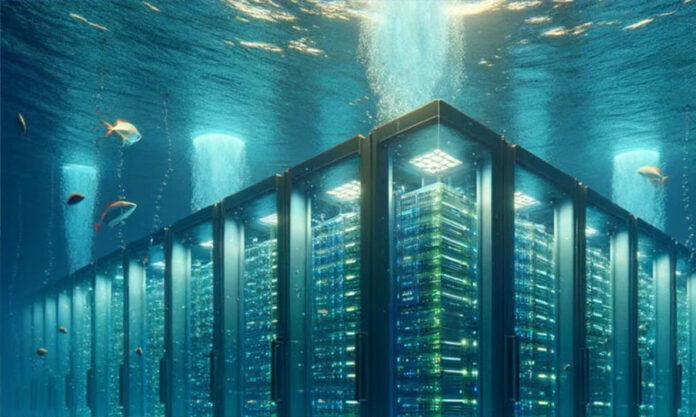



Engineers near Shanghai have lowered a data centre onto the seabed and wired it into an offshore wind farm, working from a simple premise; AI needs far more computing power than land, water and electricity can readily supply.
工程师们在上海附近的海域,把一座数据中心沉入海底,并接入了附近的海上风电场,思路其实很简单;AI所需的算力,远超土地、水和电力所能轻易供给的规模。
China has spent roughly $226 million (about ¥1.6 billion) testing whether the ocean can supply what the land cannot.
中国已经投入约2.26亿美元(约合16亿元人民币),来验证海洋能否补上陆地无法提供的部分。
The facility sits about 10 metres below the surface in Shanghai’s Lin-gang Special Area, drawing power directly from an offshore wind connection. It has a designed capacity of 24MW and houses 192 server racks across four levels; developers say up to 95 percent of that electricity can come from renewable sources, though the figure has yet to be independently verified.
这座设施位于上海临港新片区附近海面以下约10米处,电力由邻近的海上风电场直接供应。项目设计总装机容量为24MW,分四层布置,共192个机架;开发方称最高可有95%的用电来自可再生能源,不过这一数字目前尚未经过第三方核实。



Cooling without the Thirst
不用水来降温
Seawater does the cooling instead of freshwater, which the Lin-gang Special Area’s own website credits with cutting electricity use by 22.8 percent and land use by more than 90 percent compared with a conventional facility. For a country trying to expand AI infrastructure without draining freshwater supplies or eating into scarce urban land, that is a fairly persuasive trade.
海水取代了淡水承担降温任务;据临港新片区官网介绍,与传统设施相比,这能将用电量降低22.8%,土地占用减少90%以上。对于一个既想扩大AI基础设施、又不愿消耗淡水或挤占稀缺城市用地的国家来说,这笔账算得相当划算。
Traditional data centres serving AI workloads are notoriously power-hungry, need constant cooling and tend to require large plots of land in places where land is expensive. Putting the hardware underwater does not remove those demands so much as relocate them, out past the shoreline and into someone else’s jurisdiction of engineering problems.
服务AI业务的传统数据中心一向耗电惊人,需要持续降温,还往往要占用大片本就昂贵的土地。把硬件搬到海底,并没有消除这些需求,只是把它们挪到了岸线之外,交给了另一套工程难题去应对。
A Useful Test, Not a Finished Answer
一个有用的试验,还不是最终答案
None of which makes the underwater model cheap. RCRTech has pointed out that offshore deployment carries a cost premium because the infrastructure must be designed, built and then lowered into the sea rather than simply assembled on site; repairs and routine maintenance are harder still, and corrosion and biofouling are the sort of problems that do not trouble a landlocked server room. This is not a system that can be rolled out overnight, and China has not claimed otherwise.
这并不意味着海底模式便宜。RCRTech指出,海上部署本身就有额外成本,因为基础设施必须先设计、制造,再整体沉入海中,而不能像陆地设施那样直接就地组装;维修和日常维护也更麻烦,腐蚀和生物附着这类问题,是陆地机房完全不用操心的。这不是一套能马上大规模推广的系统,中国方面也没有这么宣称。


Reuters reported this year that regulators in several countries are already restricting new data centre construction because of pressure on power grids, water supplies and land. China’s response has been to keep building, but to shift some of that construction offshore rather than compete for the same scarce inputs everyone else is fighting over.
路透社今年报道,已有多国监管机构因电网、水资源和土地压力,开始限制新数据中心的建设。中国的应对方式是继续建设,但把部分建设转移到海上,避免与其他国家争抢同一批稀缺资源。
Lin-gang has spent several years positioning itself as a computing power hub, and the undersea facility fits neatly into that ambition; it lets Shanghai add AI capacity without putting further strain on the freshwater and land supplies the rest of the city depends on. Whether the economics hold up once the novelty wears off, and whether an underwater server rack can be repaired as reliably as one on dry land, are questions the project has not yet had to answer at scale.
临港新片区多年来一直在打造算力枢纽的定位,这座海底数据中心正好契合这一方向;它让上海能够增加AI算力,而不必进一步挤占城市赖以运转的淡水和土地资源。至于新鲜劲过后这笔经济账能否算得过来,海底机架的维修可靠性能否比得上陆地机房,这些问题目前还没有在大规模应用中得到检验。