






Nanjing South Railway Station perhaps might have never become a reality. And at the heart of the matter was a 3-year-long disagreement between the Ministry of Railways and the Nanjing urban planning authorities.
南京南站可能永远不会成为现实。 事情的核心是铁道部和南京城市规划主管部门之间长达3年的分歧。
It was in December of 1994 that the State Council of China approved a pre-feasibility study for the Beijing-Shanghai high-speed railway. In its line selection, the Ministry proposed a “North Line Plan”, in which the high-speed line would cross the Yangtze River by means of a tunnel in the north of Nanjing at Shangyuan Men.
1994年12月,中国国务院批准了对京沪高速铁路的预可行性研究。 在线路选择中,该部提出了一项“北线计划”,其中高速线将通过南京北部上源门的隧道穿越长江。
Nanjing disagreed. As far back as 1986, the City had already formulated plans to develop southward and decided to build a large-scale station to the south of the downtown area. The City even reserved planning space for the new Nanjing South Railway Station.
南京不同意。 早在1986年,该市就已经制定了向南发展的计划,并决定在市中心以南建造一个大型车站。 该市甚至为新的南京南站预留了规划空间。
But the Ministry maintained its preference for the northern route, arguing it would easier for it to link up with the existing lines. As further support for its position on the matter and wrongly believing the centre of Nanjing to be in the north of the city, the Ministry also cited the fact that railway stations in Nanjing had historically been located in the north.
但该部仍然倾向于北部路线,认为与现有线路连接起来会更容易。 为了进一步支持其对此事的立场,并错误地认为南京市中心位于该市北部,该部还引用了南京火车站历史上位于北部的事实。



Countering that in any city in the country, the effect of railways on driving urban development is very obvious, Nanjing pushed further for its southern plan. And although Nanjing Railway Station has Xuanwu Lake to its the front and the landscape is undeniably beautiful, there was simply no room for expansion.
反驳的是,在全国任何城市,铁路对推动城市发展的影响都非常明显,南京进一步推动了南方的计划。 虽然南京火车站前面有玄武湖,风景不可否认地美丽,但根本没有扩建的余地。
The impasse was to last into the new millennium. But then, in 2001 was issued the “Notice on Reserving Land for the Beijing-Shanghai High-speed Railway”. One side would have to back down.
僵局将持续到新千年。 但随后,在2001年发布了“京沪高铁保留土地通知”。 一方必须退后。
In the face of Nanjing’s persistence, and understanding that the driving force for the development of the southern part of the city was already very strong, the Ministry finally changed its mind and accepted that Nanjing had been right all along.
面对南京的坚持,并认识到城市南部发展的驱动力已经非常强大,该部终于改变了主意,接受了南京一直是正确的。
In a meeting held on 13 June, 2003, between the Ministry and the Nanjing Municipal Government, the Ministry officially abandoned its proposal and accepted Nanjing’s plan for the southern route.
在2003年6月13日,该部与南京市政府举行的一次会议上,该部正式放弃了其提案,并接受了南京的南线计划。
The argument may have been won but many more years of planning were to follow. On 9 January, 2008, Nanjing South Railway Station officially entered the construction phase.
争论可能已经获胜,但随后还有多年的计划。 2008年1月9日,南京南站正式进入建设阶段。
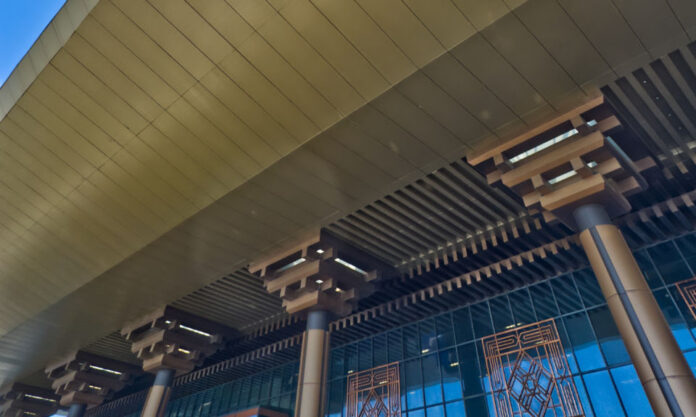
Designed to imitate a Ming Dynasty palace building, Nanjing South Railway Station opened to passengers on 28 June, 2011, at a cost of ¥30 billion.
南京南站设计模仿明朝宫殿建筑,于2011年6月28日向乘客开放,耗资300亿元。