






Fifty grams of red sorghum seed from northern Guizhou flew into space in 2003 as part of a breeding experiment for Moutai. Nearly seven decades earlier, in Zunyi’s old town, a three-day meeting had set the Long March on a new course.
二〇〇三年,五十克产自黔北的红高粱种子飞上太空,参与茅台酒原料的育种试验。早在近七十年前,遵义老城里,一场为期三天的会议改变了长征的走向。
Zunyi’s identity today owes much to both the revolution and the sorghum.
今天的遵义,很大程度上由这两样东西塑造:革命,和高粱。
Zunyi occupies much of northern Guizhou, bordering Chongqing, and had 6.47 million residents at the end of 2025. Maotai town lies in Renhuai, a county-level city within Zunyi, on the banks of the Chishui River.
遵义地处贵州北部,与重庆接壤,二〇二五年末常住人口六百四十七万。茅台镇就在遵义代管的县级市仁怀,坐落于赤水河畔。
A Turning Point by Lamplight
油灯下的转折
The Red Army arrived badly mauled. According to Xinhua, the Central Red Army shrank from more than 86,000 troops at the start of the Long March to just over 30,000 after the Battle of the Xiang River in late 1934. It took Zunyi on 7 January 1935, the Communist Party Member Network records.
红军抵达遵义时已元气大伤。据新华社报道,中央红军从长征出发时的八万六千余人,到一九三四年底湘江战役后锐减至三万余人。据共产党员网记载,红军于一九三五年一月七日占领遵义。
The meeting, held from 15 to 17 January 1935 in a small room that Xinhua describes as lit by an oil lamp, brought Mao Zedong onto the Politburo Standing Committee, the Communist Party Member Network records. Further leadership changes followed in February and March, gradually consolidating his military authority. Xinhua regards the conference as having established Mao’s leading position in the Party and the Red Army.
据共产党员网记载,中共中央政治局扩大会议于一九三五年一月十五日至十七日召开,增选毛泽东为中央政治局常委;新华社描述,会议是在一间被油灯照亮的小屋里举行的。此后的二月和三月,中央又进行了进一步的领导调整,逐步巩固了他的军事指挥地位。新华社认为,遵义会议确立了毛泽东同志在党中央和红军的领导地位。
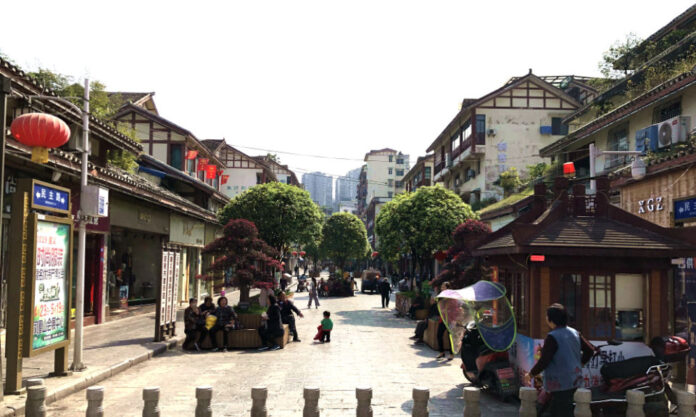
The meeting site, now the heart of the Zunyi Conference Memorial Museum in Honghuagang District, is a grey-and-white two-storey building in the old town, Xinhua notes. Beside it stands an old V-shaped pagoda tree that locals call the “victory tree”.
据新华社介绍,会址位于红花岗区遵义老城,是一幢灰白相间的两层小楼,如今是遵义会议纪念馆的核心。小楼旁有一棵“V”字形老槐树,被人们称为“胜利树”。
The Chishui River ties the two halves of Zunyi’s story together. Between January and March 1935, Xinhua reports, Mao led the Red Army back and forth across it four times to shake off the Nationalist armies. When British Field Marshal Montgomery praised his civil war campaigns during a visit to China in 1960, Mao replied that the four crossings of the Chishui were his real masterstroke, Xinhua recounts. The third crossing was made at the Maotai ferry, where, Zhejiang Online reported in 2016, the distillery and the Four Crossings memorial park face each other across the water.
赤水河串起了遵义的这两段故事。据新华社报道,一九三五年一月至三月,毛泽东指挥红军四次渡过赤水河,甩开了国民党军的围追堵截。新华社还记述,一九六〇年英国陆军元帅蒙哥马利访华时盛赞三大战役,毛泽东却说:“四渡赤水才是我的得意之笔。”三渡赤水正是在茅台渡口;据浙江在线二〇一六年报道,茅台酒厂和四渡赤水纪念园在这里隔河相望。
Seven Distillations and a Trip to Space
七次取酒,一趟太空
Moutai is a baijiu, the family of Chinese distilled spirits, and it is made from sorghum, not rice. Xinhua reports that it uses a local glutinous variety called Hongyingzi, or “red tassel”, grown along the Chishui River in Renhuai, Xishui and Jinsha. The company began breeding its own strains in 1986 and sent 50 grams of seed up on Shenzhou 5 in 2003 for an experiment in space breeding.
茅台是一种白酒,即中国的蒸馏酒,原料是高粱,而非大米。据新华社报道,茅台使用的是一种名为“红缨子”的本地糯高粱,主要种植于茅台镇及周边仁怀、习水、金沙等赤水河沿岸。茅台一九八六年启动高粱育种研究,二〇〇三年让五十克高粱种子搭载神舟五号飞入太空,开展航天育种试验。
The calendar is fixed by the seasons. People’s Daily explains that the fermentation starter, made from wheat, is prepared around the Dragon Boat Festival, when microbes thrive in the heat. The sorghum goes in at the Double Ninth Festival, on the ninth day of the ninth lunar month, when the river runs full and clean. Each brewing cycle involves two additions of grain, nine steamings, eight fermentations and seven distillations, and at least five years pass before a bottle leaves the distillery.
茅台酒的酿造遵循四时节律。据《人民日报》介绍,端午前后气温升高、微生物大量繁殖,正是用小麦制曲的时节;农历九月初九前后,赤水河水量充沛、水质纯净,便开始“重阳下沙”。一个生产周期要经过两次投料、九次蒸煮、八次发酵、七次取酒,从投料到成品出厂至少需要五年。
The returns are vast but no longer assured. Kweichow Moutai’s 2025 annual report recorded total operating revenue of ¥172.05 billion and net profit attributable to shareholders of ¥82.32 billion. Eastmoney notes it was the first time since the company’s 2001 listing that both had fallen. Zunyi felt it. The city government’s work report says GDP grew 4.3 percent in 2025 to ¥520.61 billion, 1.7 points below target, and attributes the shortfall to a downturn in the baijiu industry.
酒业依然创造着巨额收益,但增长已不再理所当然。贵州茅台二〇二五年年报显示,公司实现营业总收入一千七百二十点五四亿元,归母净利润八百二十三点二亿元;东方财富网指出,这是茅台自二〇〇一年上市以来首次营收、净利双双下滑。遵义也感受到了寒意。市政府工作报告显示,二〇二五年全市地区生产总值五千二百零六点一二亿元,增长百分之四点三,比年初目标低一点七个百分点,报告将原因归于白酒产业深度调整。
Renhuai shows how concentrated that output is. According to its statistics bulletin, Renhuai alone generated almost 39 percent of Zunyi’s economic output in 2025, with just over a tenth of its population.
仁怀的数字,足以说明当地经济产出的集中程度。据仁怀市统计公报,二〇二五年仅仁怀一地,就以遵义全市十分之一多一点的人口,创造了全市近百分之三十九的经济总量。
A Fortress and a Chilli Market
古堡与辣椒城
Zunyi’s older history is written in stone at Hailongtun, seat of the Yang clan of Bozhou. They were tusi, hereditary local rulers who governed on behalf of the imperial court. Xinhua reports that the mountain fortress was built in 1257 to hold off the Mongols and destroyed in 1600, when Ming armies besieged the rebel chieftain Yang Yinglong for more than 100 days. According to Wenhui Bao, his fall ended 725 years of Yang rule. The Paper adds that the Yang clan claimed descent from the Yang family generals of Song legend. In 2015, Hailongtun became part of UNESCO’s Tusi Sites, Guizhou’s first cultural World Heritage inscription.
遵义更古老的历史,刻在播州杨氏留下的海龙屯石堡中。杨氏是土司,即代表朝廷世袭治理地方的首领。据新华网报道,这座山地军事堡垒始建于一二五七年,用以抵御蒙古大军,毁于一六〇〇年,当时明军围攻反叛的土司杨应龙一百多天。据《文汇报》介绍,海龙屯陷落结束了杨氏七百二十五年的统治。澎湃新闻补充说,播州杨氏自称是杨家将的后代。二〇一五年,海龙屯作为土司遗址的组成部分被列入《世界遗产名录》,成为贵州首个世界文化遗产。
Its hotter export is the chilli. China National Radio reports that Zunyi grows chillies across more than 2 million mu, about 1,300 square kilometres and a tenth of China’s total, the most of any prefecture-level city. The China Chilli City market in Xiazi town traded 350,000 tonnes worth ¥7 billion in 2024, CPPCC Daily reported, shipping to more than 80 countries and regions.
遵义更火辣的出口品是辣椒。据央广网报道,遵义辣椒常年种植面积稳定在二百万亩以上,约合一千三百平方公里,约占全国十分之一,规模居全国地市级首位。据《人民政协报》报道,虾子镇的中国辣椒城二〇二四年交易量达三十五万吨,交易额七十亿元,产品销往八十余个国家和地区。
Zunyi has two airports, Xinzhou and Maotai, Huxiu notes. By high-speed rail, Zunyi is about 40 minutes from Guiyang North, according to a Sina travel guide.
据虎嗅网介绍,遵义有新舟和茅台两座机场。据新浪旅游指南,从贵阳北站乘高铁约四十分钟可到遵义。
In Zunyi’s old town, the V-shaped tree still stands beside the house where the Long March changed course. Along the Chishui River, each autumn brings another batch of red sorghum to the steamers.
遵义老城里,那棵“V”字形老槐树依旧伫立在见证长征转折的小楼旁。赤水河畔,每逢秋天,又一批红高粱被送上蒸甑。