



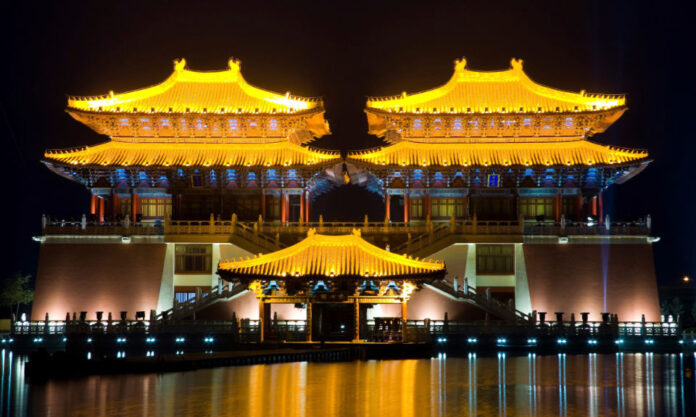



Kaifeng has the odd habit of making history feel casual. It has been a capital, a river city, a place buried and re-exposed by the Yellow River, and a city that keeps rebuilding itself without making a speech about it.
开封有种奇怪的本事,能把历史说得很平常。它做过都城,做过河城,也经历过黄河带来的掩埋和重现,还一次次重建自己,却不怎么张扬。
So when you stand near the old center, the feeling is not really grandeur. It is something closer to continuity, with a little dust on it. The names are old, the streets are used, and nothing looks as if it has been placed behind glass for admiration.
你站在老城一带,感到的并不是那种端着架子的宏大,而是一种更实在的延续,带着一点灰尘。名字很老,街道还在用,谁也没有把它摆进玻璃柜里供人瞻仰。
The obvious monuments are obvious for a reason. The Iron Pagoda stands there with a kind of weathered calm, and Longting is not just a formal landmark, but a place where the city comes to breathe. Walk a little further and Kaifeng stops sounding like a chapter heading. It becomes smaller, softer, and more human, with scooter bells, steamed buns, and people trying to get home before dark.
那些著名景点之所以著名,是有原因的。铁塔就那么站着,带着一点风吹日晒后的平静;龙亭也不只是个规整的名胜,它其实还是一处让城市透口气的地方。再往前走一点,开封就不再像书里的章节标题了。它会变得更小、更软,也更有人味,街上有电动车铃声、蒸包子的热气,还有急着在天黑前回家的人。
Peonies, Noodles, and the Habit of Staying out Late
牡丹、面条和一座城爱熬夜的习惯
In spring, the peonies arrive and Kaifeng is perfectly willing to let people make a fuss about them. But the city does not live on flowers alone. It lives on appetite, and on the ordinary rhythm of eating, walking, looking around, and eating again. A bowl of soup dumplings, a night market near the old streets, a bench beside the water, a family lingering after dinner, a child clutching something sweet from a stall, these things explain Kaifeng better than any tidy slogan.
春天一到,牡丹来了,开封也很乐意让人们为它热闹一场。但这座城并不是靠花过日子的。它靠的是胃口,也靠吃饭、走路、四下张望、再去吃一顿的日常节奏。一笼灌汤包,老街附近的夜市,河边一张长凳,吃完饭还不肯散的一家人,捏着零食站在摊前的小孩,这些东西比任何工整口号都更能说明开封。
There is also the Yellow River shadow, which never really leaves. Kaifeng knows what it means to be changed by water, and that gives it a tone that is less polished than some old capitals, less ceremonial too. It feels lived in because it is still being lived in. That sounds simple, but it is not. A city has to keep making room for buses, school runs, diners, repairs, and the occasional burst of festival noise if it wants to stay real.
黄河的影子也一直在,怎么都不会真正离开。开封知道被水改变是什么滋味,所以它的气质不像有些古都那样特别光亮,也没那么仪式化。它之所以显得真实,是因为它还在被人生活着。这话听起来简单,其实不简单。城市要想一直活着,就得不断给公交、上学、吃饭、修补,还有偶尔忽然热闹起来的节日腾地方。
By train and bus, Kaifeng is easy enough. Kaifeng North Station, Songchenglu Station, and Kaifeng Railway Station all feed the city, and the municipal sightseeing buses run directly toward the main sights, including Qingming Riverside Landscape Garden, Longting, the Iron Pagoda, Wansui Mountain, and the old downtown stops in between. You arrive, put down your bag, and the city does the rest.
交通上,开封并不难到。开封北站、宋城路站和开封火车站都在给这座城输送人流,市里的旅游公交也直接把人带向主要景点,包括清明上河园、龙亭、铁塔、万岁山,以及中间那些老城区站点。人到了,把包一放,剩下的就交给这座城自己来安排。
Kaifeng does not try to stand perfectly still. That is part of the point. It has enough old capital in it to matter, and enough daily life to stay human.
开封并不试图站得笔直不动,这恰恰就是它的一部分。它有足够多的古都分量让人记住,也有足够多的日常烟火让它继续像个活人。