



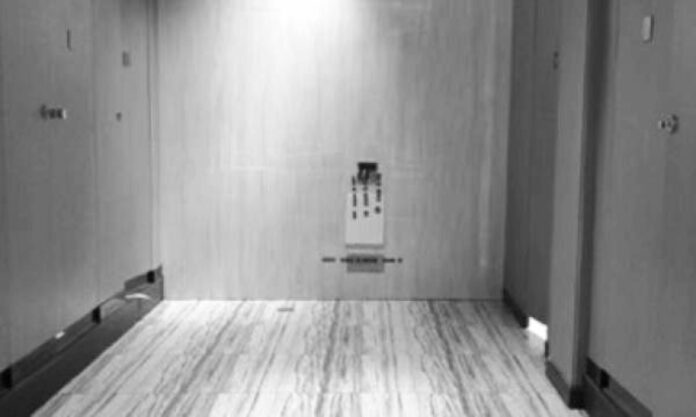



Female shoppers in Suzhou of our very own Jiangsu Province are at loggerheads over a urinal in the women’s toilet of a shopping mall and the removal thereof. For some, it’s the urinal’s removal, not the installation, that has been the cause of the debate.
在我们江苏省苏州市,女性购物者因商场女厕所内的小便池与拆除问题发生争执。对于一些人来说,争论的起因是小便池的拆除,而不是安装。
Reports which emerged on local news media this Monday, 24 April, reveal that the urinal, installed at the end of 2017, had recently been removed after the mall had received a complaint from a female shopper.
4 月 24 日星期一,当地新闻媒体报道称,该小便池于 2017 年底安装,最近在商场收到一名女性购物者的投诉后被拆除。
The toilet in question is located on the first floor of the Tianhong shopping mall on Xiangcheng Avenue in Suzhou Industrial Park.
涉案厕所位于苏州工业园区相城大道天虹商场一楼。
The image thereof contained in a report by The Paper clearly shows that the urinal has indeed been removed, leaving behind only its associated wall-mounted fittings, while on either side are the six private stalls of the women’s toilet.
澎湃新闻的报道中的图片清楚地显示,小便器确实已被拆除,只留下了相关的壁挂式配件,而两侧是女厕所的六个私人隔间。
Staff with the mall explained that the urinal was installed in order to facilitate female shoppers needing to take young boys to the toilet.
商场工作人员解释,设置小便器是为了方便女性购物者带小男孩上厕所。
It should be noted there is also a family bathroom in the same women’s toilet. The door of that particular stall is labelled with a family-of-three icon. This fact, somewhat oddly, has not attracted any kind of attention.
值得注意的是,同一个女厕所内还设有家庭浴室。那个特定摊位的门上贴着一个三口之家的图标。有点奇怪的是,这一事实并没有引起任何关注。
In the controversy that has been sparked following the urinal’s removal, a number of points of view have been brought to the fore.
在拆除小便池引发的争议中,多种观点脱颖而出。
Some people believe that a urinal for young boys in the women’s toilet offers convenience for mothers. Media has reported a woman in her 60s as saying, “What do children know; what gender consciousness is there at such a young age? There is no problem in them going to the women’s bathroom”.
有些人认为,女厕所里设置小男孩小便池为母亲们提供了方便。据媒体报道,一位60多岁的女士说,“小孩子懂什么,这么小有什么性别意识?上女厕所没有问题”。
Others felt reassured by the urinal’s presence, concerned for the safety of young boys were they to go to the men’s toilet by themselves.
其他人对小便池的存在感到放心,担心小男孩自己去男厕所的安全。
But still there are those who believe that the move is neither respectful to women nor takes into account the feelings of children. Local resient, Ms. Wu, said, “As a woman, I really feel offended. There is a difference between men and women; even if the child is young, he should not enter the women’s toilet”.
但仍有人认为此举既不尊重女性,也不考虑儿童的感受。当地居民吴女士说,“作为一名女性,我真的感到被冒犯了。男女之间是有区别的,即使孩子很小,也不应该进女厕所”。
A man also weighed in on the argument. A Mr. Feng said, “How to monitor the age of boys who go in there? Can I be sure that all children in the women’s toilet are under 5 years old?”.
一名男子也参与了这一争论。冯先生说:“如何监控进去的男孩年龄?能保证女厕所里的孩子都是5岁以下吗?”。
Then there was the opinion of a Ms. Zeng, a local school teacher, who believes that the design of the toilet is unnecessary. “Little boys may feel shy if they are watched by adult ladies in the toilet. If a young girl sees the genitals of similarly-aged member of the opposite sex, it may misguide their gender cognition”, said Zeng.
随后,当地学校老师曾女士提出了意见,她认为厕所的设计没有必要。 “小男孩如果在厕所里被成年女士看到,可能会感到害羞。如果小女孩看到同龄异性的生殖器,可能会误导他们的性别认知。”曾说。
From an official standpoint, Wu Zhengyan, Secretary General of the Suzhou Psychological Health Association, expressed the belief that removing the urinal reflects an improvement in public awareness and should be viewed from a progressive perspective.
从官方的角度来看,苏州市心理卫生协会秘书长吴正彦表示,拆除小便器反映了公众意识的提高,应该从进步的角度来看待。
Wu also pointed out that there are several stages to human sexual psychological development. In early childhood (2 to 6 years old), the young begin to have a preliminary understanding of gender difference, while children will also naturally exhibit curious behaviour.
吴还指出,人的性心理发展有几个阶段。在幼儿期(2至6岁),青少年开始对性别差异有初步的认识,同时孩子也会自然地表现出好奇的行为。
The Secretary suggested that parents should not neglect sex education for their children on account they are young and should provide personalised-sex education and support according to their individual needs.
局长建议家长不应因子女年幼而忽视对他们的性教育,并应因应孩子的个人需要,提供个性化的性教育和支持。