





It is so hard to imagine China’s flapping days of luxury; Nanjing’s pockets of glitz and glamour, before it all took a turn for the worse, only to revel in its renaissance a century later.
很难想象中国奢华的日子;南京的浮华和魅力的口袋,在一切都变得更糟之前,只是在一个世纪后陶醉于它的复兴。
All too often, modern Chinese history is encapsulated in episodes such as the Cultural Revolution and the War of Resistance against Japan. If we want to remember a world which has been forgotten and erased, along with its bourgeois ways, we need to dig further.
中国现代史往往被文化大革命和抗日战争等事件所概括。 如果我们想记住一个被遺忘和抹去的世界,以及它的资产阶级方式,我们需要进一步挖掘。
Once upon a time, Chinese high society swung to gramophones, sipped Champagne and enjoyed fine dining. Let us for a moment contemplate what it must have been like for those who came long before us; the diplomats and their families, many of whom brought their Victorian manner to mainland China.
从前,中国上流社会会摆动留声机,啜饮香槟,享受美食。 让我们思考一下,那些在我们之前很久的人一定是什么样子的;外交官及其家人,他们中的许多人将他们的维多利亚式风格带到了中国大陆。
The Nanjinger has this month explored the very buildings left standing where these people lived and worked; the city’s former embassies. As capital of China during what is now known as the Republican Era (1912-1949), Nanjing was home to a multitude of embassies, their dignitaries and staff serving within, many of which built in a European manner, mirroring their country’s architectural preferences.
本月,《南京人》探索了这些人生活和工作的建筑;该市以前的大使馆。 作为现在被称为共和时代(1912-1949)的中国首都,南京是众多大使馆的所在地,他们的政要和工作人员都在其中服役,其中许多是以欧洲方式建造的,反映了他们国家的建筑偏好。
Much of Nanjing today simply did not exist back then, with the exception of locations such as Xinjiekou and Fuzimiao. Sometimes referred to nowadays as the old embassy district, back then, Gulou was literally the new kid on the block, home to the most important of government bodies, buildings, embassies and people of note, as Nanjing settled into its role as capital of the world’s newest and most populous nation.
除了新街口和福子庙等地方外,今天的南京大部分地方在当时根本不存在。 如今有时被称为旧大使馆区,在那时,鼓楼简直就是街区的新孩子,是最重要的政府机构、建筑、大使馆和名人的所在地,因为南京成为世界上最新、人口最多的国家的首都。


Among Nanjing’s former official residences of foreign ambassadors, none can compare to the extravagance and magnificence of that which was the British Embassy. Located at 185 Huju Bei Lu, it was built in 1919 and rented by the British Embassy during the Republican Era from 1924 to 1950, after the capital was moved to Beijing. In 1953, it began to be used by the Jiangsu Provincial People’s Government.
在南京前外国大使官邸中,没有一座能与英国大使馆的奢侈和宏伟相比。 它位于胡居北路185号,建于1919年,在1924年至1950年,在首都迁至北京后,由英国大使馆出租。 1953年,它开始被江苏省人民政府使用。
This Victorian mansion, that takes up 1,765.90 square metres, is now a restaurant, used in the past as a hospital, as well as a hotel. Elegant, luxurious and very British, the building is one of the only former embassies (perhaps beside that of the Dutch) to have kept its original structure and feel to this day.
這座維多利亞式豪宅占地1,765.90平方米,現在是一家餐廳,過去曾被用作醫院和酒店。 这座建筑优雅、豪华、非常英式,是仅次于保留其原始结构和感觉的前大使馆之一(也许是荷兰大使馆)之一。
As one approaches the mansion, it becomes easy to imagine life as an expat in the 1920s. Any trace of China melts away as one ascends the white stairs of the building. Upon opening its wooden doors and standing in the splendid hallway, decked with red carpets, sparkling chandeliers and elegant paintings, one is transported into another time.
当一个人走近豪宅时,很容易想象20世纪20年代作为外籍人士的生活。 爬上大楼的白色楼梯,任何中国的痕迹都融化了。 打开木门,站在装饰着红地毯、闪闪发光的吊灯和优雅的画作的华丽走廊上,一个人被带到了另一个时代。

As I stood there with my eyes closed, I could smell ageing wood and cigarette-stained furniture; hear the whistle of of an upbeat trumpet coming from the gramophone in the corner of the hall. It was easy to imagine staff buzzing all around me, while passing by as I walked up the staircase were men in penguin tuxedos with thick moustaches; they strolled past with their walking sticks and cigars, discussing diplomatic affairs in an upper-class demeanour.
当我闭着眼睛站在那里时,我能闻到陈旧的木头和被香烟染成的家具的味道;听到大厅角落的留声机发出欢快的小号的口哨声。 很容易想象工作人员在我周围嗡嗡作响,当我走上楼梯时,路过的是穿着企鹅燕尾服、留着浓密胡子的男人;他们带着拐杖和雪茄漫步过去,以上流派的态度讨论外交事务。
Exploring the many vestibules on the second floor, I could feel the women of the house bustle from room to room, their lace dresses trailing behind them as they gave instructions to their Chinese house maids. The sun-kissed south wing consumed my imagination the most; these were the very rooms where many an important African, Middle Eastern and European diplomat sat sipping tea, where bridge was played and national affairs debated.
探索二楼的许多前厅,我能感觉到房子里的女人们从房间到房间忙碌,她们的蕾丝连衣裙跟在她们身后,向中国女仆发出指示。 阳光普照的南翼最占据了我的想象力;正是这些房间,许多重要的非洲、中东和欧洲外交官坐在那里喝茶,在那里打桥牌,辩论国家事务。

When the Kuomintang government declared Nanjing capital of the Republic of China, the government’s “central plan” was enacted. Included therein was the building (and renting) of embassies, villas and compounds. Where Ninghai Lu meets Jiangsu Lu and its surroundings is the recently-renovated Yihe Mansions compound, a century ago home to many other embassies.
当国民党政府宣布南京为中华民国的首都时,政府的“中央计划”颁布了。 其中包括建造(和租赁)大使馆、别墅和大院。 宁海路与江苏路及其周边地区相接的地方是最近翻新的易河大厦大院,一个世纪前是许多其他大使馆的所在地。
These days one can purchase a ticket and take a look around the mansions, which now serve as museums and exhibition halls.
如今,人们可以购买门票,参观一下现在用作博物馆和展厅的豪宅。
Gazing at the former Mexican Embassy at 15 Tianzhu Lu, it is more difficult to imagine this was once a place that was filled with carpeted floors, the clinking of glasses and the China-Mexico friendship treaty that was once exchanged. Similarly, many such embassies have yet to receive government-subsidised refurbishing, but that is not to say the authorities have not been working hard at restoring them.
凝视着位于天柱路15号的前墨西哥大使馆,更难想象这曾经是一个铺满地毯、玻璃叮当和曾经交换的中墨友好条约的地方。 同样,许多此类大使馆尚未获得政府补贴的翻新,但这并不是说当局一直在努力修复它们。
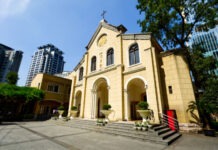


One-by-one, many a former embassy in Nanjing is slowly being returned to its former glory, to once again stand bright and tall, representing a period in Nanjing’s history that is no longer forgotten. If anything, with the emergence of speakeasy bars (see Our Space on p28), vintage styles of clothing and an obsession with the music and dance of a hundred years ago, the youth of Nanjing is embracing the city’s Republican ways once more.
许多前驻南京大使馆一个个地正在慢慢恢复昔日的辉煌,再次高高耸立,代表着南京历史上一个不再被遗忘的时期。 如果有的话,随着地下酒吧的出现(见第28页的《我们的空间》)、复古风格的服装以及一百年前对音乐和舞蹈的痴迷,南京的年轻人再次拥抱了这座城市的共和党方式。
One excellent example thereof is the former French Embassy, recently restored to now be the most beautiful structure on Gaoyunling Alley. Standing as a protected monument, its wide walkway is flanked by eight Roman columns; just by looking through the cast iron gates, the feeling of how Nanjing once moved is easy to evoke.
其中一个很好的例子是前法国大使馆,最近经过修复,现在是高云岭巷子里最美丽的建筑。 作为受保护的纪念碑,其宽阔的人行道两侧是八根罗马柱子;只要透过铸铁门望去,就很容易唤起南京曾经如何移动的感觉。

Most embassies, however, such as the former Turkish and Australian sites, took the form of rather ordinary-looking villas; European in style, but nothing to write home about. The former American Embassy, located at 33 Xikang Lu, is now a provincial government agency, much like other embassies, while some have also been refitted as museums or restaurants.
然而,大多数大使馆,如前土耳其和澳大利亚的遗址,都采取了看起来相当普通的别墅的形式;欧洲风格,但没有什么值得纪念的。 前美国大使馆位于西康路33号,现在是一个省政府机构,与其他大使馆非常相似,但有些大使馆也被改造为博物馆或餐厅。
To know that people roamed these embassies completely unbeknownst as to what was headed their way in a few short years is a decidedly odd feeling. The starched uniforms, together with fine food and wine in the lap of European luxury were all there to be enjoyed, as they indeed were, albeit for a somewhat brief period.
知道在短短几年内,人们在这些大使馆中漫游,完全不知道他们的方向是什么,这种感觉非常奇怪。 淀粉化的制服,以及欧洲奢侈品的优质食物和葡萄酒,都可以在那里享受,尽管时间有点短。
Nonetheless, to stand inside these buildings of Nanjing’s bourgeois past is a gift, representative of a very significant part of this city and country’s past. No matter the political climate of the day, the former embassies tell an epic tale of survival, struggle and beauty; brick and mortar metaphors for a resilient people with an insatiable desire for peace and prosperity.
然而,站在南京資產階級過去的這些建築中是一種禮物,代表了這座城市和国家過去非常重要的一部分。 无论当天的政治气候如何,前大使馆都讲述了一个关于生存、斗争和美丽的史诗故事;一个对和平与繁荣有不满足的渴望的坚韧的人民的砖和实体隐喻。