



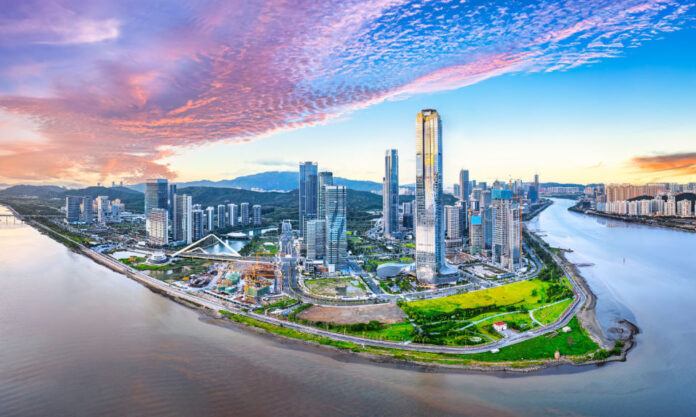



Writing in 1602, a Chinese chronicler recorded Portuguese traders arriving at Haojing in 1553 claiming a storm had soaked their cargo. Asking to dry it ashore; the maritime official Wang Bo accepted a bribe and let them stay. It was to lead to Macau.
一六〇二年的一份汉文记载写道,一五五三年抵达濠镜的葡萄牙商人声称货物遭风浪浸湿,请求上岸晾晒;海道副使汪柏受贿后准其停留,葡人在澳门的聚居地便由此发端。
By 1571–72, the annual payment of 500 taels of silver had been formalised as land rent, paid into the imperial treasury as the Portuguese settlement around the harbour continued to grow.
到一五七一至一五七二年间,每年五百两白银的缴款已被正式转为地租,纳入国库,而葡人在港湾周边的聚居区也继续扩大。
According to later Xiangshan county records, Ming authorities built a barrier gate on the narrow land connection north of Macau in 1574, controlling movement between the Portuguese settlement and the rest of Xiangshan county; a military garrison followed at nearby Qianshan in 1621.
据后来的香山县志记载,明朝当局于一五七四年在澳门以北的狭窄陆路连接处修建关闸,管控葡人聚居地与香山县其余地区之间的往来;一六二一年,附近的前山又设立了军事驻防。
Three Days to Leave the Coast
三日之内,迁离海岸
To cut supplies reaching Ming loyalist forces based in Taiwan, the Qing government ordered coastal populations inland beginning in 1661. The clearance was extended in 1664; although some areas were reopened from 1669, restrictions were not finally removed until after Qing forces took Taiwan in 1683.
为切断台湾明郑势力从大陆沿海获得接济,清廷自一六六一年起下令沿海居民内迁,一六六四年又进一步扩大迁界范围。部分地区自一六六九年起获准复界,但直到一六八三年清军攻取台湾后,相关禁令才最终解除。
Across Guangdong, successive clearance orders eventually affected 28 counties, displacing millions of people and leaving more than 5 million mu of farmland abandoned; residents were initially given just three days to leave. Xiangshan county, which then included the Zhuhai area, was among those cleared; those who remained beyond the new coastal boundary risked execution.
清廷在广东先后推行的迁界令,最终波及二十八个州县,数百万人因此流离失所,抛荒田地逾五百万亩;居民最初仅获三天的迁离期限。当时辖有今珠海一带的香山县,也在迁界范围之内;越界滞留者面临被处死的危险。
From Xiangshan to Cuba and Peru
从香山到古巴与秘鲁
Emigration resumed once the ban lifted, and accelerated after the First Opium War, when many Xiangshan residents left for Southeast Asia and the Americas in search of work; others left involuntarily, swept up in the coolie trade that grew out of Macau.
迁界令解除后,人口外迁逐渐恢复,第一次鸦片战争后更是加速,许多香山人前往东南亚及美洲谋生;另一些人则并非自愿离乡,而是卷入了因澳门而兴起的苦力贸易。
By 1873, Macau contained more than 300 barracoons holding contract labourers, many of them destined for Cuba and Peru on voyages that could take up to six months.
到一八七三年,澳门已有三百余家关押契约劳工的”猪仔馆”,其中许多劳工将被运往古巴与秘鲁,航程最长可达半年。
Portugal ordered the trade closed in December 1873, with contract emigration from Macau finally ending in March 1874.
葡萄牙于一八七三年十二月下令终止这一贸易,澳门的契约劳工出洋,最终于一八七四年三月彻底停止。
In 1980, the central government designated a 6.81-square-kilometre patch of the recently established city, then home to around 360,000 people, as one of China’s first four special economic zones, alongside Shenzhen, Shantou and Xiamen; by 2025 the city’s economic output had reached ¥457.31 billion.
一九八〇年,中央政府将这座刚设立不久、当时人口约三十六万的城市划出六点八一平方公里,设为中国最早的四个经济特区之一,与深圳、汕头、厦门并列;到二零二五年,全市地区生产总值已达四千五百七十三点一亿元。
The zone’s early leaders also looked for ways to distinguish Zhuhai from better-resourced Shenzhen. When the city’s new airport was being built, party secretary Liang Guangda pushed for its planned runway to be extended to 4,000 metres, then longer than any other in China, partly with an international air show in mind. The first China International Aviation and Aerospace Exhibition opened there in 1996, and the biennial event has since grown into one of the world’s five largest air shows.
特区早期的领导者,也在寻找一条有别于资源更雄厚的深圳的发展路径。珠海新机场建设期间,时任市委书记梁广大推动将原计划的跑道延长至四千米,在当时为全国最长,其中一个目的便是为举办国际航展创造条件。一九九六年,首届中国国际航空航天博览会在此举行,此后这一两年一届的展会逐渐跻身全球五大航展之列。
The airport opened in June 1995 at Sanzao, where Japanese forces had operated a military airfield during the occupation. The Guangzhou–Zhuhai intercity railway reached Zhuhai North in 2011, putting Guangzhou South less than an hour away; it was extended to Gongbei the following year.
这座机场于一九九五年六月在三灶通航,日军占领时期曾在此设有一座军用机场。二零一一年,广珠城际铁路通至珠海北站,前往广州南站的车程缩短至一小时以内;次年,线路进一步延伸至拱北。
A granite statue of a fisherwoman has stood on the seafront at Xianglu Bay since 1982. Standing 8.7 metres tall and assembled from 70 separate blocks, it was created by sculptor Pan He; China’s first large seaside statue, it has served as an emblem of Zhuhai ever since.
一座渔女花岗岩雕像,自一九八二年起便矗立在香炉湾畔。雕像高八点七米,由七十件花岗岩拼合而成,出自雕塑家潘鹤之手;作为中国第一座大型海滨雕像,此后便一直是珠海的城市象征。
In the 21st century, Zhuhai found itself back at the centre of China’s plans to connect the Pearl River Delta. The Hong Kong–Zhuhai–Macau Bridge, a 55-kilometre crossing including a 6.7-kilometre undersea tunnel, opened in October 2018; the drive from Hong Kong International Airport to Zhuhai, previously around four hours, was cut to about 45 minutes.
进入二十一世纪,珠海再度成为国家珠三角联通规划的核心。全长五十五公里、含六点七公里海底隧道的港珠澳大桥,于二零一八年十月通车;从香港国际机场驾车前往珠海,所需时间由此前约四小时缩短至约四十五分钟。