






They’re calling her the “Pig Girl”. And this 1990s so-called lover of pigs is also now something of an internet celebrity, for her devotion to all things swine and an entrepreneurial spirit. Yet, for many, she leaves behind her an unsavoury taste.
他们称她为“猪女孩”。这位20世纪90年代所谓的“爱猪之人”如今也因她对猪一切的热爱和创业精神而成为网红。然而,对于许多人来说,她留下了令人厌恶的味道。
Pig farmer, Hu Huiqin, from Shuyang County of Suqian City in Jiangsu, has garnered herself 146,000 fans on social media and raked in over ¥5 million, but some of the methods she employs may be too much for today’s international community.
来自江苏宿迁市沭阳县的养猪户胡惠琴在社交媒体上拥有14.6万粉丝,收入超过500万人民币,但她采用的一些方法对于当今的国际社会来说可能有点难以接受。
First, credit where credit is due. For Hu’s story is both inspiring and motivational. And hers is also a life which today brings in ¥500-600,000 in annual revenue.
第一,该信用的地方要信用。因为胡的故事既鼓舞人心又励志。如今她的生活也是年收入500-60万日元。
But growing up, Hu never got as far as high school. Instead, she worked first in an electronics factory, then set up a spicy hotpot stall, a restaurant and dabbled in e-commerce.
但在成长过程中,胡从未读过高中。相反,她先是在一家电子厂打工,后来开了一家麻辣火锅摊、一家餐馆,并涉足电子商务。
Over 3 or 4 years, she saved ¥100,000, while nurturing the idea of running a pig farm.
三四年的时间里,她攒下了10万日元,同时萌生了经营养猪场的念头。
“When I was a child, I raised a pig at home. So I probably knew how to do it. I also like pigs. I am after all a pig, so I decided to raise them”, Hu told local media. “It may well have been fate.”
“当我还是个孩子的时候,我在家里养了一头猪。所以我可能知道怎么做。我也喜欢猪。我毕竟是一头猪,所以我决定养它们”,胡告诉当地媒体。 “这很可能就是命运。”
Borrowing more than ¥200,000, Hu invested a full ¥400,000 to build a farm, kit it out and of course buy some beasts. She was confident she could raise them.
胡借了20万多元,投资了足足40万,建了一个农场,装修了设备,当然还买了一些牲畜。她有信心自己能够抚养它们。
By 2019, she had perhaps surpassed even her own expectations, earning those many millions. Fast forward to today, and Hu’s farm now covers an area of more than 1,200 square metres, home to 70 sows and more than 400 piglets.
到 2019 年,她的收入可能已经超过了数百万美元,甚至超出了她自己的预期。如今,胡先生的养殖场面积已达1200多平方米,饲养着母猪70头,仔猪400多头。
With the media spotlight on her, Hu recalls everything she has done to raise her pigs; sleeping with them, performing CPR, mouth-to-mouth resuscitation, and even serving as a midwife.
在媒体的关注下,胡回忆起她为养猪所做的一切;和他们一起睡觉、进行心肺复苏、口对口人工呼吸,甚至担任助产士。
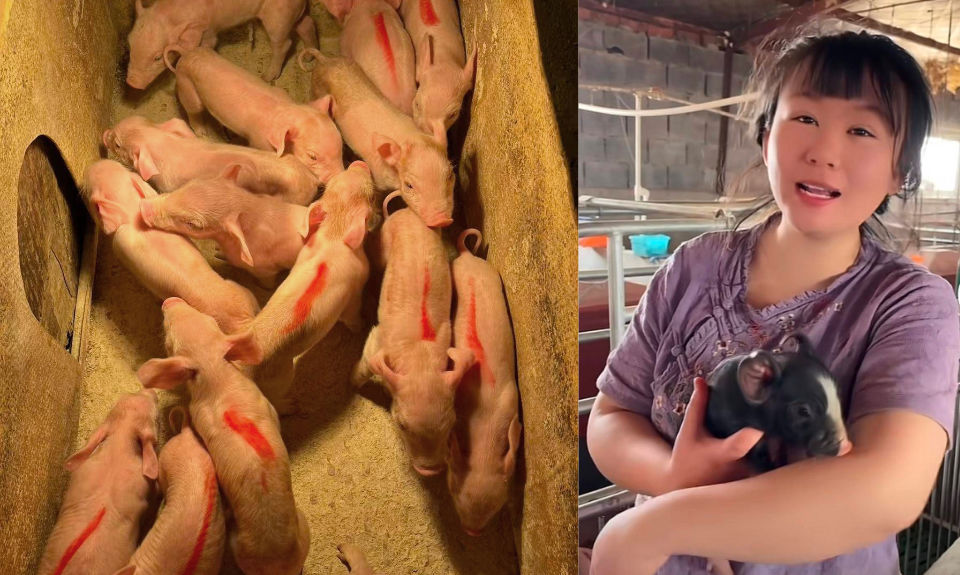
Revealing that on account a person’s life raising pigs sometimes feels lonely, Hu decided to share her daily activities online as short videos. She not acquired all those fans, but also made friends with pig farmers all over the country to discuss problems associated with their trade. She is nothing if not devoted.
由于养猪的生活有时会感到孤独,胡女士决定将自己的日常活动以短视频的形式分享到网上。她不仅赢得了这么多粉丝,还与全国各地的养猪户交了朋友,讨论与养猪业相关的问题。如果她不忠诚,她就什么都不是。
But then comes the troublesome aspect to this 28-year old’s pig-farming success.
但这位 28 岁的养猪人的成功却面临着麻烦。
As as the Yangtze Evening News reports regarding pig rearing, “The reality is often more cruel than the imagination”.
正如《扬子晚报》有关养猪的报道一样,“现实往往比想象更残酷”。
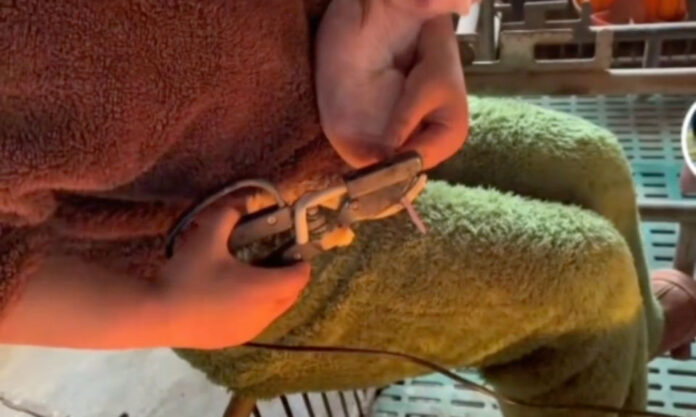
That’s in reference to the practice of tail docking, which Hu is seen to perform in a video published by that publication, seemingly without the piglets being administered any form of anaesthetic. After its tail is severed, the piglet is seen to convulse in excruciating pain.
这是指胡在该出版物发布的视频中进行的断尾实践,似乎没有对仔猪进行任何形式的麻醉。尾巴被切断后,小猪在剧痛中抽搐。
The video, which many readers will find disturbing, can be seen in the Yangtze Evening News report via this link.
这段视频让许多读者感到不安,可以通过此链接在扬子晚报的报道中看到。
The practice of tail docking came about in reaction to industrialised pig rearing, whereby pigs live close together and are unable to engage in their natural practices of rooting and foraging. They become bored and often take to biting each others’ tails.
断尾的做法是对工业化生猪饲养的反应,猪生活在一起,无法进行自然的寻根和觅食活动。他们变得无聊,经常互相咬对方的尾巴。
Hence, many farmers have adopted the habit of cutting the tails short using some form of clippers or pliers, or even by cauterisation. From their perspective, World Animal Protection says, “This mutilation is a very painful and stressful experience for the piglets and can have a lasting effect on their wellbeing”.
因此,许多农民养成了使用某种剪刀或钳子,甚至通过烧灼将尾巴剪短的习惯。从他们的角度来看,世界动物保护组织表示,“这种残害对小猪来说是一次非常痛苦和有压力的经历,并且会对它们的健康产生持久影响”。
The practice of tail docking has become illegal in a number of countries.
在许多国家,断尾的做法已成为非法。
While Hu’s story undoubtedly shall serve as an inspiration to many a budding entrepreneur, it is clear there remains much progress to made on many of the farms around China, and elsewhere, as regards animal welfare.
虽然胡的故事无疑会给许多崭露头角的企业家带来启发,但很明显,中国各地和其他地方的许多农场在动物福利方面仍然需要取得很大进展。