



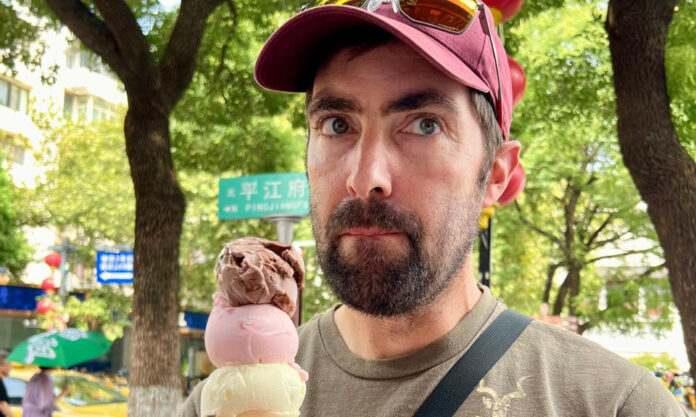



- August in Nanjing defies expectations: extreme heat replaces mild warmth, disrupting normalcy and comfort.
- Nanjing’s summer is unbearably hot, surpassing other global hotspots with its intense, humid 38°C (feels like 48°C).
- Winter in Nanjing offers little relief, as indoor heating makes it feel hotter than summer, creating a paradoxical climate.
- The essay reflects on Nanjing’s heat as a metaphor for global stress, climate change, and life’s relentless pressures.
Arriving in August in a new city in the Northern Hemisphere should be a well-judged exercise: quieter, as most holidays are over; the weather should be warm, the delectable sighings of early autumn beginning to peak through some cooler days.
8月抵达北半球的一个新城市应该是一次经过深思的练习:更安静,因为大多数假期都结束了;天气应该很暖和,初秋的美味叹息在一些凉爽的日子里开始达到顶峰。
It should. But Nanjing decides, like a spoilt middle child throwing a tantrum, like a violent spark creeping up on dry grass, that a normal and happy summer is not for enjoyment.
应该的。 但南京决定,就像一个被宠坏的中间孩子发脾气,就像暴力的火花在干燥的草地上爬行一样,一个正常而快乐的夏天不是为了享受的。
For it is safe to say that arriving in Nanjing in August is HOT.
因为可以肯定地说,8月到达南京很热。
For those who have never experienced a summer in a furnace city, let me again repeat, without any elaboration or tautological exaggeration or hyperbolic imagination, that Nanjing is Hot; Nanjing is Scorching, it is Boiling, it is Sizzling and Blazing and Sweltering; it is Fiery and Burning and Boiling and Torrid.
对于那些从未在炉城度过过夏天的人来说,让我再次重复一遍,没有任何阐述或重述的夸张或夸张的想象,南京是热的;南京是灼热的,是沸腾的,是嘶嘶的,是炽热的,是灼热的,是灼热的,是沸腾的,是炎热的。
Reflecting on this heat over this winter, I wonder if it is just a warped nostalgia taking hold in my mind, trying to recall the baking of one’s soul; surely I embellish. Indeed, it was not that unpleasant my cognitive dissonance argues. Perhaps I am like Scout in To Kill a Mockingbird, wistfully reflecting that “Somehow, it was hotter then”. Yet, like a sizzling nightmare, I have no doubt the heat will return as a destroyer of our comfortable worlds.
反思这个冬天的炎热,我想知道这是否只是一种扭曲的怀旧在我脑海中,试图回忆起一个人灵魂的烘烤;我当然会美化。 的确,我的认知失调并没有那么令人不快。 也许我就像《杀死一只知更鸟》中的童子军,暷嚷地回忆着“不知怎的,那时更热”。 然而,就像一场灼热的噩梦一样,我毫不怀疑,热量会像摧毁我们舒适世界一样回来。
Because Nanjing in Summer is Hot.
因为南京夏天很热。
We are fairly well-travelled and have experienced a fair amount of hot summers. We have sweltered through the humidity of a Durban and New York and a Caribbean Coast and a Russian Summer; humidity that clings and claws at your pores. We have been to Death Valley and Kruger National Park and the Namibian desert; all dry, all scorching, all around the 40 Celsius mark.
我们经常旅行,也经历过相当多的炎热夏天。 我们在德班和纽约、加勒比海海岸和俄罗斯夏天的潮湿中闷闷不过;湿气粘在你的毛孔里。 我们去过死亡谷、克鲁格国家公园和纳米比亚沙漠;全部干燥,全部灼热,周围都是40摄氏度。
And yet, they never came close to the heavy heat of a Nanjing Summer. A 38 humid heat (real-feel of 48) where a 100-metre walk destroys any vestige of what is normal.
然而,他们从未接近南京夏天的酷暑。 38度的潮湿热量(真实感觉为48度),步行100米会破坏任何正常状态的痕迹。
Any outside activity becomes, to echo Gatsby, a reality where “in this heat, every extra gesture feels like an affront to the common store of life”.
呼应Gatsby,任何外部活动都變成了一個現實,即「在這種炎熱的天氣裡,每一個額外的姿態都感覺像是對生活的普通商店的侮辱」。
This heat means that if one could enter Nanjing into Greek mythology, Helios would be the name with which our stifling myths and legends concur. Nanjing personified would be standing inside a stuffy bar, steamily dragging on a cigarette with a smouldering intensity, feverish eyes promising both passion and peril, leaving delirium and desire in their wake.
这种热度意味着,如果人们可以进入南京进入希腊神话,赫利俄斯将是我们令人窒息的神话和传说的名字。 南京的人格将站在闷热的酒吧里,热气腾腾地抽着烟,热气腾腾的眼睛承诺着激情和危险,留下谵妄和欲望。
Once again: Nanjing in Summer is Hot.
再一次:南京夏天很热。
And what does Nanjing offer in the way of refreshing oneself amid this kiln? Nanjing offers Heat. Hot beer. Hot Water. Hot Pots. There is a romanticist elegy waiting to be written about heroically surviving a Nanjing summer walk and finally arriving at an oasis of a restaurant, gasping for something to drink, and having warm beer served to remind you that, like life, one should never expect comfort in this level of heat.
南京在这个窑炉中提神的方式是什么? 南京提供热火。 熱啤酒。 热水。 火锅。 有一个浪漫主义的輓歌等待着写,讲述了在南京的夏季散步中英勇地幸存下来,最后到达一家餐厅的绿洲,喘着粗气想喝点东西,并喝上热啤酒,提醒你,就像生活一样,人们永远不应该期望在这种高温下感到舒适。
To be fair, there is a Winter to provide respite. And this winter should be cold. And yes, indeed, experiencing my first Nanjing Winter, I have seen these gleams of cold—my thin South African blood has struggled on walks and duties outside in the frigidness; my multiple, and multiplying, clothing layers are a source of amusement to those born in lands where snow is their right.
公平地说,有一个冬天可以提供喘息的机会。 这个冬天应该很冷。 是的,的确,经历了我的第一个南京冬天,我看到了这些寒冷的光芒——我瘦弱的南非血统在寒冷的天气里在外面散步和值班时挣扎;我的多层衣服层叠叠叠,是那些出生在雪是他们权利的土地上的人的娱乐来源。
However, this cold is survivable. It is, actually, more than survivable because, to reiterate a point, Nanjing is Hot. Part of the irony of Nanjing’s heat is that getting cold can almost feel impossible.
然而,这种感冒是可以生存的。 事实上,这是可以生存的,因为,重申一点,南京很热。 南京炎热的部分讽刺是,天气变冷几乎是不可能的。
It is as if the latent summer heat does not actually disappear, but instead seems to seep into every air-conditioner and radiator and underfloor heating, waiting for an opportunity to expel its feverish breath once more.
仿佛夏季的隐性热量实际上并没有消失,而是似乎会进入每个空调、散热器和地暖,等待机会再次排出它狂热的气息。
Because Winter in Nanjing is Hot.
因为南京的冬天很热。
Dare I say that, at times, Winter is hotter than the summer, as you struggle to cool down in any indoor place. Entering a building after a brisk walk makes one feel attacked; you will be roasted alive. Everywhere, no thermostat is set at a pleasant temperature (let’s say, 22) but on a ‘Nanjing Summer Max’. While you sweat and struggle in your thermals and beanie, a Didi trip reminds you there is such a thing as too much hot air. Double glazed windows that don’t open; malls and trains that forget one needs to breathe; a clothing heat, a clanging heat; jackets and jerseys and jumpers over arms and carried around echoing the irony that it is all-day-hot as the snow approaches outside.
我敢说,有时冬天比夏天更热,因為你在任何室内都努力降温。 轻快地走完后进入一栋建筑,会让人感到受到攻击;你会被活活烤死。 在任何地方,除了“南京夏季最大值”之外,没有恒温器设置为宜人的温度(比之,22)。 当你汗流浃背,穿着保暖衣和贝尼帽挣扎时,滴滴之旅提醒你,空气过热。 双层玻璃窗打不开;商场和火车忘记了人们需要呼吸;衣服的热量,砰砰的热量;夹克、球衣和毛衣披在手臂上,四处携带,呼应着讽刺的是,当外面的雪临近时,一整天都很热。




Nanjing is Hot. I Should, therefore, want to highlight that the best metaphors write themselves and allow a mixing of idioms and anecdotes and some hyperbolic resonances to the everyday figurative language that life can buy.
南京很热。 因此,我想强调的是,最好的隐喻是自己写的,并允许将成语和轶事以及一些夸张的共鸣与生活可以购买的日常具象语言混合在一起。
I Should want to mention how, when Shakespeare wrote of “hot days” leading to “mad blood stirring”, we can all picture the moment: tempers up, anger swelling, and sweat drenching.
我想提一下,当莎士比亚写到“炎热的日子”导致“疯狂的血液搅动”时,我们都可以想象那一刻:脾气暴躁,愤怒膨胀,汗流浃背。
I Should, accordingly, begin to mention the global situation we find ourselves in; how we are indeed, living in a world of growing heat, beyond the vestiges of the temperature we live.
因此,我应该开始提到我们所处的全球局势;我们确实生活在一个越来越热的世界里,超越了我们生活的温度的痕迹。
The growing scorch of wars and rumours of wars drive in some way the despair and loneliness epidemic of worry and stress, making us frogs slowly seeing ourselves boiling alive.
日益皈皈的战争和战争谣言在某种程度上推动了担忧和压力的绝望和孤独的流行,让我们青蛙慢慢看到自己活了。
I Should write of the fires plaguing so much of the world, the climate growing hotter and hotter, which ties in with the fury of the modern world’s driving-fire for success.
我應該寫關於困擾世界大部分地區的火災,氣候越來越熱,這與現代世界成功之火的憤怒聯絡在一起。
I Should metaphorically speak of Nanjing; the paradoxical mix with this coldness echoing the story of history emerging amid modern globalisation. A hot high-speed train running parallel to glacial Ancient tombs; forgotten iced artefacts over 3000 years old, available to touch with a hot hand.
我应该隐喻地谈论南京;矛盾的混合与这种冷漠呼应了现代全球化中出现的历史故事。 一辆与冰川古墓平行运行的热高速列车;被遗忘的冰文物有3000多年的历史,可以用热手触摸。
I Should segue to my previous article about how the life of fastness drives the heat within oneself. We Should discuss how this heat leads to the deeper, hotter questions we ask: are we good enough; do we have enough time? This questioning heat rises metaphorically, and in what we experience, we all eventually look upwards to see eternal flame.
我应该从我上一篇文章中说起,关于紧固的生活如何驱动自己内心的热量。 我们应该讨论这种热度如何导致我们提出更深层次、更热的问题:我们足够好吗;我们有足够的时间吗? 这种质疑的热量隐喻地上升,在我们经历的事情中,我们最终都向上看,看到永恒的火焰。
I Should.
我应该。
I Should be querying these questions, forging these links, and starting these sparks of discussion.
我应该询问这些问题,建立这些链接,并开始这些讨论的火花。
But Nanjing is Hot. And all the above “Shoulds” require energy; and energy means work; and work means sweat; and sweat reminds me that Nanjing is Hot.
但是南京很热。 上述所有“应该”都需要能量;能量意味着工作;工作意味着汗水;汗水提醒我南京很热。
So today I Shan’t; instead, I will just quietly close my laptop, wander in hope of an oasis of cold and try my best to find an icy beer.
所以今天我不会;相反,我会悄悄地关上我的笔记本电脑,在寒冷的绿洲中徘徊,并尽力寻找冰啤酒。