



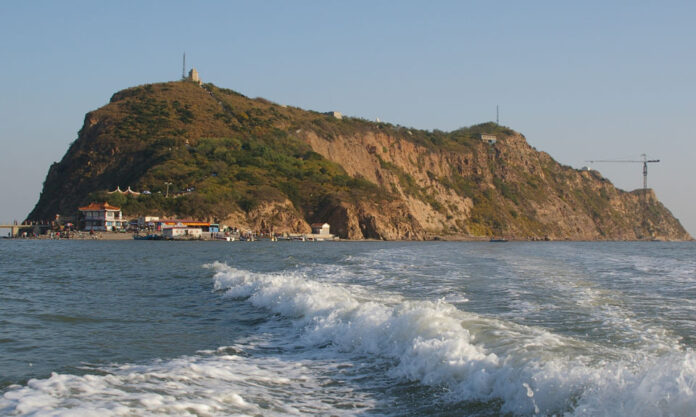



Twice a day, the sea at Jinzhou Bay pulls back and a stone path appears, joining an island to the coast. Visitors wait hours for the moment, then hurry back before the tide swallows the crossing again.
每天两次,锦州湾的海水会退去,一条石路随之显现,将一座岛屿与海岸连接起来。游客常常等候数小时,只为这一刻,随后又要赶在潮水吞没通道之前匆匆返回。
The island is Bijia Mountain, named for three rocky peaks that resemble a traditional Chinese brush rest. A pebble causeway, 1620 metres long, links it to the mainland only at low tide; at high tide the sea closes over it completely, and the only way across is by speedboat.
这座岛屿名为笔架山,因三座岩峰形似传统中式笔架而得名。一条长一千六百二十米的卵石路仅在退潮时与陆地相连;涨潮时海水将其完全淹没,唯一的通行方式便是乘坐快艇。
Temples cluster near the summit, some said to date to the Song dynasty, when hermits first settled the island’s isolation. Pilgrims still climb past the Sanqing Pavilion, built largely of stone, to look out over the Bohai Sea.
庙宇群聚于山顶附近,相传部分可追溯至宋代,当时隐士最早在这座孤岛上定居。香客们仍会攀过以石材为主建成的三清阁,眺望渤海。
War History Sits Alongside a Seaside Draw
战争历史与海滨风光并存
Jinzhou itself sits in the southwest of Liaoning province, wedged between the Songling Mountains and the Bohai coast. It is one of three major logistics hubs in the province, and its port handles trade reaching more than 80 countries.
锦州本身位于辽宁省西南部,坐落于松岭山脉与渤海海岸之间。它是辽宁三大物流枢纽之一,港口贸易通达八十多个国家。
An administration was first recorded here under the Han dynasty, more than two thousand years ago, when the settlement was known as Tuhe. Its current name dates to the Liao dynasty, when Khitan rulers held the region; the city has changed hands many times since.
据记载,汉代时这里便设有行政建制,距今已逾两千年,当时的聚落名为“徒河”。如今的名称则始于辽代,由契丹统治者掌控这一地区之时;此后锦州几经易主。
The 20th century left a heavier mark. According to Nanjing Daily, Jinzhou was a decisive battleground during the Liaoshen Campaign of 1948, one of the turning points of the Chinese civil war. The memorial hall built to mark it is free to enter and holds a panoramic painting gallery, the kind of stop that fills a school-trip itinerary as easily as a tourist’s.
二十世纪则留下了更深的印记。据《南京日报》报道,一九四八年辽沈战役期间,锦州曾是决定性的战场,这场战役是中国内战的转折点之一。为纪念这段历史而建的纪念馆免费开放,馆内设有一座全景画馆,这样的行程既适合学生团体,也吸引着普通游客。
A Tripadvisor reviewer timed a trip to Bijia Mountain for the evening tide instead, catching a bus from Jinzhou Railway Station that took closer to an hour than the timetable suggested. “The tide hit us around 5-5:30”, they wrote, “and it was a great experience for us, a fantastic phenomenon.”
一位猫途鹰用户则选在傍晚潮汐时分前往笔架山,从锦州火车站乘车前往,车程比时刻表所示的要接近一小时。“潮水大约在五点到五点半涌来,”他写道,“对我们来说是一次很棒的体验,是一种奇妙的景象。”
What a Ticket Buys, and Where People Eat
一张门票能买到什么,人们又在哪里用餐
Tickets to Bijia Mountain cost ¥65 for a standard visit, rising to ¥85 if a boat ride or a look at the resident reptiles is included; a one-way speedboat costs ¥15 when the causeway is submerged. Numbers spike around the Labour Day holiday, when families arrive to hunt for clams left exposed by the retreating water.
笔架山的门票为标准游览¥65,若包含乘船或参观岛上的爬行动物,则升至¥85;卵石路被淹没时,单程快艇票价为¥15。每逢五一假期,游客数量会明显增多,不少家庭前来寻找退潮后露出的蛤蜊。
One Trip.com itinerary built around Bijia Mountain routes visitors to the Shiqiaozi Morning Market before they leave, a stall-lined market that opens at five o’clock and sells fried cakes, noodle tea and roujiamo, a flatbread sandwich filled with stewed meat. The same guide calls it the place to feel the city’s “most authentic local vibe”, a claim harder to verify than the tide tables but repeated often enough in traveller write-ups to be worth noting.
一份围绕笔架山设计的携程攻略,建议游客在离开前顺道前往石桥子早市——这是一处清晨五点开市的摊位云集市场,售卖炸糕、面茶和肉夹馍,一种夹着炖肉的薄饼三明治。该攻略称此处能让人感受到锦州“最地道的市井气息”,这一说法不像潮汐表那样容易核实,但在游客攻略中屡次出现。
Away from the coast, the economy still leans on manufacturing and agate handicrafts, industries that predate the tourist boom by generations. The city’s prefecture-level GDP passed ¥132 billion in recent figures, though income per person still trails the wealthier cities of southern China.
远离海岸线,当地经济仍依靠制造业与玛瑙工艺品,这些产业的历史比旅游业的兴起早了好几代人。近年数据显示,该市地级市GDP已超过¥1320亿,但人均收入水平仍落后于中国南方较富裕的城市。
The crowds on the shoreline each afternoon are not thinking about any of that. They are watching the sea, waiting for the stone path to Bijia Mountain to surface once more, before the tide takes it back.
每日午后聚集在海岸边的人群并不会想着这些。他们只是望着大海,等待通往笔架山的石路再次浮现,而后又被潮水收回。