






Mid 19th century, British accounts were calling Foshan the Birmingham of China, after its iron foundries consumed most of Guangdong province’s pig iron output; by then, casting furnaces had crowded the streets around the city’s Ancestral Temple for centuries.
十九世纪,英文史料已将佛山称为”中国的伯明翰”,因为佛山的铸铁作坊消耗了广东省大部分的生铁产量;彼时,围绕祖庙一带的铸炉作坊,已经拥挤了数百年。
Guangdong’s officials required that pig iron smelted anywhere in the province be shipped to Foshan for casting, and by the early Ming dynasty roughly 5,000 people worked the foundries clustered near the temple. By the Ming dynasty, writers were already saying that “Foshan’s ironworks reached the whole empire.”
广东官府规定,全省各地所炼生铁一律运至佛山铸造;到明代初年,聚集在祖庙一带的铸炉作坊已有约五千人以此为生。到明代,已有文人写下”佛山之冶遍天下”之语。
Foshan’s cast-iron woks, made unusually thin and light using a technique called red-mould casting, were sold across the country and abroad; 19th-century British industry reportedly called the technique an industrial marvel.
佛山用”红模铸造法”制成的铁锅,胎薄质轻,畅销全国乃至海外;据称,十九世纪的英国工业界曾将这一铸造技艺誉为工业奇迹。
From Foundries to a Head Start
从铸炉到先行一步
As early as 1973, Guangdong permitted Foshan’s agriculture and consumer goods industries to become an export production base, and a modern highway linked the city to Guangzhou soon after. According to the American scholar Ezra Vogel’s study of Guangdong’s reform era, this head start allowed Foshan’s party secretary, Tong Mengqing, and its mayor, Yu Fei, to move quickly when China’s reform and opening up policies began taking shape under Deng Xiaoping later in the decade.
早在一九七三年,广东便允许佛山的农业与轻工业成为出口生产基地,此后不久,一条现代化公路也将该市与广州连接起来。据美国学者傅高义对广东改革历程的研究,正是这一先发优势,令佛山市委书记佟孟青与市长于飞,得以在二十世纪七十年代末邓小平推动改革开放之际迅速行动。
Foshan is now headquarters to Midea, one of the world’s largest home appliance makers, based in Beijiao township in the city’s Shunde district. In 2025 Foshan’s overall economic output reached ¥1.316 trillion, up 0.2 percent, with advanced manufacturing accounting for 55.7 percent of the value added generated by its larger industrial enterprises, and industrial robot production passing 46,000 units, up 29.6 percent.
如今,佛山是全球最大家电制造商之一美的集团的总部所在地,公司总部位于顺德区北滘镇。二零二五年,佛山全市地区生产总值达一万三千一百五十七点三五亿元,同比增长百分之零点二,先进制造业增加值占规上工业企业增加值比重达百分之五十五点七,工业机器人产量突破四点六万套,同比增长百分之二十九点六。
Cantonese Opera, Ceramics and Wing Chun
粤剧、陶瓷与咏春拳
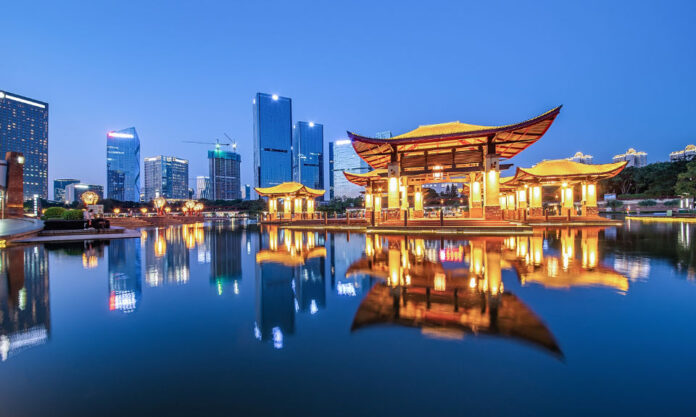
Foshan is regarded as one of the cradles of Cantonese opera, and lion dancing remains a living tradition in the city today. The Ancestral Temple at its centre, a Taoist temple to the god Beidi, was rebuilt in 1372 and had become the community’s focal point by the 15th century.
佛山被视为粤剧的重要发源地之一,舞狮传统至今仍在这座城市生生不息。位于市中心、供奉北帝的祖庙于一三七二年重建,到十五世纪已成为整个社区的核心所在。
Shiwan, in today’s Chancheng district, has produced ceramics for centuries and helped the city grow into one of China’s four great historic market towns, prized as much for its local pottery as for its metalwork.
位于今禅城区境内的石湾,数百年来一直烧制陶瓷,这也助力佛山成长为中国古代四大名镇之一,其陶瓷与冶铁工艺同样负有盛名。
Foshan is also the birthplace of the Wing Chun master Ip Man, whose most famous student, Bruce Lee, later became an international martial arts icon; the folk hero and martial artist Huang Feihong, subject of dozens of Chinese films, was born in Foshan too.
咏春拳宗师叶问也出生于佛山,他最著名的弟子李小龙,后来成为享誉国际的武术偶像;此外,民间传奇武术家黄飞鸿——曾是数十部华语电影的主角——同样是佛山人。
Guangfo Metro, which opened in November 2010, was mainland China’s first subway line to connect two separate prefecture-level cities, linking Foshan directly with Guangzhou.
二零一零年十一月开通的广佛地铁,是中国大陆首条连接两座地级市的地铁线路,将佛山与广州直接相连。
The furnaces that once earned Foshan the name Birmingham of China have long since gone quiet. The city has since found other things to make.
曾为佛山赢得”中国伯明翰”之名的铸炉早已归于沉寂。这座城市,如今已找到了别的东西来制造。