



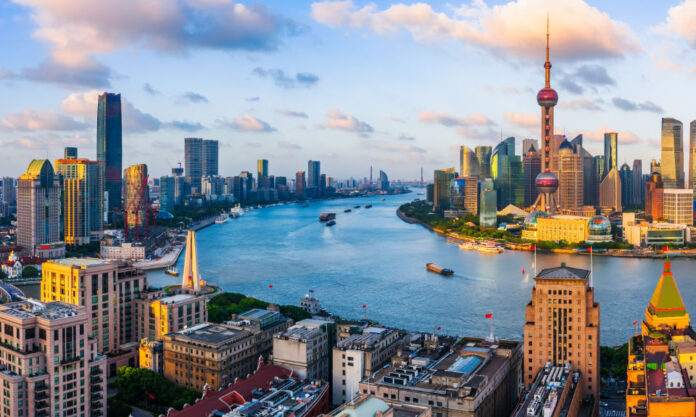
Few cities carry so many arguments in their skin. Shanghai is one of them. It has been a river city, a port city, a treaty-port city, a revolution city and a money city; at different times, outsiders have praised it as the Venice of the East and sneered at it with uglier names.
很少有城市像上海这样,身上背着这么多争论。它是江河之城、港口之城、通商口岸之城、革命之城,也是金融之城;在不同年代,外人曾把它赞为“东方威尼斯”,也曾用更难听的词来羞辱它。
Before Shanghai became a global shorthand, it was a county seat in the lower Yangtze delta. Under the Ming Dynasty and Qing Dynasty, the area sat within Huating and later Songjiang prefectural rule; it was a place of water routes, cotton, silk and market towns, not yet a metropolis.
在成为世界性符号之前,上海只是长江三角洲里的一个县城。明清时期,这一带先属华亭,后归松江府管辖;那时的上海还是水路、棉花、丝绸和集镇的世界,还远不是今天的大都会。
Shanghai’s own 2024 population was 24.8026 million, say the municipal statistics, and the city government now governs 16 districts. Those numbers matter because they show scale, but they do not explain Shanghai on their own. To understand the city, you have to read the layers in its memory.
根据市级统计,上海2024年常住人口为2480.26万人,市政府管辖16个区。数字当然重要,因为它说明了体量,但它并不能单独解释上海。要理解这座城市,还得看它记忆里的层层叠叠。
The Shanghai History Museum still divides that story into five parts, from Huating origins and walled-city life to the opening of the port, the ten-mile foreign-style boulevard and the city’s maritime traces. That structure is useful because it shows Shanghai was never one thing for long; it kept changing its clothes.
上海市历史博物馆至今仍把这段历史分成五部分,从“华亭溯源”和“城厢风貌”,到“开埠掠影”“十里洋场”和“海上旧踪”。这个结构很有意思,因为它说明上海从来都不是单一面孔;它一直在换装。
From Huating County to Treaty-Port Power
从华亭县到通商口岸
Shanghai’s modern turn began in 1843, when the city was formally opened as a treaty port. The 1845 land regulations and later settlement rules gave foreign merchants and consuls a legal framework to build their own districts; the Bund rose from what had once been a muddy riverbank. The place became a commercial experiment, but also a political wound.
上海的现代转向,始于1843年正式开埠。1845年的土地章程以及后来的居住章程,为外国商人与领事机构搭起了制度框架;外滩则是从一片黄浦江边的滩涂上长出来的。这里后来成了商业实验场,也成了政治伤口。
By the late nineteenth and early twentieth centuries, Shanghai had become the country’s busiest meeting point of capital, print, shipping and consumption. Banks, shipping houses, publishing firms, theatres and film studios all clustered in the same compact urban world. That is why the city was admired, feared and resented in equal measure.
到十九世纪末和二十世纪初,上海已经成了中国最繁忙的资本、出版、航运与消费交汇地。银行、船运公司、出版社、戏院和电影公司挤在同一个紧凑的城市空间里。也正因为如此,这座城市既被仰望,也被害怕,还被怨恨。
This was also the Shanghai of outsiders’ fantasies. The phrase “Whore of the Orient” was never a local slogan; it was a colonial insult, tied to nightlife, prostitution and a city that seemed too fast, too hybrid and too difficult to pin down. But the same streets also produced modern journalism, left-wing politics, fashion and cinema. Shanghai was never only what its critics wanted it to be.
这也是外人想象里的上海。“东方荡妇”从来不是本地人的口号;它是带着殖民色彩的侮辱,和夜生活、娼业,以及一座太快、太混杂、太难被定义的城市绑在一起。但同样的街道,也催生了现代报业、左翼政治、时尚与电影。上海从来都不只是批评者想让它成为的样子。
Finance, Memory and a City Refusing to Sit Still
金融、记忆与一座停不下来的城市
After 1949, Shanghai was pulled into a different rhythm. Heavy industry, state planning and port logistics gave it a new role in the socialist era. Later, reform and opening pushed it back towards finance, trade and international services; Pudong became the symbol of that second leap, but the older city never disappeared. It simply learned to share the stage.
1949年以后,上海进入了另一种节奏。重工业、计划体制和港口物流,让它在社会主义时期承担了新的角色。后来改革开放又把它推回金融、贸易和国际服务的轨道;浦东成了第二次跃升的象征,但老城并没有消失,它只是学会了和新城同台。
The city’s museums help make that continuity visible. The Shanghai Museum in People’s Square holds more than a million objects, while the new Shanghai History Museum, in the restored former Race Club building on Nanjing West Road, keeps the civic story grounded in buildings, archives and urban detail. In Shanghai, memory is not a side note; it is part of the infrastructure.
上海的博物馆让这种连续性变得看得见。人民广场的上海博物馆藏品超过百万件,而南京西路上修复后的原跑马总会大楼,如今成为上海市历史博物馆,把城市故事牢牢拴在建筑、档案和城市细部上。在上海,记忆不是附属品;它本身就是基础设施。
Even now, Shanghai still feels made from arrivals. People come from Jiangsu, Zhejiang, Anhui, Shandong and farther afield; they come for work, study, finance, culture and ambition. The result is a city that is polished without being static, international without losing its local accents, and modern without pretending it was born yesterday.
直到今天,上海仍然像是一座由“抵达”拼成的城市。人们从江苏、浙江、安徽、山东乃至更远的地方来到这里;他们为工作、求学、金融、文化和野心而来。于是这座城市既精致,又不僵;既国际化,又保留本地口音;既现代,又不装作自己是昨天才出生的。
Transport is part of that identity too. Shanghai is served by Pudong and Hongqiao international airports, two major railway hubs and one of the world’s most extensive metro networks. The city’s rail and air links make it easy to move between the coast, the delta and the rest of China; that constant movement is still one of Shanghai’s oldest habits.
交通同样是这座城市身份的一部分。上海有浦东和虹桥两座国际机场、两大铁路枢纽,以及世界上最庞大的地铁网络之一。铁路和航空把它与海岸、三角洲和中国其他地区紧紧连在一起;这种持续流动,本来就是上海最老的习惯之一。
Shanghai survives labels because it has always been larger than them. It can be romantic, ruthless, glamorous, bruised and practical in the same afternoon. That is why the old nickname does not settle the argument. Shanghai keeps doing what it has done for nearly two centuries; it takes pressure from outside and turns it into city life.
上海之所以能穿过各种标签,是因为它从来都比标签更大。它可以在同一个下午里同时浪漫、冷硬、光鲜、带伤又务实。也因此,那个老外号并不能真正盖棺定论。上海近两百年来一直做的事情,就是把外来的压力,转化成城市生活。