







Shui Hua (水华) was a film director and screenwriter who maintained artistic integrity while also appealing to the general public with his simplicity and a subtle but clear personal style.
水华(水华)是一位电影导演和编剧,他保持了艺术诚信,同时以他的简单和微妙但清晰的个人风格吸引了公众。
Born in Nanjing on 23 November, 1916, Shui devoted himself to left-wing drama activities when he was as young as 15. This was to forge the foundation of his career and make him posthumously more and more relevant today.
Shui于1916年11月23日出生在南京,15岁时就致力于左翼戏剧活动。 这是为了奠定他职业生涯的基础,并使他死后在今天越来越重要。
In 1933, Shui enrolled the law department of Fudan University in Shanghai and the following year served as a member of the Nanjing Branch of the League of Left-Wing Writers.
1933年,水进入上海复旦大学法律系学习,次年担任左翼作家联盟南京分会成员。
It would pave the way for his long term career as one of China’s most acclaimed directors, when he would often use the screen name Zhang Shuihua, possibly to be more “directorial”.
这将为他作为中国最受赞誉的导演之一的长期职业生涯铺平道路,当时他经常使用片名张水华,可能是为了更“导演”。
But Shui’s work should not be too narrowly bookmarked as left-wing cinema.
但Shui的作品不应该被狭隘地视为左翼电影。
The term “left wing” has connotations with not only politics at the top of the tree, but also the media and entire branches of sociology below it.
“左翼”一词不仅与树顶的政治有内涵,还有媒体和社会学的整个分支。
But to the average Chinese citizen in the 1930s, “left wing” remained but two words. Laikwan Pang points this out in “Building a New China in Cinema: The Chinese Left-Wing Cinema Movement, 1932-1937” (Lanham: Rowman & Littlefield Publishers; 2002).
但对20世纪30年代的普通中国公民来说,“左翼”只是两个词。 Laikwan Pang在《在电影中建设新中国:中国左翼电影运动,1932-1937》(Lanham:Rowman & Littlefield Publishers;2002)中指出了这一点。
Pang notes that while the genre may have had political intent, these movies brought in an audience that “spanned a large spectrum of population in Shanghai”, in particular “petty urbanites”, a term that refers to, at least from the leftists’ point of view, a community of urban consumers who were “unenlightened, conservative and with a taste for things popular”.
Pang指出,虽然该类型可能具有政治意图,但这些电影带来了“跨越上海大量人口”的观众,特别是“小城市人”,至少从左派的角度来看,这个词指的是一个“不开明、保守、喜欢流行事物”的城市消费者社区。
Hence, and with the study of Chinese cinema now more popular than ever before in western colleges and universities, a prolonged consideration of Shui’s canon of work would be a valuable scholarly pursuit.
因此,随着中国电影的研究现在在西方高校比以往任何时候都更受欢迎,长期考虑水的作品是一项有价值的学术追求。


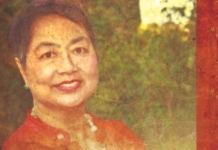
In 1950, Shui co-directed “White Haired Girl” (白毛女) which went on to win the special honour award at the 6th Karlovy Vary International Film Festival in today’s Czech Republic.
1950年,Shui共同执导了《白毛女》,该片在今天的捷克共和国举行的第六届卡罗维发利国际电影节上获得了特别荣誉奖。
Further critical acclaim came as the decade closed, with Shui as solo director on “The Lin Family Shop” (林家铺子), based on a short story by Mao Dun.
随着十年的结束,Shui根据Mao Dun的短篇小说《林家铺子》担任独任导演,获得了进一步的好评。
But then came China’s turmoils of the 1960s and 70s, which made many believe that Shui had already directed his last ever film. But that was not to be the case at all.
但随后,中国在20世纪60年代和70年代出现了动荡,这让许多人相信Shui已经导演了他的最后一部电影。 但情况并非如此。
The 1980s saw Shui in the director’s chair once again for more films based on celebrated authors’ works; 1981’s “Regret for the Past” (伤逝), adapted from a story by Lu Xun; and 1984’s “Blue Flowers”, based on the Li Guowen short story, “Eclipse of the Moon” (月食).
20世纪80年代,水再次担任导演的椅子,拍摄更多基于著名作家作品的电影;1981年的《对过去的遗憾》(伤逝),改编自鲁迅的故事;以及1984年的《蓝花》,根据李国文的短篇小说《月食》改编。
Recognition for his 4 decades of work in the industry came Shui’s way in 1995. Commemorating the 90th anniversary of the birth of Chinese cinema, Shui was awarded with a Director Award in the Chinese Century Movie Awards.
1995年,Shui因在该行业工作了40年而获得认可。 为了纪念中国电影诞生90周年,Shui在中国世纪电影奖上获得了导演奖。
Shui died of illness in Beijing at the age of 79 on 16 December, 1995. Leaving behind him at least one movie from each period in the history of Chinese cinema, the rigorous creative attitude of this Great Nanjinger persists even today for those interested in the Middle Kingdom’s silver screens.
1995年12月16日,Shui在北京因病去世,享年79歲。 这位大南京人对中国电影史上每个时期至少一部电影都留下了一部电影,即使在今天,对于那些对中王国银幕感兴趣的人来说,他严格的创作态度仍然存在。