

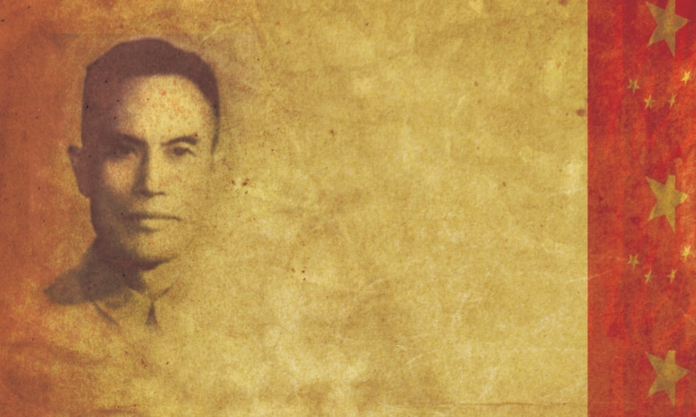

Zhang Tianyi (张天翼) was a 20th-century Chinese satirist who went on to become editor of a prolific national literary journal. But, as a left winger and member of the Communist Party, the public needed to enjoy Zhang’s wit through underground journals.
张天翼(张天翼)是一位20世纪的中国讽刺作家,后来成为一家多产的国家文学期刊的编辑。 但是,作为一名左翼和共产党员,公众需要通过地下期刊欣赏张的机智。
Born in Nanjing on 26 September, 1906, Zhang’s ancestors hailed from Xiangxiang County of southerly Hunan Province.
1906年9月26日,张的祖先出生于南京,来自湖南省南部的湘乡县。
Zhang finished primary and junior high school in Hangzhou and arrived in Beijing in the autumn of 1925 to be enrolled in Peking University the following year.
张在杭州完成了小学和初中学业,并于1925年秋天抵达北京,次年就读于北京大学。
But it was not until 1929 that his professional that he officially started his professional writing career. And as it would turn out, that would writing with political leanings.
但直到1929年,他的职业才正式开始他的专业写作生涯。 结果是,那将是带有政治倾向的写作。
Expressing dissatisfaction with his uni courses and his family’s limited financial means, a new-found ideology in Zhang led him to join the Communist Party in 1927.
张表达了对大学课程和家庭有限经济状况的不满,在张新发现的意识形态导致他于1927年加入共产党。
Subsequently, he joined the Chinese Left Wing Writers’ League (中国左翼作家联盟), the literary organisation led and established by the Communist Party of China in Shanghai, with the purpose to fight a propaganda position against the Kuomintang (KMT) and attract the general public’s support for its ideas.
随后,他加入了中国左翼作家联盟,这是一个由中国共产党在上海领导和建立的文学组织,目的是对抗国民党(KMT)的宣传立场,吸引公众对其思想的支持。
That which would become a turning point for Zhang’s career was heralded by the founding of China’s first first literary journal, People’s Literature (人民文学) on 25 October, 1949, with calligraphy for tits masthead done by Chairman Mao Zedong himself.
1949年10月25日,中国第一本文学期刊《人民文学》的成立预示着,这将成为张职业生涯的转折点,由毛泽东主席亲自为奶子桅头做书法。
But before becoming that publication’s editor in chief, after liberation, Zhang successively served as Deputy Director of the Central Literature Institute (中央文学讲习所), member of the China Federation of Literary and Art Circles (中国文联委) and Secretary to the Secretariat of the China Writers’ Association (中国作协书).
但在成为该出版物的主编之前,解放后,张先后担任中央文学讲习所副所长、中国文艺界联合会成员和中国作家协书秘书处秘书。
But as a writer, given his political leanings and the ever-present KMT of the day, much of Zhang’s personal cannon was published under pseudonyms, such as Zhang Tianjing and Tie Chihan, through underground channels.
但作为一名作家,鉴于他的政治倾向和当时无处不在的国民党,张的大部分个人大炮都是通过地下渠道以张天和铁志涵等假名出版的。


That particular avenue also only served to enhance Zhang’s popularity with his readers, especially given the style and focus of his writing.
这一特殊途径也只会提高张在读者中的受欢迎程度,特别是考虑到他的写作风格和重点。
Through his prose, Zhang liked to expose the vulgar and ridiculous life of ordinary citizens and intellectuals alike, so as to reveal the hypocrisy and ugliness of reality, attacking the disadvantages of that he saw as an abnormal society.
通过他的散文,张喜欢揭露普通公民和知识分子的粗俗和荒谬的生活,以揭示现实的虚伪和丑陋,攻击他认为的不正常社会的缺点。
Given this darker preference, the paradox in Zhang’s life story was the fact that he found his greatest success as a writer of children’s fiction, to the extent his fairy tales now occupy an important position in the history of Chinese children’s literature.
鉴于这种更黑暗的偏好,张的人生故事中的悖论是,他作为儿童小说作家获得了最大的成功,以至于他的童话故事现在在中国儿童文学史上占有重要地位。
In particular, Zhang’s “The Story of Luo Wenying” (罗文应的故事), a collection of short stories, won first prize in the National Children’s Literary and Artistic Creation Award (全国少年儿童文学艺术创作) in 1954. That same institution also later conferred Zhang as an honorary recipient of the award in recognition of his contribution to children’s literature.
特别是,张的短篇小说集《罗文应的故事》于1954年获得全国少年儿童文学艺术创作一等奖。 同一机构后来也授予张该奖项的荣誉获得者,以表彰他对儿童文学的贡献。
Meanwhile, his other works, “The Bald King” (秃秃大王) and “Dalin and Kobayashi” (大林和小林), went on to be known as milestones in the history of Chinese fairy tales.
与此同时,他的其他作品《秃头大王》和《大林和小林》成为中国童话史上的里程碑。
Sickened by hemiplegia and aphasia but largely cured, he still insisted on working for most of the following decade. Zhang died on 28 April, 1985.
患有偏瘫和失语症,但基本痊愈,在接下来的十年里,他仍然坚持工作。 张于1985年4月28日去世。