As an English teacher, I have to fight my natural urge to mock and demean geography, at least as a school subject.
作为一名英语老师,我必须抵制嘲笑和贬低地理的自然冲动,至少作为一门学校科目。
It is all too easy to dismiss it as “colouring in maps” and quizzes about flags, (although I challenge anyone to deny these aren’t the most appealing parts of it!) and to overlook the vast reach of the discipline. Aside from the classical split between physical and human geography, there are numerous branches and topics, including biogeography, economic geography, geomorphology, geographical psychology and even geopoetics! Perhaps more than any other school subject, geography lends itself to blending and melding with other disciplines, linking nicely to the world around it. Fitting.
把它當作「在地图上涂色」和关于旗帜的测验是很容易的,(尽管我向任何人提出挑战,不要否認這些不是其中最吸引人的部分!) 并忽视了该学科的广泛范围。 除了物理地理和人文地理之间的经典划分外,还有许多分支和主题,包括生物地理学、经济地理学、地貌学、地理心理学甚至地缘诗学! 也许与任何其他学校科目相比,地理学更适合与其他学科融合,与周围的世界建立良好的联系。 合身。
Following my interests, that of geopoetics is nowhere near as intimidating as it first sounds. Combining elements of geography and poetry to explore the relationship between human experience and the natural environment, it emphasises the emotional and sensory experience of landscapes, seeking to evoke a sense of place and belonging through poetic expression, and drawing inspiration from the physical features of the Earth; mountains, rivers, forests.
根据我的兴趣,地缘诗学远没有最初听起来那么令人生畏。 它结合地理和诗歌元素来探索人类经验和自然环境之间的关系,强调景观的情感和感官体验,寻求通过诗歌表达唤起地方感和归属感,并从地球的物理特征中汲取灵感;山脉、河流、森林。
Geopoetics also encourages poets and writers to explore environmentalism and sustainability, reflecting on the impact of human activities on the natural world.
地理诗学还鼓励诗人和作家探索环保主义和可持续性,反思人类活动对自然世界的影响。
Focusing on China, the essence of this movement has long existed in the Chinese literary tradition, from “Poems of the Late Tang” in the 9th and 10th centuries to “Stone Classics” (石经) by Bian Zhilin of the 20th century. Works such as these blend elements of geography, culture and poetry to conjure up a sense of place; real or imaginary.
以中国为重点,这种运动的精髓早已存在于中国文学传统中,从9世纪和10世纪的《唐末诗》到20世纪的汴志林的《石经》。 像这样的作品融合了地理、文化和诗歌的元素,唤起一种地方感;真实或想象。
The classic Chinese fable, “Peach Blossom Spring” (桃花源) tells the story of a fisherman who discovers a hidden paradise in a remote valley. He interacts with the villagers there who exist in this utopia out of the rush and clamour of the everyday world and away from strife:
中国经典寓言《桃花源》讲述了一个渔夫在一个偏远的山谷中发现一个隐藏的天堂的故事。 他与那里的村民互动,他们存在于这个乌托邦中,远离日常世界的喧嚣和喧嚣,远离纷争:
有良田、美池、桑、竹之屬,阡陌交通,雞犬相聞。
There were fertile lands, beautiful pools, mulberry trees and bamboo, and roads and paths for travel; chickens and dogs could be heard.
有良田、美池、桑、竹之属,阡陌交通,鸡犬相闻。 这里有肥沃的土地、美丽的水池、桑树和竹子,还有道路和旅行小径;可以听到鸡和狗的声音。
The fisherman leaves, and tries to mark the route back so he can return. The governor of the province sends people to search for a way back to the village; they are “fascinated” but can not find the route. The tale celebrates the idyllic beauty of nature and reflects on themes of utopia, nostalgia and the harmony between humans and the environment. It appears geopoetics touches on history too!
渔夫离开了,并试图标记返回的路线,以便他可以返回。 省长派人去寻找回村的路;他们“着迷”,但找不到路线。 这个故事颂扬了大自然的田園美,并反映了乌托邦、怀旧以及人与环境和谐的主题。 似乎地缘诗学也触及了历史!
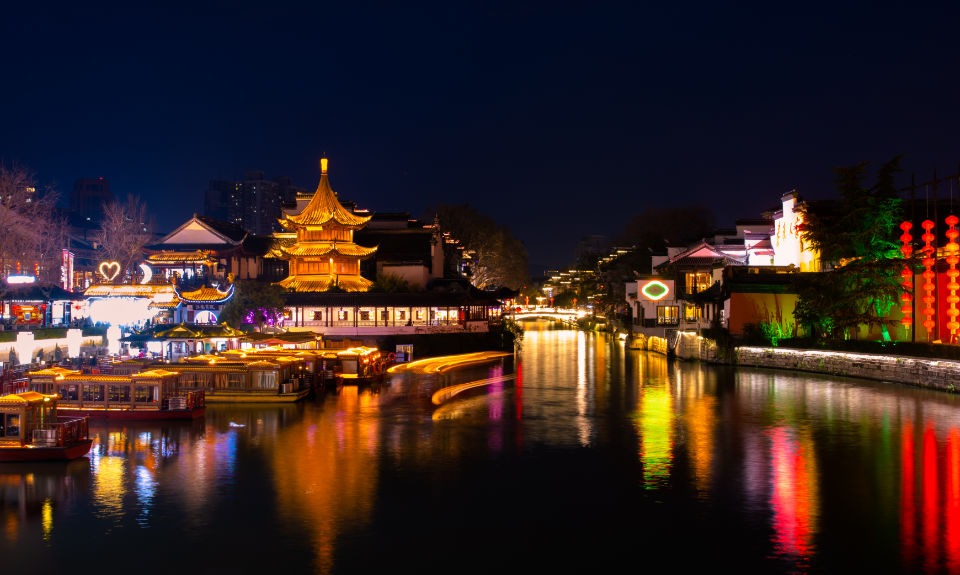
What about something a little closer to our beloved Nanjing? Of course, the Southern Capital has been the muse of poets for as long as its been a city. For somewhere so pivotal in Chinese history, how could it not be? Aside from several poems celebrating the rain in Nanjing (go figure), we have Du Mu’s classical “Mooring by the Qínhuái” (泊秦淮), which simultaneously creates a sense of place and captures our city’s sometimes less-than-friendly weather:
离我们心爱的南京更近一点的地方怎么样? 当然,南方首都一直是诗人的缪斯,就像它是一个城市一样。 对于中国历史上如此关键的地方,它怎么可能不呢? 除了几首庆祝南京雨的诗(go figure),我们还有杜木的经典作品《泊秦淮》,它同时营造了一种地方感,并捕捉到了我们城市有时不太友好的天气:
迷濛的煙霧包圍著寒江,皓月的清輝亦籠罩著沙渚。
The haze covers the cold river, as does the bright moon over the sand banks.
迷濛的烟雾包围着寒江,皓月的清辉也笼罩着沙渚。 雾霾覆盖着冰冷的河流,沙洲上的明月也是如此。
The poem goes on to describe the hectic hustle and bustle of the restaurants at night down by the river. We can almost feel ourselves in Fuzimiao, if a Fuzimiao that exists more in the shared imagination than among the Starbucks and KFCs of its modern incarnation.
这首诗接着描述了晚上河边餐馆的喧嚣。 我们几乎可以感觉到自己在Fuzimiao,如果Fuzimiao更多地存在于共享的想象中,而不是在现代化身的星巴克和肯德基中。
It seems that English and geography have always been tied together more closely than for which I previously gave credit.
似乎英语和地理一直比我之前给予的信用更紧密地联系在一起。
In the labyrinth of human existence, and from the bustling streets of Nanjing to its tranquil riverside parks, geography emerges as the compass guiding our understanding of the world.
在人类生存的迷宫中,从南京繁华的街道到宁静的河边公园,地理成为指导我们理解世界的指南针。
In a city where history breathes through ancient city walls while modernity pulsates in skyscrapers, English and geography can combine to give us a deeper appreciation of the city’s man-made and natural spaces, and draw a line through vivid and real place to a just-as-richly-painted past.
在一个历史透过古老的城墙呼吸,而现代性在摩天大楼中脉动的城市里,英语和地理可以结合在一起,让我们更深入地理解城市的人造和自然空间,并通过生动而真实的地方划出一条线,与同样丰富的描绘的过去。
In an increasingly interconnected world, geographic literacy of a more traditional form is not merely advantageous; it is imperative. From navigating geopolitical (just another branch!) tensions to understanding the causes and implications of climate change, geographical knowledge equips individuals with the tools to navigate complex global challenges. In modern China, steeped in history yet poised for the future, this cornerstone of education is more necessary than ever.
在一个日益相互联系的世界中,更传统形式的地理素养不仅是有利的;它是当务之急。 从地理政治导航(只是另一个分支!) 理解氣候變化的原因和影響的緊張關係,地理知識使個人掌握了應對複雜全球挑戰的工具。 在沉浸在历史中,但又为未来做好准备的现代中国,教育的基石比以往任何时候都更加必要。
And, failing that, you can always go back to map-colouring and flag-finding (where can I sign up?)!
而且,如果做不到,你总是可以回到地图着色和旗帜查找(我在哪里可以注册?)!