



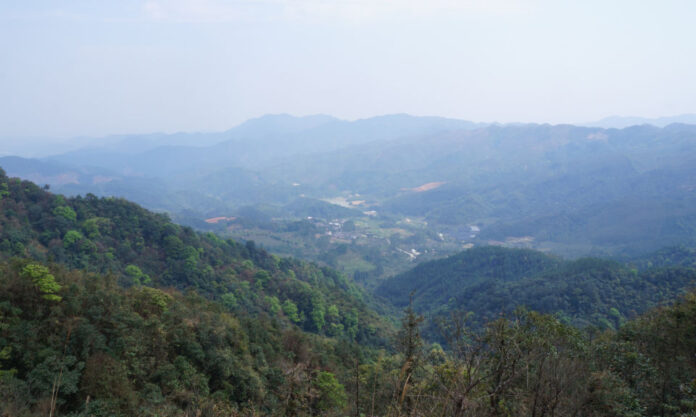



Zhuang and Yao ancestors, part of the ancient Baiyue peoples, once populated the entire territory that is now Yunfu, long before Han settlers arrived here in force; today, ethnic minorities make up barely 14,000 of the city’s nearly 2.4 million residents.
壮族与瑶族先民,同属古代百越族群,曾遍布如今云浮的整片辖境,远早于汉人大规模迁入此地;而今日,这座城市近二百四十万常住人口中,少数民族仅有一万四千余人。
The Qin dynasty absorbed the area into Guilin Commandery in the third century BC, and the Han dynasty later folded it into the short-lived Kingdom of Nanyue; successive imperial administrations brought repeated waves of Han settlement after that, and by the time centuries of migration and intermarriage had run their course, only two villages, Hejiang in Luoding and Dalin in Yun’an, retained anything resembling a concentrated ethnic minority population, according to the city’s own local gazetteer.
公元前三世纪,秦朝将此地纳入桂林郡辖境,汉代又将其并入短命的南越国;此后历代王朝统治期间,汉人不断成批迁入,数个世纪的迁徙与通婚过后,如今仅剩罗定市嘉议镇的合江与云安区镇安镇的大迳两处村落,还保留着相对集中的少数民族聚居形态,据该市地方志记载。
The Stone Beneath Their Feet Made the City Famous Instead
脚下的石头,取而代之成就了这座城市的声名
What did make Yunfu famous was never its people but its rock; local quarrying of marble and granite dates back more than 400 years to the Ming dynasty, and the industry now stretches along National Highway 324 through more than 850 stone enterprises, earning the city its national title as China’s Stone Capital.
真正让云浮声名远播的,从来不是这里的人,而是脚下的岩石;当地开采大理石与花岗岩的历史,可追溯至四百多年前的明代,如今这一产业沿着324国道分布,聚集着八百五十余家石材企业,也让这座城市赢得了”中国石材之都”的国家级美誉。
Beneath the marble sits pyrite, and Yunfu has developed into China’s largest sulfur chemical production base on the strength of it, alongside a stainless steel tableware industry that supplies much of Guangdong province; both industries were built almost entirely by Han migrants and their descendants, on land that ancient records once counted as Baiyue territory.
大理石之下则是黄铁矿,云浮凭借这一资源,发展成为中国规模最大的硫化工生产基地,此外还形成了供应广东全省的不锈钢餐具产业;这两大产业几乎完全由汉族移民及其后裔一手建立,而这片土地,古代文献中却曾将其记作百越故地。
According to the city’s own 2024 economic communiqué, Yunfu’s GDP reached ¥130.9 billion that year, up 4.0 percent, with per capita output at ¥54,619; the permanent population stood at 2.3973 million, only 47.4 percent of them classified as urban, one of the lower urbanisation rates in Guangdong province.
据该市自身发布的二零二四年经济统计公报显示,当年云浮市GDP达一千三百零九点一九亿元,同比增长百分之四点零,人均产值为五万四千六百一十九元;常住人口为二百三十九点七三万人,其中城镇人口比重仅为百分之四十七点四,是广东省内城镇化率较低的地区之一。
Getting to Yunfu means a drive of around two hours from Guangzhou, roughly 160 kilometres away, or a shorter journey along the Xijiang River to Yunfu New Port, the largest inland river port in Guangdong.
前往云浮,自广州驱车车程约两小时,路程约一百六十公里;也可沿西江水路前往云浮新港,这是广东省内规模最大的内河港口。
Hejiang and Dalin survive today like two small islands in a landscape of quarries and stone yards, preserving the ancestry that once belonged to the whole surrounding region.
合江与大迳两村,如今犹如两座孤岛,散落在这片布满采石场与石材加工厂的土地之上,守护着曾遍布整个周边地区的那一脉血统。