






Steam hangs over Longyan in the morning, caught between the hills of western Fujian and the first buses into town. The city feels old in the bones, but its news feeds are busy, and that mix gives it a very particular energy.
清晨的龙岩总带着一层潮气,山影压在城外,第一班公交车已经进了市区。这里骨子里很旧,可新闻栏里又很热闹,这种混合让它有一种很特别的劲头。
Longyan is not a city that has to invent a story for itself. It arrives with one already in place, and a fairly large one at that. Mountains, red history, Hakka roots, industrial work and a stubborn habit of getting things done all sit close together here.
龙岩并不需要替自己编一个故事。它一出生,故事就已经很大了。山地、红色历史、客家根脉、工业生产和一种埋头做事的习惯,在这里挨得很近。
According to Longyan’s municipal government site, this is the only prefecture-level city in China with “龙” in its name. The same official profile calls it a national civilisation city, a national sustainable development pilot zone, a national ecological civilisation pilot area and a national specialised vehicle city. It also says Longyan is the place where the Party established the principle of ideological and political building in the army, the core area of the old Central Soviet Area, a source of Mao Zedong Thought and a city that enjoys the praise of “二十年红旗不倒”. In the same breath, it describes Longyan as an important mining and forest base and “海西品牌最多的旅游区” (The tourist area with the highest number of brands in Haixi).
按龙岩市人民政府门户网站的说法,龙岩是全国唯一以“龙”字命名的地级市。市情介绍里还写着,它是全国文明城市、国家级可持续发展实验区、全国生态文明建设试点地区、国家专用汽车名城。官方还强调,这里是我党确立思想建党、政治建军原则的地方,是原中央苏区核心区域、毛泽东思想的重要发祥地,并享有“二十年红旗不倒”的赞誉。网站同时把它写成福建省重要矿区、林区,也是“海西品牌最多的旅游区”。
Red Ground that Somehow Still Feels Current
红色土地,今天仍然热乎
That is the weight Longyan carries, and it is not a museum weight. In the city centre, the language of the day still sounds practical. The municipal government homepage on 15 July, 2026 led with an inspection of industrial economy quality and growth; on 13 July, another headline said the city’s province-level science projects had reached a record high in both number and value. Red memory is still there, but so is the business of the present.
这就是龙岩的分量,而且不是博物馆里的那种分量。放到今天,它的语言依旧很实在。龙岩市政府网站2026年7月15日的头条是工业经济提质增量行动调研,7月13日又写到省级科技计划项目立项数和金额创新高。红色记忆当然还在,可眼前的日子也一样在往前走。
The city does not hide how central the Hakka story is either. Official wording still uses phrases like “客家祖地”, and that matters because Longyan’s culture is built from movement, settlement and stubborn continuity. You hear it in the way people speak about lineage, in the way whole villages still remember surnames and in the plain confidence with which the city describes itself.
龙岩也从不掩饰自己和客家文化的关系。官方话语里常见“客家祖地”这样的说法,这很重要,因为龙岩的文化本来就建立在迁徙、落脚和持续的传承上。宗族、村落、姓氏,这些东西在这里并没有退场,只是换了一种更日常的说法。
Tulou, Tea and the City in Between
土楼、茶叶与夹在中间的龙岩
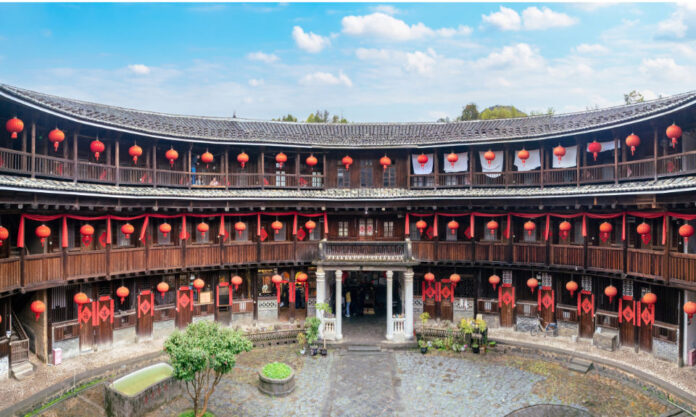
Walk west into Yongding and the built landscape changes the tone again. The district government still calls Yongding “土楼之乡”, and says it is the origin and core distribution area of Fujian tulou. That is not just a slogan. It is the reason the roads feel like they are leading towards someone’s front door, not just a scenic spot.
往西进入永定,建筑本身就把气氛改了。永定区政府至今还把自己叫作“土楼之乡”,并写明它是福建土楼的发源地和核心分布区。这不只是标语。路到了这里,真的像是在往谁家门口走,而不只是往景区里去。
The tulou clusters are famous because they make one idea visible at full scale. Families built for defence, shared life and the long haul; thick walls, circular corridors and courtyards that still make first-time visitors slow down a little. Yongding’s own government page has continued to treat them as a living part of the district, not a finished chapter.
土楼之所以出名,是因为它把一种生活方式放大到人人看得见。防御、共居、长期生活,厚墙、环廊、天井,这些东西会让第一次来的人自然慢下来一点。永定区政府现在写这些土楼时,也还是把它们当成活着的地方,而不是已经写完的章节。
Longyan is also a city of work clothes, tea shops and straightforward meals. The official profile calls it an important mineral and forest base; around it, that becomes visible in the rhythm of trucks, in the smell of wet timber after rain and in the way tea is never treated as a luxury. It is part of the day.
龙岩还是一座会穿工作服、喝茶、吃得很直接的城。官方简介里把它写成重要矿区、林区,这些词放到街头巷尾就变成了货车节奏、雨后木材的潮味,还有茶叶从来不被当成奢侈品的日常。它就是日子的一部分。
Hakka Roots, Red Sites and New Ambition
客家根脉、红色旧址与新的野心
That mix gives Longyan its unusual balance. A city can be serious about revolution, serious about timber and ore, serious about family memory and still be surprisingly alert to the business of building hospitals, schools, industrial parks and better roads. Longyan feels less like a place trying on identities and more like one that has been keeping several plates spinning for a long time.
这种混合感正是龙岩最特别的地方。它既认真对待革命记忆,也认真对待矿产和林木,还认真对待宗族记忆,同时又对医院、学校、产业园和道路建设保持着很高的敏感度。龙岩不像是在试穿身份,更像是很早就开始同时转着好几个盘子。
Transport keeps that movement honest. Longyan Railway Station and Longyan Guanzhaishan Airport make the city far easier to reach than its mountain frame might suggest; roads and rail now do the slow job of stitching the uplands to the rest of Fujian. The hills are still there, but they no longer have the final say.
交通让这种流动更踏实。龙岩站和龙岩冠豸山机场让这座城比山地外观看上去更容易抵达;铁路和公路正在把山地和福建其他地方慢慢缝在一起。山还是在的,可它们已经不再拥有最后的发言权。
So Longyan ends up as a city where a red slogan, a tulou wall and a factory headline can sit on the same page without any real strain. That is the point. The steam in the morning does not hide the city; it helps define it.
所以龙岩最后呈现出来的样子,是一座红色口号、土楼墙体和工厂新闻可以同时出现在同一页上的城,而且一点都不别扭。重点就在这里。清晨的潮气并没有遮住这座城,反而把它的轮廓衬得更清楚。