



The idea of incongruity carries a bad rep. It’s right there, in the word itself. “In” often implies something ineffective, inefficient or incompatible. But the picture becomes muddier when we consider inventiveness, ingenuity and incredibility. Hold that incongruity in mind.
不一致的想法带有不好的声誉。 它就在那里,在这个词本身。 “In”通常意味着一些无效、低效或不相容的东西。 但是,當我們考慮到創造力、獨創性和可信度時,畫面變得更加模糊。 牢记这种不协调。
Humans, being pattern-seeking animals, look for connections and congruencies between things. We like to classify, to order, to line the world up in neat chunks.
人类是寻求模式的动物,在事物之间寻找联系和一致性。 我们喜欢分类、排序、将世界整齐地排列成大块。
The Chinese characters that combine to define “incongruous” do the same thing. “协” (xié), meaning association, harmonise, or help comes together with “调” (tiáo), meaning tune or tone. Then, by sticking the multi-purpose “不” (bù) in front of it, we get the negativity seeping through – defining something by what it is not. So is an incongruous idea inherently bad?
組合在一起定義「不協調」的漢字也有同樣的事情。 “协”(xié),意思是关联、和谐或帮助,与“调”(tiáo)一起,意思是调或音调。 然后,通过将多用途的“不”(bù)贴在它前面,我们让负面情绪透进来——用它不是的东西来定义某物。 那么,一个不协调的想法本质上是坏的吗?
Let’s explore. Which of these approaches to incongruity appeals most to you?
我们来探索吧。 这些关于不协调的方法中,哪种方法最吸引你?
“Faith is the final triumph over incongruity, the final assertion of the meaningfulness of existence.” Reinhold Niebuhr
“信仰是对不协调的最终胜利,是对存在意义的最终断言。” 莱因霍尔德·尼布尔
“Ingenuity and incongruity always cheer me up.” Terry Pratchett
“巧妙和不协调总是让我振作起来。” 特里·普拉切特
For me, the choice is easy. I would always pick the laid-back approach of the second over the solemn seriousness of the first. Of course, it helps a lot being familiar with Terry Pratchett’s comedy stylings in his “Discworld” and “Good Omens” novels, and only learning of Reinhold Niebuhr’s serious theological philosophy much more of late. It is, after all, a writer’s prerogative to load the dice in their favour!
对我来说,选择很容易。 我总是会选择第二个的悠闲方法,而不是第一个庄严严肃。 当然,熟悉Terry Pratchett在《Discworld》和《Good Omens》小说中的喜剧风格,以及最近才更多地了解Reinhold Niebuhr严肃的神学哲学,这对他有很大帮助。 毕竟,把骰子装得对他们有利是作家的特权!
Being an incurable atheist helps too. In my view, the “meaningfulness of existence” just doesn’t wash – it’s hard to agree there is a divine order to life with the sheer random chaos that is living day to day, a feeling incomparably strengthened when you learn the number of “make-up days” the regional government has announced after a Chinese public holiday.
成為一個無法治癒的無神論者也有幫助。 在我看来,“存在的意义”只是没有洗不掉——很难同意生活有神圣的秩序,每天都是纯粹的随机混乱,当你了解到地区政府在中国公共假期后宣布的“化妆日”数量时,这种感觉会得到无与伦比的加强。
Genuinely, though, embracing the incongruities of everyday life seems to make more sense than asserting an order, through faith, without evidence.
然而,从真的说起,拥抱日常生活的不协调似乎比在没有证据的情况下通过信仰断言秩序更有意义。
When you break it down, what could be more incongruous than that?
当你分解它时,还有什么比这更不协调的呢?
My research and abstract musings on the congruent (or not) nature of life also led me to the idea of negative capability: a writer’s ability, “which Shakespeare possessed so enormously,” to accept “uncertainties, mysteries, doubts, without any irritable reaching after fact and reason”, according to English poet John Keats who first used the term in an 1817 letter.
英国诗人约翰·基茨(约翰·基茨)在1817年的一封信中首次使用了这个词,我对生活的一致性(或不一致)性质的研究和抽象的沉思也使我产生了消极能力的想法:一个作家的能力,“莎士比亚拥有如此之多”,接受“不确定性、神秘、怀疑,没有任何烦躁的触及事实和理性”。
For Keats, being open minded and not always striving for a sure answer is more important than certainty. This is perhaps best exemplified in his famous “Ode on a Grecian Urn”, where he states “‘Beauty is truth, truth beauty’—that is all / Ye know on earth, and all ye need to know.”
对Keats来说,保持开放的心态,而不是总是为确定的答案而奋斗,这比确定性更重要。 这也许在他著名的《希腊骨灰盒上的頌歌》中得到了最好的体现,他说:“’美就是真理,真理美’——这就是你们在地球上所知道的一切,以及你们需要知道的一切。”
Or is it? Is Keats telling us to stop searching for more and live in the aesthetic, or to keep our minds open and see truth in beauty without trying to classify it into something cold and scientific?
还是这样? Keats是告诉我们不要再寻找更多,活在美学中,还是要保持开放的心态,在美中看到真理,而不试图将其归类为冷酷和科学的东西?
This circulatory, ambling thought process is expressed in Chinese poetry too. Modern Chinese poet 北岛 (Bei Dao) writes in “The Taste of Rain” (雨的味道):
這種迴圈、漫無邊際的思維過程也在中國詩歌中得到了表達。 中国现代诗人北岛(北岛)在《雨的味道》中写道:
《我说这不是雨的味道,这是土地的味道。》
I say this isn’t the taste of rain, it’s the taste of earth.
《我说这不是雨的味道,这是土地的味道。》 我说这不是雨的味道,而是大地的味道。
《这雨水滋润着大地,我说这是世界的气息。》
This rainwater nourishes the earth, I say this is the breath of the world.
《这雨水滋润着大地,我说这是世界的气息。》 这雨水滋养了大地,我说这是世界的气息。
《他们不懂,我说的是悲伤,是幸福。》
They don’t understand, what I’m saying is sadness, is happiness.
《他们不懂,我说的是悲伤,是幸福。》 他们不明白,我说的是悲伤,是快乐。
《我说的是远方,是过去,是希望。》
What I’m saying is distance, is the past, is hope.
《我说的是远方,是过去,是希望。》 我说的是距离,是过去,是希望。
《他们听见的只是雨的声音,雨的味道。》
What they hear is only the sound of rain, the taste of rain.
《他们听到的只是雨的声音,雨的味道。》 他们听到的只是雨声,雨的味道。
Something that “is sadness, is happiness”? “Is distance, is the past, is hope”? Drawing two contradictions together seems a favourite trick of these poet-y types! Perhaps they hope us to reflect on the passing of time, on the fleeting nature of experience, on the shifting sands beneath our meaning-making minds.
“是悲伤,是快乐”的东西? “距离,过去,希望”? 把两个矛盾画在一起似乎是这些诗人最喜欢的把戏! 也许他们希望我们反思时间的流逝,反思经验的转瞬即逝,反思我们创造意义的头脑下不断变化的沙子。
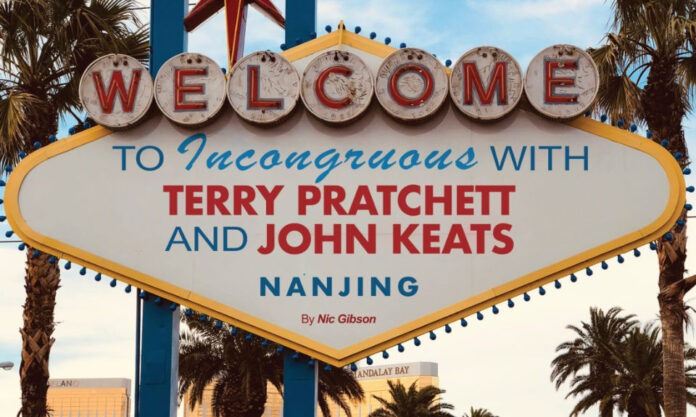
Or perhaps we could enjoy a more concrete example of something being out of tune with its surroundings: Las Vegas. Russian-American author Maria Konnikova made it real when she said “Las Vegas shouldn’t exist. The incongruity hits you from the moment you first glimpse it from the airplane. First mountains, then desert, then neat squares of identical houses that look as if they were plucked straight from Monopoly.”
或者,也许我们可以享受一个更具体的例子,说明与周围环境不协调:拉斯维加斯。 俄裔美国作家Maria Konnikova说“拉斯维加斯不应该存在”,这让事情变得真实。 从你第一次从飞机上看到它的那一刻起,这种不协调就击中了你。 首先是山脉,然后是沙漠,然后是整齐的相同房屋的正方形,看起来就像是从大富翁中直接摘来的。”
Our whirlwind tour of the inconsistencies in the human experience here hence comes to an end; feelings of disorientation to be expected!
因此,我们对人类经验不一致的旋风之旅结束了;迷失方向的感觉是可以预料的!