I must confess from the get go that I don’t have any tattoos. I flirted with the idea of getting song lyrics in my teenage years; I would have gone for somewhere understated, like a tricep or inner thigh. But my favourite bands at the time were The Libertines, The Cribs and Muse, so the inking would have been something pseudo-intellectual or straight-up emo.
我必须承认,我没有任何纹身。 在我十几岁的时期,我与获得歌词的想法调情;我会去一些低调的地方,比如三头肌或大腿内侧。 但当时我最喜欢的乐队是The Libertines、The Cribs和Muse,所以墨水会是伪知识分子或直截了当的情绪。
I would have ended up with, “I think I’m drowning, asphyxiated”, or, “Wouldn’t it be nice to be Dorian Gray just for a day?”, across my body, forever.
我最终会说,“我想我要淹死了,窒息了”,或者,“做一天多里安·格雷不是很好吗?”,在我的身体里,永远。
I’m thankful, sometimes, I was such a hesitant teen; getting a tattoo is a lifelong commitment, and is, as with so much these days, part of a larger picture of cultural ebb and flow.
我很感激,有时,我是一个如此犹豫不决的青少年;纹身是一项终身的承诺,就像现在一样,它是文化起伏的更大画面的一部分。
Now, living in Brighton on the south coast of the UK, I’m surrounded by body art. Brighton has long been a hub of creativity and individuality. It is well-known for being one of the most progressive cities in the UK, with all the benefits and comical sights that can bring. The city’s bohemian spirit has made it something of a hotspot for tattoo enthusiasts and artists.
现在,我住在英国南海岸的布莱顿,周围都是人体艺术。 布莱顿长期以来一直是创造力和个性的中心。 它以英国最进步的城市之一而闻名,拥有所有好处和滑稽的景点。 这座城市的波西米亚精神使它成为纹身爱好者和艺术家的热点。
Unfortunately, this doesn’t mean the quality of tattooing is any higher. Brighton’s tattooed populace has its fair share of faded anchors, muddled blocks of text (poetry? Hard to tell…) and faces inkily smeared across chests and calves, somehow looking larger than life and diminished at the same time.
不幸的是,这并不意味着纹身的质量更高。 布莱顿的纹身人口有相当一部分褪色的锚,混乱的文字块(诗歌? 很难说……)胸部和小腿上沾满了脸,不知何故,看起来比生命更大,同时又缩小了。
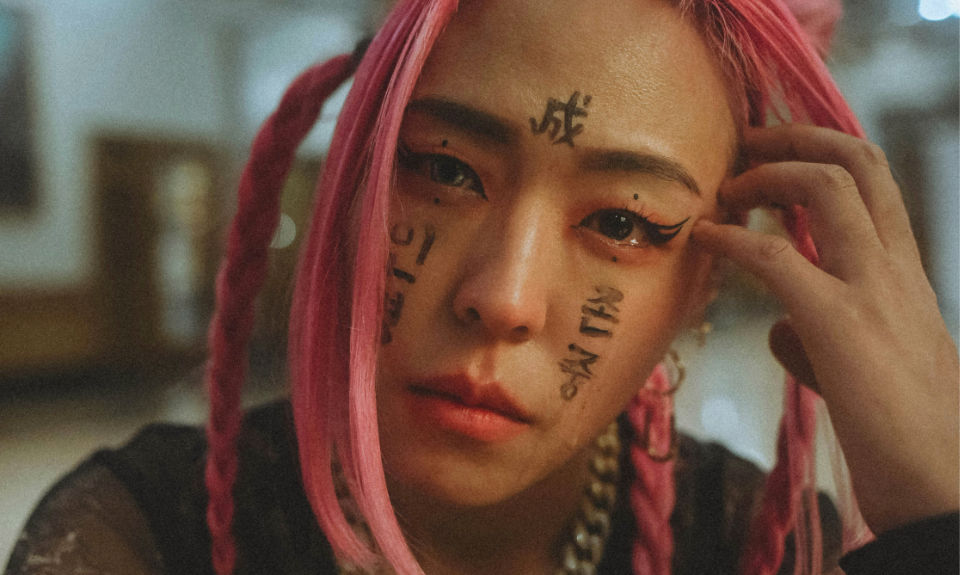
Something I’ve been pleased to mostly avoid is the spectacle of Chinese characters tattooed onto people, just for the look.
我很高兴最常避免的是把汉字纹身在人们身上的奇观,只是为了外观。
This is like the trend in China to print random English words onto clothes, just on steroids. We’ve all had a chuckle when a passer-by has an illegible string of letters on his clothes that might just look like “Giorgio Armani” if you squinted, but that’s all it is; a chuckle.
这就像中国在衣服上随意印上英语单词的趋势,只是类固醇。 当一个路人的衣服上有一串难以辨認的字母时,我们都笑了,如果你眯着眼睛,可能看起来像“乔治·阿玛尼”,但仅此而已;咯咯地笑。
When someone with little-to-know knowledge of Chinese characters chooses to have one, or some, tattooed onto their body, I have the urge not to chuckle but to cringe.
当一个对汉字知之甚少的人选择在身上纹一个或一些汉字时,我忍不住想傻笑,而是畏缩。
The problems are legion. While a person may think they know the translation and meaning of the character(s) they’re choosing to share their bodies with, Chinese characters can have multiple layers of meaning, or change depending on context. Getting a tattoo based on purely aesthetics alone with a surface level understanding of the meaning of the character could lead to an embarrassing encounter with a fluent Chinese speaker/reader.
问题很大。 虽然一个人可能认为他们知道他们选择与之共享身体的字符的翻译和含义,但汉字可以有多层次的含义,或者根据上下文而变化。 仅仅基于纯粹的美学来纹身,并对角色的含义有表面的理解,可能会导致与流利的中文使用者/读者尴尬的相遇。
Making matters worse, if the character itself is not inked well, it could easily look like another character, or just like it’s been drawn by a sloppy child. Having a tattoo artist with limited knowledge or experience with Chinese characters could lead a relatively simple tattoo, “力” for “strength”, to end up looking like “刀” for “knife”, or even “办” for “manage”, if the artist got creative.
更糟糕的是,如果角色本身的墨水不好,它很容易看起来像另一个角色,或者就像一个邋遢的孩子画的一样。 如果艺术家有创意的话,拥有一个对汉字知识或经验有限的纹身艺术家,可能会导致一个相对简单的纹身,“力”表示“力量”,最终看起来像“刀”表示“刀”,甚至“办”表示“管理”。
Then you’re left with the character equivalent of a word-soup T-shirt, just on your body, for the rest of your life.
然后,在你的余生中,你只剩下一件相当于单词汤T恤的角色。
So, how about in China? During my time there, I felt that attitudes were shifting, in line with global trends as well. In China, and even more so in Japan, tattoos were associated with criminality and social deviance. There’s always been a strong counter-culture element associated with the act of getting a tattoo, enforced by the image of the “punky” teenager.
那么,在中国怎么样? 在我在那里的这段时间里,我觉得态度正在发生变化,也符合全球趋势。 在中国,甚至在日本,纹身与犯罪和社会偏差有关。 纹身的行为一直有一种强烈的反文化元素,这种反文化元素被“朋克”青少年的形象所强化。
But in Japan, the associations are more sinister; members of organised crime groups such as the Yakuza are typically heavily tattooed, so body art came to be associated with trouble.
但在日本,协会更加险恶;山口组等有组织犯罪集团的成员通常有大量纹身,因此人体艺术与麻烦有关。
While attitudes are changing, I do remember, around 10 years ago, translating a sign outside an onsen (hot springs) on my visit there, stating tattoos were forbidden.
虽然态度正在改变,但我确实记得,大约10年前,当我访问那里时,翻译了温泉(温泉)外的一个标志,上面写着禁止纹身。
While the connotations are not so deep-set in China, I just don’t recall seeing as many tattoos as I would in the UK. Luckily, this means I never saw the reverse of the debacle that is the “Westerner with a Chinese tattoo”.
虽然中国的内涵没有那么深厚,但我不记得像在英国见过那么多纹身。 幸运的是,这意味着我从未见过“有中国纹身的西方人”这一慘败的反面。
I do dread to think that someone, somewhere might have decided that his favourite T-shirt logo would look great across his chest, permanently.
我确实害怕有人,在某个地方可能已经决定,他最喜欢的T恤标志会永远在他的胸前看起来很棒。
And while attitudes might be loosening somewhat among younger generations and those on the fringes of society, there are trends in the other direction too.
虽然年轻一代和社会边缘人的态度可能有所缓和,但也有相反的趋势。
In 2017, the State Cyberspace Administration made it illegal to show tattoos during live-streaming or in videos posted to social media. The 2021 ban on the Chinese national team getting tattoos, and advice for those with tattoos to remove them, is another case in point.
2017年,国家网络空间管理局规定,在直播或发布到社交媒体的视频中展示纹身是非法的。 2021年禁止中国国家队纹身,以及建议有纹身的人去除纹身,是另一个例子。
And in 2022, a crackdown was announced on establishments tattooing under 18s. I feel like a lot of parents probably didn’t disagree with this one!
2022年,宣布对18岁以下纹身机构进行镇压。 我觉得很多父母可能并不反对这个!
Ultimately, tattoos are another form of art and self-expression. Art, culture, identity (and, yes, tattoos!) are the arenas in which vast social forces gain and give up influence and power.
归根结底,纹身是艺术和自我表达的另一种形式。 艺术、文化、身份认同(还有,是的,纹身!) 是庞大的社会力量获得和放弃影响力和权力的领域。
While the decision of what to do with one’s body should always be your own, it should be informed, thought-through and cognisant of its place in a larger debate.
虽然如何处理一个人的身体的决定应该始终是你自己的,但它应该知情、深思熟虑,并认识到它在更大的辩论中的地位。
And I’d love to pretend I had these lofty thoughts in mind when I decided to not get my own tattoo, rather than just the fear it would look rubbish.
当我决定不纹自己的纹身时,我想假装我脑子里有这些崇高的想法,而不仅仅是担心它看起来是垃圾。