



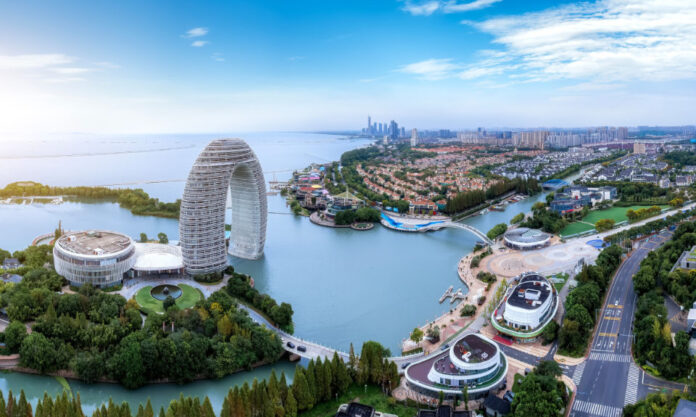



Huzhou is one of those Zhejiang cities easy to underestimate from a map and hard to forget once you know it. Set on the south shore of Lake Tai, it has long lived off water, silk and trade; today it is adding rail links, green industry and a more polished urban edge.
湖州是那种在地图上容易被低估、真正了解后却很难忘记的浙江城市。它坐落于太湖之南,长期依水而生,靠丝绸和商贸起家;如今,它又在高铁、绿色产业和更精致的城市面貌上继续加码。
According to Chinese reference material on the city and its historic districts, Huzhou is known as a silk city and a bamboo city, while South Taihu and the surrounding plain have shaped its identity for centuries. The city’s old strength was not spectacle; it was steady production, quiet trade and a habit of making useful things well.
根据有关湖州及其历史街区的中文资料,湖州素有“丝绸之府”“竹乡”之称,而太湖南岸和平原水网则在数百年间塑造了它的城市性格。它的旧优势从来不是热闹,而是稳定的生产、安静的贸易,以及把实用之物做好做精的耐心。


South Lake, Silk And A City With Deep Roots
南浔、丝绸与一座底子很深的城市
Huzhou’s cultural pull is strongest in places like Nanxun, where water, merchant wealth and old houses still tell a clear story. Nanxun is one of China’s historic towns; its old lanes, bridges and merchant residences make plain how closely local life once followed the waterways. The town also preserves the memory of a silk economy that made Huzhou important well beyond northern Zhejiang.
湖州最有文化吸引力的地方,往往就在南浔这类地方。水、商贾财富和老宅仍然清楚地讲着过去的故事。南浔是中国历史文化名镇之一,古巷、古桥和商人宅第都说明,旧时这里的生活如何紧紧依附于水路。它也保存着那段丝绸经济的记忆,而那正是湖州影响力超出浙北的重要原因。
That history has not vanished. It now sits beside a city that has become more practical and more connected. Huzhou still leans on textiles and its wider manufacturing base, but it has also pushed into equipment, new materials and greener industry. In Chinese reporting on the city’s economy, the emphasis increasingly falls on quality, upgrading and cleaner growth rather than simple volume.
这段历史并没有消失。它今天与一座更务实、联系更紧密的城市并排而立。湖州仍然依托纺织业和更广泛的制造基础,但也已向装备制造、新材料和绿色产业延伸。中国媒体谈到湖州经济时,越来越强调质量、升级和更清洁的增长,而不是单纯追求规模。
The city’s numbers help explain the confidence. Huzhou’s permanent population was about 3.44 million at the end of 2023, and the city reported GDP of ¥385 billion in 2022. That scale places it well below the giants of the Yangtze River Delta; yet it is exactly the kind of mid-sized city that can move quickly, adapt fast and keep a tight grip on its own character.
湖州的数据也能说明这种底气。到2023年底,湖州常住人口约为344万;2022年全市地区生产总值为3850亿元。这样的体量当然比长三角那些巨头小得多;但恰恰正是这种中等城市,往往更能快转身、快适应,同时牢牢守住自己的气质。



Transport, Trade and A City That Keeps Reaching Out
交通、商贸与一座不断向外延伸的城市
Transport has recently become part of Huzhou’s new story. The Shanghai-Suzhou-Huzhou high-speed railway opened on 26 December 2024, cutting the Shanghai-Huzhou journey to about 43 minutes and giving the city a much firmer place in the regional rail web. Huzhou East, Huzhou station and Nanxun all now sit on a line that makes the city feel less peripheral and more plugged in.
交通最近也成了湖州新故事的一部分。沪苏湖高铁于2024年12月26日开通,将上海到湖州的行程压缩到约43分钟,也让湖州在区域铁路网络中的位置更加稳固。湖州东、湖州站和南浔,如今都被这条线路串了起来,使这座城市显得不再边缘,而是更深地嵌入了长三角。
That matters because Huzhou has never been only a scenic stop. It is a working city with a real industrial base, real logistics and real pressure to keep growing without losing the air and water that make it liveable. The local appeal lies in that balance; it is a city that still values the old economy of silk and waterways while trying to build the next one on rail, technology and cleaner production.
这一点很重要,因为湖州从来都不只是一个风景点。它是一座真正运转中的城市,有实打实的工业基础、物流体系,也有持续增长却不能牺牲空气和水环境的现实压力。它的吸引力就在这种平衡里;它仍然珍视丝绸和水网所代表的旧经济,同时也在高铁、科技和更清洁的生产上搭建下一轮增长。
Huzhou is served by Huzhou railway station, Huzhou East and Huzhou Nanxun station; the new Shanghai-Suzhou-Huzhou line has turned rail travel into one of the city’s sharpest advantages. That is fitting for a place whose past was built on water and whose future now seems to be arriving on tracks.
湖州由湖州站、湖州东站和湖州南浔站共同服务;新开的沪苏湖高铁已把铁路出行变成这座城市最锋利的优势之一。对于这样一座过去靠水路起家、未来却正沿着轨道加速前行的城市来说,这一点再合适不过。