



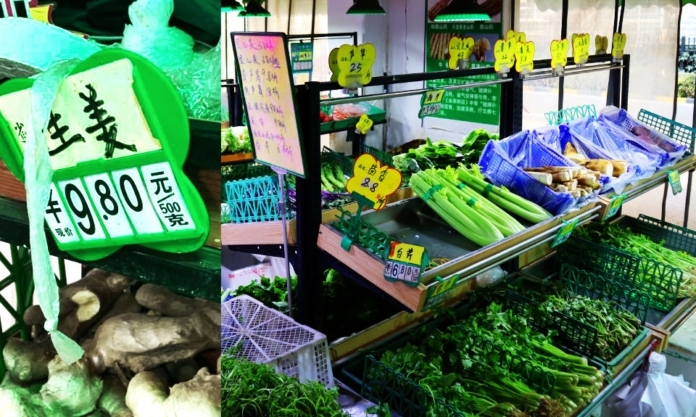



Frequenters of their local wet market in Nanjing may have noticed a trend of late. The once go-to option for quality that’s both fresh and cheap has recently become borderline expensive. Primarily, that’s down to two factors; COVID and the weather.
经常光顾南京当地农贸市场的人可能已经注意到了最近的一个趋势。曾经首选的既新鲜又便宜的优质选择最近变得非常昂贵。这主要取决于两个因素;新冠病毒和天气。
At the Zhuquan Lu farmers’ market in Nanjing’s Jiangbei New Area, a wet-market owner admitted that a month or more ago, local Chinese cabbages were going for only ¥1.5 per 500 milligrams (一斤), but now they cost as much as ¥3 for the same weight.
在南京江北新区竹泉路农贸市场,一位菜市场老板坦言,一个多月前,当地的大白菜每500毫克一斤才卖1.5元,而现在同等重量的大白菜售价高达3元。
As the most common and popular vegetable in Nanjing, the price of Chinese cabbage is directly related to output. The market owner told reporters that the cold waves in the weather of middle and late December meant that leaf vegetables were obviously frozen. With market volume suppressed, so the price suddenly rose.
作为南京最常见、最受欢迎的蔬菜,大白菜的价格与产量直接相关。市场老板告诉记者,12月中下旬的寒潮意味着叶类蔬菜明显被冻。由于市场成交量受到抑制,所以价格突然上涨。
But there are exceptions. In some areas, the price of Chinese cabbage has slumped to only ¥0.8 per 500 milligrams. It is understood this is due to the expansion of production areas in Hubei Province, resulting in an increase in output.
但也有例外。部分地区大白菜价格已跌至每500毫克仅0.8元。据了解,这是由于湖北省生产面积扩大,导致产量增加。
Another favourite with the Chinese, green beans and all its derivatives, has also seen a spike in prices of late, up to as much as ¥10 per 500 milligrams, an increase of 60 percent or more. Once again, the weather has been the deciding factor, not least, excessive rain of late in Yunnan Province.
另一种深受中国人喜爱的绿豆及其所有衍生品,最近价格也大幅上涨,高达每 500 毫克 10 日元,涨幅达 60% 或更多。天气再次成为决定因素,尤其是最近云南省的过量降雨。
Those price rises also apply to that spicy favourite with foreigners, the French beans or string beans (四季豆) which go into Sichuan Style Fried Beans (干煸四季豆).
这些价格上涨也适用于外国人最喜欢的辛辣菜豆,即四季豆,它们被用于川式炒豆(干煸四季豆)。
Elsewhere and with other staples, while a reporter for the Yangtze Evening News found that ginger is at present generally sold for ¥12-15 per 500 milligrams, another increase of more than 60 percent compared with November of last year. Yet, The Nanjinger this afternoon, 6 January, visited a local-wet market in Jiangning District where the price was cheaper, at ¥9.80 per 500 milligrams.
而在其他地方,与其他主食一样,长江晚报记者发现,目前生姜的售价普遍为每500毫克12-15元,比去年11月又上涨了60%以上。然而,1月6日下午,《南京人》记者走访了江宁区当地的一个生鲜市场,那里的价格更便宜,每500毫克9.80元。
With ginger normally used as seasoning in daily life, the onset of COVID has meant that many families have taken to making a tea at home, one infused out of ginger with spring onions. Some readers may be interested in other COVID remedies inspired by Traditional Chinese Medicine, as reported by this publication on 20 December.
生姜在日常生活中通常被用作调味品,新冠疫情的出现意味着许多家庭开始在家泡茶,用生姜和葱泡茶。正如本出版物 12 月 20 日报道的那样,一些读者可能对受传统中医启发的其他新冠疗法感兴趣。
But those prices are still quite a hike on a month or 2 ago. “There aren’t any cheap vegetables anymore”, a clerk in that same wet market said. But when quizzed on the price of potatoes and carrots, the same clerk said, “Ok, they’re still cheap”.
但这些价格比一两个月前仍然上涨了很多。 “便宜的蔬菜已经没有了”,该菜市场的一名店员说道。但当被问及土豆和胡萝卜的价格时,这位店员说:“好吧,它们还是便宜”。
Going forward, the situation is likely to get worse before it gets better. Another new round of cooling is predicted for later in January, resulting in some vegetables being frozen, an accompanying slow growth and a general increase in costs.
展望未来,情况在好转之前可能会变得更糟。预计1月下旬将出现新一轮降温,导致部分蔬菜被冻结,生长缓慢,成本普遍上升。