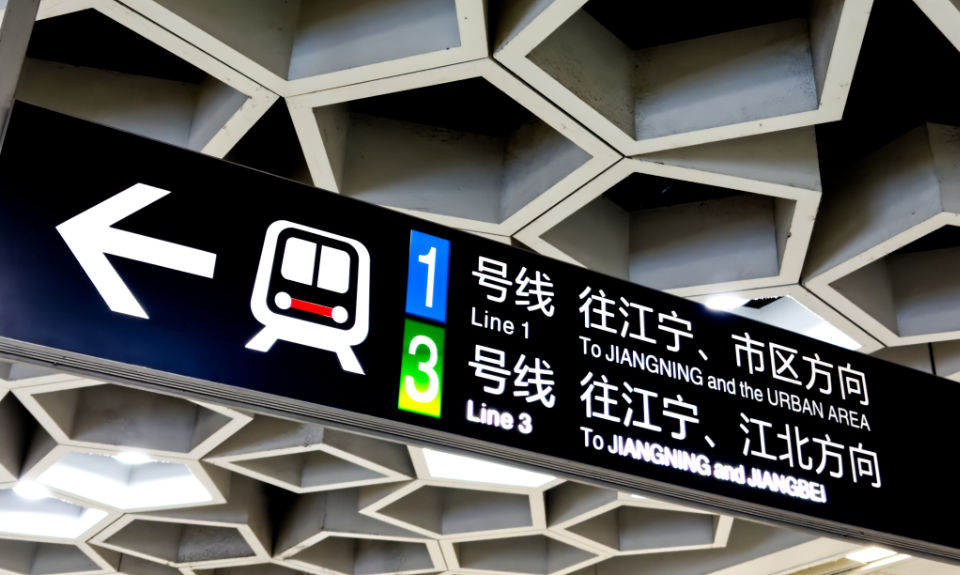
Stepping off a Nanjing Metro train that has come into Nanjing South Railway Station from Lukou International Airport, there is immediately noticeable the several individuals who sprint the 15 metres or so across the platform to board an awaiting Line S3 train that will take them to our City’s southwesterly suburbs. It’s a transfer which took them just 5 seconds.
从从禄口国际机场驶入南京南站的南京地铁列车下,立即注意到有几个人穿过站台冲刺15米左右,登上等待的S3线列车,该列车将带他们前往我们城市的西南郊区。 这是一个转移,他们只花了5秒钟。
The contrast couldn’t be greater; the daggers in their direction from the eyes of other passengers plainer.
对比再大不过了;从其他乘客的眼中,匕首朝他们看来。
For them, a 10 minute walk is in store, simply to get on a Line 1 or Line 3 train.
对他们来说,步行10分钟就能坐上1号线或3号线的火车。
Welcome to the wackiness of interchanges on the Nanjing Metro.
欢迎来到南京地铁的古怪交汇处。
It was to be a colourful journey. The modus operandi was not particularly sophisticated; spend a Sunday afternoon on the Nanjing Metro to take in as many of the network’s interchanges as possible. There are surely some worse ways to spend a good chunk of a weekend.
这将是一次丰富多彩的旅程。 操作方式并不特别复杂;在南京地铁上度过一个周日下午,尽可能多地进入网络的交汇处。 肯定有一些更糟糕的方式来度过一个周末。
I chose to start at Nanjing Railway Station, as if a bus had just dropped me off at the Station’s South Square, where I sought a train on Line 3. And this is where the phooey begins. For Line 1 and Line 3 here intersect at a 90 degree angle. Nothing unusual about that, but the former sits under the South Square and the latter under the North Square and built almost a decade after the first.
我选择从南京火车站出发,就好像一辆公共汽车刚刚把我送到车站的南广场,在那里我寻找3号线的火车。 这就是phooey开始的地方。 对于1号线和3号线,这里以90度角相交。 这并不奇怪,但前者位于南广场下,后者位于北广场下,在第一个后近十年建成。
That’s where simply getting to Line 3 first involves a walk down the actual platform of Line 1. In places, it’s rather narrow and, as is to be repeated later, this is one place not to be during rush hour.
那就是首先到达3号线的地方,需要沿着1号线的實際站臺走下去。 在某些地方,它相当狭窄,正如后面要重复的那样,这是高峰时段不能去的地方。
After a somewhat monotonous transfer to Line 2 at Daxinggong, it was time for one of the highlights of this trip; Xinjiekou.
在大兴宫有点单调地换乘到2号线后,是时候参加这次旅行的亮点之一了;新街口。
While there have long been theories as to how humanity might survive any likely coming apocalypse by building a new world for ourselves underground, in Nanjing we actually did it.
虽然长期以来一直有关于人类如何通过在地下为自己建造一个新的世界来生存的任何可能的天启的理论,但在南京,我们实际上做到了。
And that world is called Xinjiekou Metro Station.
那个世界被称为新街口地铁站。
24 entrances/exits. Four city blocks. Every conceivable convenience, it would seem, other than the trains themselves. The situation is, in fact, so ludicrous that, during the writing of this article, an alert reader made the comment that they had once worked in Xinjiekou and had lunch down there every day for almost a year before becoming aware there are actually trains running back and forth beneath.
24个入口/出口。 四个城市街区。 除了火车本身之外,似乎还有所有可以想象的便利。 事实上,情况太荒谬了,以至于在写这篇文章时,一位警觉的读者评论说,他们曾经在新街口工作过,几乎一年来每天都在那里吃午饭,才意识到下面实际上有火车来回行驶。
From there, a turn southward was next, to board a Line 1 train where the next interchange to be encountered, at present, is that at Ande Men. And that is an exercise in lunacy itself.
从那里,接下来是向南转弯,登上1号线的火车,目前遇到的下一个交汇处是安德门。 而那是疯狂本身的练习。
There, Line 1 is upstairs and outside in the open air, Line 10 downstairs and in the depths. Three levels downstairs to be precise, with each descent interrupted by a minute-long walk.
在那里,1号线在楼上和外面的露天,10号线在楼下和深处。 准确地说,楼下有三层,每次下行都会被一分钟的步行打断。
The absurdity of the situation was not lost on a senior in front of The Nanjinger going down the escalator, one who had just finished berating a member of Nanjing Metro staff as to the insanity of the entire operation.
一名在南京人前走下自动扶梯的高年级学生并没有失去这种情况的荒谬性,他刚刚结束对南京地铁工作人员的整个操作的疯狂性进行了。
Then things started getting psychedelic. The back story to this is that as Nanjing’s metro network expanded, some bright spark eventually thought there was perhaps no need to keep to the colour coding of both lines and stations, which by definition, was a little restrictive from a design standpoint.
然后事情开始变得迷幻。 背景故事是,随着南京地铁网络的扩大,一些明亮的火花最终认为可能没有必要保留线路和车站的颜色编码,从设计的角度来看,这有点限制性。
Hence the interchange at Yongchu Lu Station with Line S3 and Line 7. Gold is the watchword here, with its ceiling textures a little reminiscent of those at the dreaded Nanjing South Railway Station.
因此,在龙丘路站换乘S3号线和7号线。 金色是这里的口号,它的天花板纹理有点让人联想到可怕的南京南站。
Here too, travellers may want to look out for the orange transfer to/from the green and purple lines in the golden station. Go figure.
在这里,旅行者可能也想留意金色车站的绿色和紫色线的橙色换乘。 去想吧。
Whilst on Line 7, worthy of mention is surely our Metro network’s fictitious interchanges. For travellers on Line 7, after inspecting the official map of the Metro, might be tempted to head to Caochang Men Station where they could transfer to Line 4 or pop into Nanjing University of the Arts.
在7号线时,值得一提的是我们地铁网络的虚构交汇处。 对于7号线的旅客来说,在查看了地铁的官方地图后,可能会被诱惑去曹昌门站,在那里他们可以换乘4号线或突然进入南京艺术大学。
That’s not going to happen, not for the next year or so at least, as hastily assembled signs on every station’s protective platform barrier remind. “Zhongfu Lu Station to Nanhu Station is temporarily not open. Thank you for your understanding.”
這不會發生,至少在明年左右,正如每個車站的保護站臺屏障上都催集的標誌所提醒的那樣。 “中府路站到南湖站暂时不开放。 感谢您的理解。”
That’s Nanjing Metro’s internal wording for, “We haven’t built it yet”. Why not just ditch the map and the signage and be done with it?
这是南京地铁的内部措辞,“我们还没有建造它”。 为什么不直接放弃地图和标牌,然后结束它呢?
The nonsense doesn’t stop there. Back at Nanjing South Railway Station is where we also find Line 1 and Line 3, the busiest and third busiest on the network, respectively. But the masses who have finished their walk from afar are then herded, single file, into a makeshift walkway to guide them in the direction of the platform below, which in an effort for yet more confusion, is shared by both lines.
胡说八道不止此。 回到南京南站,我们还发现了1号线和3号线,分别是网络上最繁忙和第三繁忙的。 但那些从远处走完的群众随后被排成一排,排成一条临时的人行道,引导他们走向下面的平台,为了造成更多的混乱,两条线都共享了。