Category: About Shandong

  • Dezhou; Rail Junctions, Solar Ambition and a City That Keeps Moving

    Dezhou; Rail Junctions, Solar Ambition and a City That Keeps Moving

    Set hard against the north of Shandong, Dezhou is less a city of grand gestures than a city of routes. It leans toward Beijing, faces Hebei and has spent generations turning its position into practical value.

    坚定地站在山东北部,德州与其说是一座追求大场面的城市,不如说是一座讲通道、讲位置的城市。它面向北京,隔着河北,也花了几代时间把自己的地理位置变成了实际价值。

    That practical streak shows in its rail lines, highways and old canal links. Dezhou has long been a crossing point, not a cul-de-sac; a place where goods, people and ideas keep moving through.

    这种务实气质体现在铁路、公路和旧运河联系上。德州一直不是死路尽头,而是一个交汇点;货物、人口和观念都在这里不断流动。

    According to Chinese-language reference pages and state-media reporting linked to Solar Valley, Dezhou covers 10,357.67 square kilometres and had 5.61 million people at the 2020 census. It is now divided into two districts, two county-level cities and seven counties.

    根据中文参考页面以及与“太阳谷”相关的媒体报道,德州面积为10,357.67平方公里,2020年人口普查时常住人口为561.12万人。如今,全市下辖2个市辖区、2个县级市和7个县。

    Rail, Roads and a City Built on Junctions
    铁路、公路与一座生来讲通道的城市

    The rail story is central. Dezhou Station on the older Beijing-Shanghai and Shide lines remains a working piece of railway history; Dezhou East, on the Beijing-Shanghai high-speed line, pushed the city firmly into the fast network when it opened in 2011.

    铁路是这座城市最核心的故事之一。老京沪铁路和石德铁路上的德州站至今仍在运转,是一段活着的铁路史;而2011年启用的德州东站位于京沪高铁线上,把这座城市稳稳送进了高速铁路网络。

    That mattered beyond convenience. Local reporting around the opening said Beijing was about an hour away by high-speed rail, a line that changed how Dezhou was seen inside Shandong. It was no longer only a stop; it became a launch point.

    这不只是出行更方便。车站开通时的本地报道提到,到北京高铁约为1小时,这条线改变了德州在山东内部被看待的方式。它不再只是一个停靠点,也成了一个出发点。

    The same logic runs through the city’s road network and freight links. Dezhou sits on the wider corridor that connects the capital with the Yangtze Delta, and the city has used that position to stay useful rather than merely central.

    同样的逻辑也体现在公路和货运联系上。德州位于连接首都与长三角的大通道上,这座城市一直在利用这一位置,让自己不仅仅是“位于中心”,而是真正发挥作用。

    Solar Valley, Chicken and a City with a Clearer Brand
    太阳谷、扒鸡与一座品牌更清晰的城市

    Dezhou’s best-known modern brand is Solar Valley, the clean-energy project that gave the city a louder international voice. It turned Dezhou into a showcase for solar water heaters, low-carbon building ideas and a city image tied to energy rather than smoke.

    德州最有名的现代名片是“太阳谷”,这个清洁能源项目让这座城市拥有了更响亮的国际声音。它把德州变成了太阳能热水器、低碳建筑理念和能源形象的展示窗口,而不再只是和烟尘联系在一起。

    Yet the city is not all futurism. Dezhou braised chicken still carries the old street-level story of the place, spreading from rail stations to shelves far beyond Shandong. In a city built on movement, even the food learned to travel.

    但这座城市并不只有未来感。德州扒鸡依然讲述着这座城市更早的街头故事,从火车站一路卖到山东以外的货架上。在一座由流动塑造的城市里,连吃食都学会了远行。

    Dezhou also carries older cultural weight through the Grand Canal and the Yellow River plain. That broader landscape explains the city’s steady, unsentimental character; it has always been made by water, soil and the need to keep moving.

    德州还背着更早的文化分量,来自京杭大运河和黄河平原。更大的地理背景解释了这座城市那种稳定、不过分煽情的性格;它一直是被水、土地和不断前行的需要共同塑造出来的。

    Dezhou today is still doing what the opening lines promised: using its position, not hiding it. That makes it less flashy than some cities, but more honest about how it works. In Shandong’s north, that is its own kind of strength.

    今天的德州仍然在做开头所说的事:利用自己的位置,而不是掩盖它。这让它看起来没有一些城市那么耀眼,但也更诚实地展示了自己的运转方式。在山东北部,这本身就是一种力量。
  • Liaocheng; Canals, Lake Views And A City Built on Crossings

    Liaocheng; Canals, Lake Views And A City Built on Crossings

    Straddling the western edge of Shandong, Liaocheng sits where the province meets Henan, Hebei and a long memory of river trade. It is a city of plains, water and old routes; practical before it is picturesque.

    横跨山东西部边缘的聊城,正处在山东与河南、河北交界的地带,也延续着一段漫长的水运记忆。这里是一座平原、水系和古老通道交织的城市;先务实,再谈好看。

    According to Chinese-language city pages, Liaocheng is a prefecture-level city in western Shandong with a permanent population of about 5.95 million in the 2020 census. It covers 8,628 square kilometres and has long been shaped by the Yellow River plain and the Grand Canal.

    根据中文城市资料,聊城是山东西部的地级市,2020年常住人口约595.2万人。全市面积8,628平方公里,长期受黄河冲积平原和京杭大运河共同塑造。

    The old name was Dongchangfu, and the city still carries that harder, older sound in local memory. What makes Liaocheng stand out is not just age; it is the way water has remained central to its identity, from the canal to Dongchang Lake and the smaller rivers that thread the plain.

    聊城旧称东昌府,这个名字至今仍带着更硬朗、也更古老的回声。聊城真正特别的地方,不只是历史久;而是水一直是它身份的核心,从运河,到东昌湖,再到平原上纵横交错的支流,都是如此。

    Canals, Lake And Old Walls
    运河、湖泊与古城墙

    Liaocheng is one of those cities that Chinese tourism brochures call a “water city”, but here the label is not empty. Dongchang Lake began as a moat in the Northern Song Dynasty; it later became part of the city’s image, and today it gives the old town a broad, open centre.

    聊城是那种在中国旅游宣传里常被称作“水城”的地方,但这一次,这个说法并不空。东昌湖最早是北宋时的护城河,后来逐渐成为城市形象的一部分,如今也让老城拥有了开阔的中心气质。

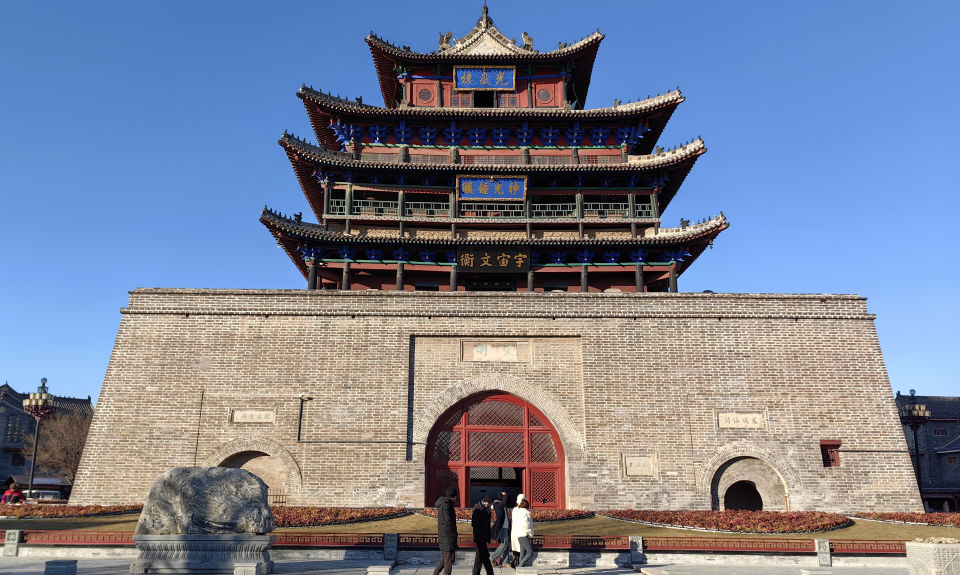
    Nearby stands Guangyue Tower, the city’s best-known landmark, built in the Ming Dynasty and still rising above the old quarters with quiet confidence. It is not a skyline city. It does not need to be. One tower, one lake and one old wall can do a lot of work here.

    附近的光岳楼则是聊城最有名的地标,始建于明代,至今仍安静而有分量地立在古城之上。聊城不是高楼林立的天际线城市,也不需要这样。一座楼、一片湖、一道老城墙,已经足够说明很多事情。

    The Grand Canal gives Liaocheng its wider historical frame. Chinese sources note that several canal heritage points and river sections in the city have been included in the Grand Canal World Heritage listing. That is important because Liaocheng is not just beside the canal; it is one of the places that helped keep the canal’s story alive.

    京杭大运河则给聊城提供了更大的历史背景。中文资料提到,市内有多个大运河遗产点和河段被列入世界文化遗产名录。这个意义很重要,因为聊城并不只是“靠着运河”,它本身就是让运河故事继续延续的城市之一。

    Industry, Heritage And A City Moving Forward
    产业、遗产与继续向前的城市

    Liaocheng today is more than a heritage stop. It still depends on agriculture and farm processing, but it also has metallurgy, chemicals, new-energy vehicles and tourism in the mix. That is a wider base than many outsiders expect from a city with such an old face.

    今天的聊城早已不只是一个遗产型城市。它仍然依赖农业和农副产品加工,但同时也有有色金属、化工、新能源汽车和旅游业。对一座看起来如此古老的城市来说,这个产业面相比外界想象的更宽。

    One of its strongest local products is Dong’e ejiao, a name that carries both commercial weight and cultural baggage. Alongside that sit the city’s riverfront landscape, its restored ancient walls and its older commercial buildings, all of which help turn history into something visible rather than sealed away.

    它最强的地方产品之一是东阿阿胶,这个名字既有商业分量,也带着文化重量。与此同时,河湖景观、复建后的古城墙和老商业建筑,也都在把历史变成看得见、摸得着的东西,而不是封存在展柜里。

    Transport is changing the city’s reach. Liaocheng Railway Station remains the main old-line hub on the Beijing-Kowloon Railway; Liaocheng West, which opened in 2023, has tied the city into the Zhengzhou-Jinan high-speed corridor, with further links still being built out. That matters in a city whose whole story has always been about routes.

    交通正在改变聊城的外延。聊城站仍是京九铁路上的老牌主枢纽;2023年投入使用的聊城西站,则把城市接入了郑济高铁通道,更多线路仍在推进之中。对一座本来就靠通道生长的城市来说,这一点格外重要。

    Liaocheng does not try to impress by volume. It does it by layering: water over land, old over new, market over memory. That is why it feels less like a city that has finished becoming itself than one that has spent centuries learning how.

    聊城并不靠“声量”来打动人。它靠的是层次:水覆在地上,旧叠在新上,市场压着记忆走。这也让它看起来不像一座已经完成自我塑造的城市,而更像一座花了几百年才学会如何成为自己的城市。

  • Binzhou; River Plains, Heavy Industry and a City Building Faster Links

    Binzhou; River Plains, Heavy Industry and a City Building Faster Links

    Spread across the lower Yellow River plain and edging towards the Bohai Sea, Binzhou is a city that rarely feels content to sit still. It has water, land, industry and a strong practical streak; not much here is for show.

    跨越黄河下游平原、向渤海岸线延伸的滨州,几乎从来不是一座满足于原地不动的城市。这里有水,有地,有产业,也有很强的务实气质;很多东西都不是摆给人看的。

    Binzhou was made a prefecture-level city in 2000, but its older identity runs much deeper. It sits in northern Shandong, straddles the lower Yellow River basin and takes its name from being on the Bohai coast. The 2020 census put its permanent population at about 3.92 million.

    滨州于2000年设地级市,但它更深的身份来得早得多。它位于山东北部,处在黄河下游流域,名字也取自“滨海”之意。2020年人口普查显示,全市常住人口约391.9万人。

    According to municipal materials and Chinese-language reference pages, Binzhou is a city that has built itself around water and work. Its industrial base is unusually broad for a city of its size, with textiles, chemicals, food processing, equipment manufacturing and non-ferrous metals all playing a part.

    根据市级公开资料和中文参考页面,滨州是一座围着水和产业长出来的城市。以它的体量来看,这里的工业门类相当宽,纺织、化工、食品加工、装备制造和有色金属都占有一席之地。

    Industry, Water and a City that Likes to Work
    产业、水系与一座爱干活的城市

    Binzhou’s strongest industrial calling card is high-end aluminium, and the name most often attached to that story is Weiqiao. Around it sit spinning, grain processing and household textile clusters that have given the city a reputation for making things at scale, and making them go out to market fast.

    滨州最响的产业名片是高端铝,而这一条线最常被提到的名字就是魏桥。围绕它展开的,还有纺纱、粮食加工和家纺产业集群;这些行业让这座城市形成了规模化制造的名声,也让它在把产品推向市场这件事上相当利落。

    That is one reason Binzhou feels more industrial than decorative. It has been shaped by production lines, river transport, ports and logistics corridors. Even its more familiar local brands, from winter jujubes to beef, oil and textiles, sit inside a larger economy that is very much about supply chains rather than slogans.

    这也是滨州为什么更像一座工业城市,而不是一座靠“形象”说话的城市。它的骨架来自生产线、河运、港口和物流通道。连那些更为人熟悉的地方品牌,比如冬枣、牛肉、食用油和家纺,也都嵌在一套更大的供应链体系里,而不是停留在口号上。

    There is a cultural side, too, and it helps stop Binzhou from becoming all steel and no soul. Sun Wu is often claimed as a local figure; Lu opera has deep roots in the wider region; and places such as Du Shoutian’s former residence, Weishi Manor and the shell ridge-and-wetland landscapes around Wudi give the city more texture than outsiders may expect.

    滨州也有文化的一面,这让它不至于只剩钢铁和机器。孙武常被视作当地重要历史人物;吕剧在这一带有深厚根基;而杜受田故居、魏氏庄园,以及无棣一带的贝壳堤岛和湿地景观,都让这座城市比外界想象的更有层次。

    Rails, Ports and a City Reaching Further
    铁路、港口与继续向外伸展的城市

    Binzhou has also spent the past decade trying to make distance less of a problem. Roads, rail and port links have all been upgraded in one form or another, because a city built on the edge of the Bohai rim cannot afford to think locally only. It has to think in routes.

    滨州在过去十年里,也一直在努力把“距离”这件事变得不那么麻烦。公路、铁路和港口联系都在不同层面上被强化,因为一座站在渤海湾西南缘的城市,不可能只想着本地,它必须把自己放进通道里看。

    Rail is the clearest sign of that ambition. Binzhou Railway Station opened in 2015, while the city’s rail map has since been tied to the faster national network through the ongoing Jiwin high-speed line projects and the wider Shandong rail build-out. The station itself is now in the middle of a rebuild for that next phase.

    铁路是这种雄心最直观的体现。滨州站于2015年投入使用,而随着津潍高铁等项目推进,这座城市也被更快地接入全国高铁网络,山东铁路版图的更新也在继续。滨州站本身,如今正在为下一阶段建设而改造。

    There is still freight muscle behind the passenger story. Binzhou East and Binzhou North handle cargo work, and Binzhou Port gives the city a waterborne outlet that suits its geography. The result is a place where goods can move by rail, road and sea without the city ever losing its hard-edged industrial feel.

    客运故事背后,货运力量同样扎实。滨州东站和滨州北站承担着货运任务,滨州港则给这座城市提供了适合其地理条件的水运出口。结果就是,这里能靠铁路、公路和水路把货物送出去,同时又始终保留着那种硬朗的工业气质。

    Binzhou is not a city that tries to charm you first. It prefers to show you what it makes, how it moves and how much ground it can still cover. That, in the end, is what gives it its own kind of confidence.

    滨州并不是那种先用“好看”来打动人的城市。它更愿意直接让你看它造什么、怎么运、还能往外走多远。归根到底,这就是它自己的自信。

  • Heze; Peonies, Rail And A Border City That Refuses to Stay Small

    Heze; Peonies, Rail And A Border City That Refuses to Stay Small

    Take to the far edge of southwestern Shandong, where the province meets Jiangsu, Henan and Anhui. Here, Heze has spent years proving that a city can be both rural in texture and ambitious in direction. It is best known for peonies, yet that is only part of the story.

    在山东西南角,菏泽与江苏、河南和安徽三省接壤。这里多年都在证明,一座城市可以保有乡土质感,同时又朝着更大的方向往前走。它最出名的是牡丹;但这只是故事的一部分。

    According to municipal government material and local culture-and-tourism pages, Heze sits on the North China Plain and has long been defined by scale as much as by symbol. The 2020 census put its permanent population at 8.80 million, spread across more than 12,000 square kilometres.

    根据市政府公开资料和当地文旅页面,菏泽位于华北平原,长期以来既有体量,也有辨识度。2020年人口普查显示,全市常住人口为879.59万人,辖区面积超过1.2万平方公里。

    Peonies Still Set The Tone
    牡丹依旧定调

    Heze officially won the title of China’s peony capital in 2012, and that label has stuck because the city has made it mean something. The flowers are not just for show. They feed a seedling trade, a medicinal herb market and a wider seasonal economy that still matters.

    菏泽在2012年被正式授予“中国牡丹之都”称号,这个名号之所以能站住脚,是因为这座城市把它做成了实打实的产业。牡丹不只是摆设,还带动种苗、药材和一整套季节性经济。

    The best known symbol is Caozhou Peony Garden, but the real point is bigger than one park. Heze has built a whole public identity around the flower, from festivals to nursery bases. In spring, the city does not merely bloom; it sells, ships and promotes.

    最有名的地标当然是曹州牡丹园,但真正的重点不止于一座园子。菏泽把一整座城市的公共形象都和牡丹绑在一起,从花会到种苗基地,春天到来时,这里不只是开花,也在交易、外运和推广。

    The city also carries a heavier cultural load than its soft petals suggest. Old Caozhou was long a crossroads of popular culture; today that legacy still shows up in local opera, calligraphy, martial arts and museums. Heze likes to be remembered for flowers, but it is not made of flowers alone.

    这座城市的文化分量,也远比花瓣看上去更重。古曹州曾是民间文化的交汇地,今天,这份底子仍能在地方戏曲、书画、武术和博物馆里看见。菏泽愿意被记住为牡丹之城,但它绝不是只有牡丹。

    Its position matters too. Heze sits close to the meeting point of four provinces, which has given it a practical outlook. This is not a city that can afford to be ornamental. It has always had to think about roads, routes and getting goods to market.

    地理位置同样关键。菏泽靠近四省交界,这让它一直带着很强的现实感。它不是一座可以只靠观赏性的城市,始终都得考虑道路、通道和货物如何进入市场。

    Tracks, Wings And A Wider Horizon
    铁路、航线与更大的视野

    Rail has changed the feel of the city. Heze East Railway Station, opened in 2021 on the Rizhao-Lanzhou high-speed line, gave the city a much faster exit route. Local reporting around the opening said Jinan was about an hour away by high-speed rail; that is a very different proposition from the old days.

    铁路改变了这座城市的感觉。2021年启用的菏泽东站位于日兰高铁线上,让菏泽有了更快的外出通道。车站开通时的本地报道提到,到济南高铁约为1小时;这和过去的出行体验已经完全不是一回事。

    Heze Mudan Airport, in Dingtao District, adds another door to the outside world. Opened for commercial flights in 2021, it gives the city a regional air link that peonies alone could never have delivered. For a place once seen as inland and distant, that is no small shift.

    位于定陶区的菏泽牡丹机场,则给城市打开了另一扇门。机场于2021年通航,给了菏泽一条区域航空通道,这是单靠牡丹本身永远带不来的。对一座过去常被视作内陆和边地的城市来说,这种变化不小。

    Heze still feels like a place where the present is being built on a very plain, very old base. That is what makes it interesting. It is learning to be more than a flower city, but it has not stopped being one either. The balance is the point.

    菏泽依然像是一座在朴素而古老的底座上往前搭建当下的城市。也正因如此,它才显得有意思。它正在学着不只做一座花城,但也并没有放弃花城这个身份。平衡本身,就是它的重点。

  • Jinan; Springs, the Yellow River, a Capital Built on Water, and Dumplings?

    Jinan; Springs, the Yellow River, a Capital Built on Water, and Dumplings?

    Nestled in the heart of Shandong, Jinan is a city that has long had to earn its identity rather than borrow one. It is the provincial capital, but it is also a spring city, a rail city and a place where old water still shapes new ambition.

    济南位于山东腹地,这座城市一直是靠自己去建立身份,而不是借来的。它是省会,但同时也是“泉城”、铁路枢纽城市,也是那种旧水脉仍在塑造新雄心的地方。

    Jinan’s best-known image comes straight out of the ground. Springs are not an ornament here; they are the city’s first argument, its civic badge and its everyday pride. Baotu Spring, Daming Lake and the city’s old historic core give Jinan a feel that is both urban and elemental, polished yet still fed by water.

    济南最出名的形象,几乎是从地下冒出来的。这里的泉水不是点缀,而是城市最早的理由、最鲜明的标志和日常的骄傲。趵突泉、大明湖和老城区,让济南既像一座现代都市,又像一处仍由水脉供养的地方。

    According to Chinese-language municipal material and the 2024 statistical bulletin, Jinan’s permanent population reached 9.515 million at the end of 2024, with an urbanisation rate of 76.2 percent. That scale matters. It shows a capital that is not merely ceremonial, but large enough to carry the administrative, industrial and transport weight of western Shandong.

    根据中文市级资料和2024年统计公报,济南到2024年底常住人口达到951.5万人,常住人口城镇化率为76.2 percent。这个体量很重要。它说明这不仅是一座“省会”城市,更是一座足以承担山东西部行政、工业和交通重量的城市。

    Springs, Lakes And A City That Refuses To Run Dry
    泉、湖与一座不肯干涸的城市

    The spring culture is more than scenery. It has shaped how Jinan thinks about land, water and growth for decades. The city’s water story has at times been fragile; Baotu Spring famously went through dry spells in the late 20th century, which turned groundwater protection into a public issue rather than a technical one. In Jinan, ecology is not an abstract slogan. It is infrastructure.

    泉文化远不只是风景。它在几十年间一直影响着济南对土地、水和发展的理解。这里的水故事有时并不轻松;趵突泉在20世纪后期曾一度面临断流,这使地下水保护从技术问题变成了公共议题。在济南,生态不是抽象口号,而是基础设施。

    Daming Lake gives the city another register. It is not only a scenic lake; it is a place where the city’s old literary memory and its everyday leisure meet. The line between park, heritage and lived-in urban space is unusually thin here. That is one reason Jinan feels older than many provincial capitals, even when its skyline says otherwise.

    大明湖则给这座城市带来另一种气质。它不只是景观湖,也是城市文学记忆和日常休闲交汇的地方。这里的公园、遗产和真实城市生活之间,界线并不厚。这也是为什么济南常常给人一种比很多省会都更“老”的感觉,哪怕天际线并不总是如此。

    The old centre still keeps the city’s Qing and Republican-era memory visible, while the broader urban area has moved into a much larger present. Jinan has become a place where heritage, residential growth and administrative scale all have to coexist. That is not always easy, but it gives the city a layered character that is hard to fake.

    老城区仍然让清代和民国时期的记忆清晰可见,而更广阔的城市空间已经进入一个大得多的当代阶段。济南已经变成一座遗产、居住扩张和行政体量必须同时共存的城市。这并不总是容易,但也让这座城市拥有一种很难伪造的层次感。

    Industry, Rail And A Capital With Real Reach
    产业、铁路与一座真正有辐射力的省会

    Jinan is not only about water. It is also a heavy-duty capital city with a serious industrial base. Equipment manufacturing, automobiles, biomedicine, electronics and modern services all matter here. The city has long served as a bridge between northern and eastern China; that role has only grown as the wider Yellow River region and the Beijing-Shanghai corridor have become more closely connected.

    济南并不只是“有泉”。它同样是一座工业底盘扎实、功能完整的省会。装备制造、汽车、生物医药、电子和现代服务业都在这里占有重要地位。它长期充当华北与华东之间的连接点,而随着黄河流域和京沪走廊联系得越来越紧,这种作用只会更强。

    Rail is a big part of that reach. Jinan is served by Jinan, Jinan West and Jinan East railway stations; the city also sits on the Beijing-Shanghai high-speed railway, which keeps it closely tied to the national transport spine. Jinan Yaoqiang International Airport adds the air side of the picture, making the city a true multi-modal hub rather than a single-line stop.

    铁路正是这种辐射力的重要部分。济南由济南站、济南西站和济南东站共同服务;城市也位于京沪高铁线上,始终紧贴全国交通主轴。济南遥墙国际机场则补足了航空这一块,使这座城市真正成为多式联运枢纽,而不是单线停靠点。

    That matters because Jinan has to do two jobs at once. It must protect what makes it famous, while also carrying a modern provincial capital’s weight. Few cities are asked to keep a spring alive and an economy moving at the same time. Jinan does both, and that is what gives it its particular confidence.

    这一点很重要,因为济南要同时完成两件事。它既要守住自己最有名的东西,也要承担现代省会的重量。很少有城市会被要求一边保泉,一边推动经济前进。济南两样都在做,也正因如此,它的底气才显得特别明确。

    Speaking of which, Jinan also has a food boast that it likes to wear with a straight face. Some locals will tell you, only half joking, that this is home to the best dumplings in China. Perhaps that is not entirely fair on the rest of the country; then again, once a city can claim springs, there is room for a little culinary overconfidence.

    济南还有一个很爱认真对待的美食说法。当地人常会半开玩笑地告诉你,这里或许是中国最好吃饺子的地方。这样的说法未必对全国其他城市公平;但一座连泉水都能喷成名片的城市,偶尔在饺子上多一点自信,也并不奇怪。

    Jinan is served by Jinan, Jinan West and Jinan East stations, with Jinan Yaoqiang International Airport completing the picture. In a city where springs still set the tone, the transport network now sets the pace; that combination is exactly what lets Jinan stay both rooted and in motion.

    济南由济南站、济南西站和济南东站共同服务,济南遥墙国际机场则补齐了整体布局。在这座泉水仍在定调的城市里,交通网络如今正在定义速度;正是这种组合,让济南既扎根本地,又持续向前。