
A teacher in Hunan has gained national fame as his unconventional method of punishment caught the attentions of China’s netizens last week.
Author: Laura Schmitt
-

Nanjing Haven For Job-Hunting Graduates
Over half of Nanjing’s new workforce are recent university graduates, after effects of industrial restructuring of Nanjing have taken hold.
-
Six Predictions for the APEC Summit in Beijing
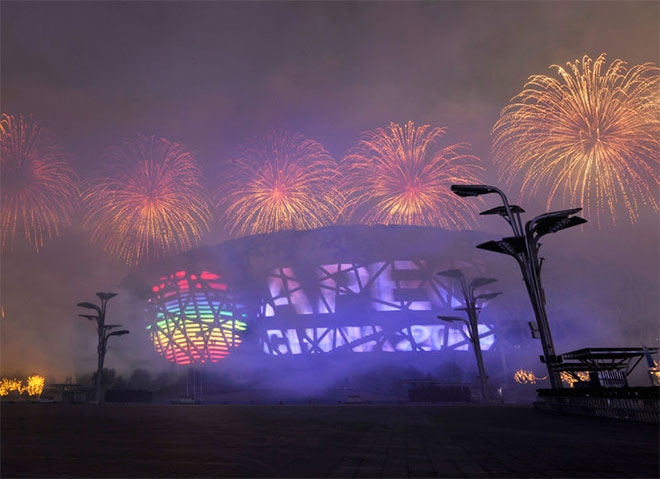
Saturday is the big day; the day China will host the first large international event under the new Chinese leadership. With Mr Xi’s different approach to diplomatics, it is set to be an interesting convention.
-

Taxi Wars; Tuhao Taxi A Game Changer?
Taxi apps Kuaidi and Didi Dache have entirely transformed the local taxi market, pushing each other to new innovation heights. Will Didi Dache’s latest attempt to win the battle backfire?
-

Zuckerberg on Schmoozing Spree in China
The Facebook founder stunned audiences at Qinghua University with a speech and Q&A session delivered entirely in Chinese. The event took place after the social media mogul had been named as a member of Qinghua’s School of Economics and Management’s advisory board. Attracting such high level international talent illustrates once again the growing international importance of the Middle Kingdom.
-
Greener on the Other Side, A Growing Urban Sporting Potential
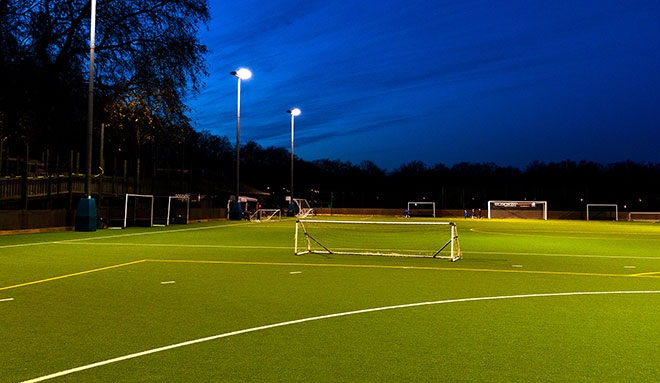
A document to be released this week will detail the planned acceleration of the development of the Chinese sporting industry. At a State Council executive meeting on 2nd September 2014, presided over by Premier Li Keqiang, research was commissioned into how the development of the sports industry can be accelerated, the results of which will be detailed in the aforementioned paper.The government has cast its eye towards the sporting industry with the hopes of enhancing the nation’s overall health and improving citizens livelihood aside from the economic factors of stimulating consumption and creating new domestic employment opportunities.
One of the beneficiaries of this recent push from the government is artificial grass producer CoCreation Grass (CCG). The Chinese company, which currently owns a 13 percent market share of the world’s artificial grass market and recently became the first Chinese company to be awarded the certificate of “FIFA Preferred Producer”, held a Global Partners and Industry Forum last Friday, 17th October, as part of the inauguration of their new factory.
Speaking at the forum, Mr Peng Xiao, Vice Chair of the Center of Sports Equipment of the State Sport General Administration of P. R. China, explained why the government is focusing on the sporting industry at this exact moment. “With the rapid economic development of the past decades, China has now reached a level of prosperity at which it is not just about making money any more. Now, once the people have reached a certain degree of material wealth, they begin to strive for spiritual wealth as well. A big factor for a spiritually fulfilled life is an active and healthy lifestyle, hence the potential of the sports market in the coming years is incredibly vast.” Especially in the growing urban environment, sports have witnessed a surge in popularity and importance.
This development could not have come at a better time for CCG, as rooftop sports pitches and indoor facilities are rising in number as a result of the Chinese quest for physical activity. With none of the drawbacks of real grass, i.e. maintenance, dependency on sunlight, seasonality and high sensibility, artificial grass is a clean and high-quality alternative, that is increasingly seeing application in high level international competitions.
Also speaking at the forum, Johannes Holzmüller, Group Leader the FIFA Quality Programme, suggested that the march to victory of artificial grass is far from over. “This year’s FIFA U20 World Cup was played entirely on indoor pitches with artificial turf and the undertaking has been a great success. In fact, there have been less injuries during this competition than in the previous years”. This suggests that aside from practicality, an additional element of safety exists with this product.
Holzmüller went on to say that “with 26 million people wanting to play football, the only possible way of providing them with a sufficient amount of pitches is artificial grass.”
In fact, in answer to the big question whether the world will soon see a FIFA World Cup play out on artificial turf, the football association’s representative sounded rather hopeful. “While this decision is not up to FIFA but rather to each host country of the tournament, we have no influence on whether traditional or artificial grass will be used. However, a majority of new football pitches are being installed with artificial grass, and so there will undeniably come a point in the future, when the competition will be played on an artificial surface.”
With a grin he adds “Who knows, this might happen when China hosts the World Cup.”
If Li Keqiang and CCG both keep up their current pace, that might be sooner than the world thinks.
-

Chain Reaction; Asia Bike here to stay
The fourth Asia Bike exhibition welcomed visitors to another successful show this past weekend. A total of 487 brands exhibited the latest in cycling technology at Nanjing’s International Expo and Conference Center, with 82 percent of participating companies hailing from overseas.
What began as the first professional trade show on the sports bike market in China, has now grown to become an important appointment on the industry’s annual calendar. Stefan Reisinger, Head of Eurobike, oversea’s equivalent and sister show to Asia Bike, says he is very pleased with the development of the event over the past years. “The show has grown roughly 30 percent from 2013 to 2014, but this is just the beginning as the potential for the market is incredibly vast. The annual market growth rate currently lies between 25 and 30 percent, and this of course great for our show.”
The speed at which the show is developing is reflective of that trend. This year the indoor exhibition spanned 38,000 sq m compared with 26,000 the previous year. “The exhibition filled one hall in 2012, two in 2013 and this year we have a total of three halls full exhibits, this is a great indication of how the show has been growing,” Reisinger recalls.
However, the show is not only expanding in size, the nature of exhibitors is changing as well according to Reisinger. “The show already worlks very well for Western brands interested in entering the Chinese market; this year though we are seeing an increasing number of local brands joining the show. Especially for small manufacturers based in China, the show is becoming an important vehicle to meet customers.”
A main reason for Asia Bike’s increasing success is the great job it does at bringing supply and demand together, especially due to the nature of visitors to the show.
Taylor Price, China GM for bike giant Specialized, explains why Asia Bike ranks high on his list of must visit events. “I prefer Nanjing to bigger shows that are just at bit random in terms of their audience. With those shows for the masses it’s just about who has the loudest booth and the prettiest girls but here at Nanjing the quality of people that come is a lot higher. Also, I especially enjoy the Demo Day, where people can actually test the bikes instead of just staring at them; this sets Asia Bike apart from other shows.”
The Demo Day was held on 8th October, as prelude to the exhibition, at Nanjing Sports Park in Purple Mountain. For an entire day, bike enthusiasts got to take some of the most modern, funky and expensive bikes of the industry out on a spree on either an on-road and off-road track. The heavens were smiling down at the cyclists with weather that could not have been better. Blue skys, brilliant sunshine and the beautiful scenery at the foot of the mountain provided a great backdrop for the event.
Finally, one brand managed to sneak into the show without actually being an exhibitor. China’s outdoor gear and wear mogul Kailas was hard to ignore as a considerable number of visitors sported their latest stroke of fashion brilliance, the ‘fresh air only” T-shirt displaying a gas mask wearing head and the Chinese characters 我要新鲜空气 (I want fresh air). It seems the bold and ironic statement has hit home with the outdoor community, after all, when it comes to cycling, fresh air is what it’s all about.
-

It’s Official! NICC receives Local Government Backing
In a show of support, the Nanjing International Community Clubhouse has been granted official status by the local government. The announcement comes four months after the founding of the NICC in March 2014. The Clubhouse, which aims to provide local expats with support in their daily lives as well as a platform to meet new people and partake in cultural exchanges and activities, was awarded this official recognition by the Nanjing Municipal Government as part of their third round of “Cultural Exchange Bases and Envoys” appraisals.
“We are incredibly happy and proud to have received this recognition and the backing of the local government; their support will help us to better realize our plans of becoming a center for cultural exchange between expats and their host culture,” explains Angela He, co-founder of the Clubhouse.
The NICC has already lined up a host of exciting activities for the coming weeks such as Chinese Classes, held every Thursday from 1.30pm to 3.00pm at the British School Nanjing in Jiangning district; monthly Ladies’ Night, coming up on 26th September and educational talks such as “China’s Economic Impact on the World” set for 25th October, with American Director of the Jinling High School American Division, Dr. Henry Tsang.
While this is already a considerable amount of activities to keep local expats busy, Ms He has plans to expand the offerings even further, across international borders.
“Our hope for the future is to organize international cultural exchanges such as school trips, art exhibitions or international concerts and with the backing of the Nanjing government, we are one step closer to achieving our goal,” she continues.
“Now we are on the lookout for international institutions, which are interested in organizing such cross-border cultural activities and we welcome any interested parties to contact us directly.”
Find the Nanjing International Community Clubhouse online at http://www.yournicc.net.
-
New Era in China-Mongolia Relations after Xi’s State Visit
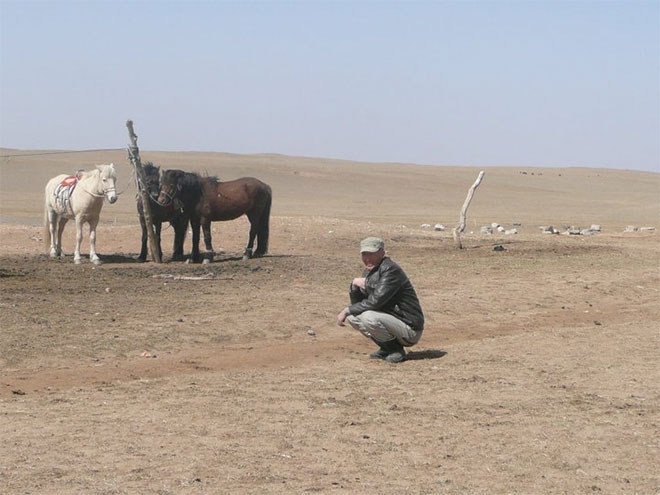
A further step to solidifying China-Mongolian relations was made last Thursday with the signing of a joint declaration to upgrade bilateral relations by Xi Jinping and Tsakhiagiin Elbegdorj, his Mongolian counterpart during what was the first visit of the Chinese head of state to the country in 11 years.
Mongolian-Chinese ties have been tense due to their long and complicated history. The Great Wall of China, today the country’s most famous tourist attraction, was built mainly, while not entirely, due to aggressions from Mongolian tribes, beginning as early as the Han dynasty in 220 BC. Despite the wall, the Mongolians managed to establish the first foreign rule in China, founding the Yuan dynasty under Mongolian leadership, which lasted from 1271 to 1368. That same year, the Ming dynasty managed to expel the Mongolian occupiers and strengthen the Great Wall, while altercations between the two empires continued to occurr. During what was to be China’s final imperial dynasty, the Qing rule, Mongolia was incorporated into Chinese territory. However, in the ensuing chaos of the founding of the Republic of China and warlord period after the fall of the Qing in 1911, with Russian support Outer Mongolia managed to acquire and in 1924 officially proclaim its independence, the Chinese government being in turmoil and in no position to oppose the move; especially due to Russian backing.
Inner Mongolia, as it were, remains to this day a Chinese province, an “autonomous region” to be exact, with a majority of Han Chinese settlers and Mandarin as the main language of communication, as opposed to the country of Mongolia, where the Mongolian language and customs live on as something more than a mere tourist attraction. After this turbulent time, the countries managed to establish diplomatic ties 65 years ago, in 1949 coinciding with the emergence of the “new China” under communist rule.
Since then, both sides have been working on forming a closer, more positive relationship. In fact, peaceful business and cultural exchange has been going on between the country of Mongolia and the Chinese province Inner Mongolia for a long time, the country at times even providing shelter for Han from their own government.
Feng Zhenxiang, a Han Chinese who was raised in Hohhot, Inner Mongolia, remembers the stories she was told about her father, Feng Liku, who spent three years just across the border in Mongolia from 1965 onwards. This allowed him to escape from the persecution he would have faced in his own country during the Cultural Revolution as a “rich capitalist”. “He worked as a carpenter in Mongolia during that time and thereby was safe during the beginning of the cultural revolution. During that time, he would buy carpets and other materials in Mongolia, since their quality was splendid, and then bring them back into China where he would make them into clothes.” At that time Chinese customs did not allow the import of Mongolian clothing; the reasons for this can only be speculated upon, with the unisex communist garb being non-optional possibly this was a measure to ensure no temptation in form of colourful folk garments was presented. Still, Feng Liku found a way around the system, providing his family with wonderfully unique clothing from the neighbouring country.
His daughter, Ms Feng, would go on to have frequent dealings with Mongolia as part of her wood business during the early nineties, at a time when Li Peng signed a treaty of cooperation and friendship (1994) to further improve the relationship. While, unlike her father, Ms Feng never stepped foot across the border, she was involved in many business transactions with Mongolian wood dealers, who would come to Erlianhaote (or Erenhot as it is called in the Mongolian language), a city close to the border on the Chinese side, to provide the young woman (only about 23 at the time) with large wood deliveries. Without an interpreter at hand, the two sides had to rely on sign language to come to an agreement in terms of the price. Ms Feng holds a very positive attitude towards her neighbours, who were all about business, and is full of praise for their appearance recalling her admiration at their “handsomeness and beauty.”
However, on both sides there still exists negative feeling and stereotyping. Once Ms Feng was having dinner in Erlianhaote, placing her milk tea on the floor and letting it out of her sight. When she looked down to pick it up, it was gone. “The waitress told me the Mongolians took it and sure enough there they were sitting with my cup of milk tea; when I asked her why they would do that she replied: ‘They tend to do that a lot, they are famous for being thieves.’”
On the other side there is still aggravation and contempt about the fact that part of the country was annexed by China, which is illustrated by blogs such as Sodon, describing the plight of Mongolian minority nomads and farmers, who find their lifestyle and habitat being encroached upon by Han tactics of modernization.
Furthermore, according to reports by local media, there is still a worry amongst the neighboring country that China plans to expand its territory and re-incorporate Mongolia into its modern empire. Such fear is of course fueled by other border conflicts China is currently involved in, such as the Fishing Islands, setting a bad tone as well as the drastic overpopulation the Middle Kingdom faces, which makes necessary an expansion in one form or another.
Yet, conciliatory moves such as Xi Jinping’s appearance in Ulanbaatar, the only destination of the Chinese head of state on this occasion, are helping to further the countries’ good relations. In fact, the neighbours have become rather interdependent; in 2013 their bilateral trade volume reached almost ¥37 billion, on the Mongolian side making up over half of the nation’s total foreign trade volume. The 26 agreements signed on Thursday speak of a “comprehensive strategic partnership”, relating to fields of trade, infrastructure, energy and finance in addition to pledging to increase bilateral trade volume to over ¥60 billion by 2020.
The Chinese investment is especially beneficial for the further development of the nomad state of Mongolia with a population of about 3 million people, whose infrastructure is vastly underdeveloped across the country; a modern road system being only present in the capital Ulanbaatar according to traveler’s experiences. Yet, the international exchange is also an important step for China, who are thereby demonstrating their intent on peaceful coexistence with their neighbours. In fact, local media are hailing the visit and its result not only as a new era in China-Mongolian bilateral relations, but further as a model for further peaceful cooperation amongst Asian countries.
In the meantime, Inner Mongolian business woman Ms Feng applaudes the move due to the opportunities it opens for exchange and internationalisation. “As China becomes more modernized and wants to enter the global market as an equal partner to other countries, it becomes more important to further interaction with other countries and cultures. The possibilities the younger generation have nowadays to go abroad and study a different way of life and of doing business have received even more support with the signing of this declaration.”
-
Blind Driving The Blind; YOG Causes Wave of Non-Local Drivers
Beside the more obvious boost to sports, culture and infrastructure, the YOG have brought farther reaching, though less blatant consequences to Nanjing’s most comfortable mode of public transportation.
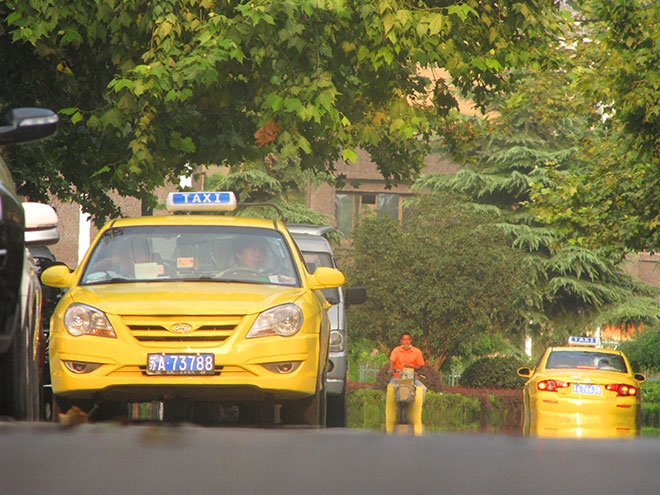
Due to the Youth Olympics, currently running at full speed, and the masses coming to Nanjing from all over the world, a lot of stress is being put on public transportation. In order to make sure that everything would run smoothly during the Games, the city’s public transport network has been considerably expanded to include additional underground and bus lines, an all new Nanjing tram system and a large number of new taxis. But who is driving all those taxis?
A hint; it’s not Nanjingers. “With all the extra cars, but not enough drivers at hand, the Nanjing taxi company in cooperation with the government have been running a huge campaign in order to attract taxi-driving talent from all over the country by placing adds on popular job searching sites such as Zhaopin”, tells us Zhang Weifeng, one of the few truly local drivers left on Nanjing’s streets these days. “As a result, I am convinced there are now more ‘waidi’ drivers from out of town than there are local ones.”
“I have come here because of the Youth Olympics”, confirms David Chao, who has recently arrived in Ning from Dongguan, the scene of a recent scandal relating to shady services. “There is no money to be made in Dongguan anymore,” he goes on. “But Nanjing; that is a different story.”
The influx of non-local drivers, while providing sorely needed job opportunities, comes with its own set of challenges. As Nanjing is not their hometown, the men and women who come here from as close as Yancheng and as far as Guangdong province, do not know the city and therefore have to rely entirely on GPS, which as we all know can go terribly wrong.
And so it can happen that a taxi ride that should have taken 20 minutes and cost around ¥25 ends up being twice as long and expensive, since the navigation system sends the driver on the less jammed, but considerably farther route. In our case, the taxi driver apologized and let us simply pay the amount we deemed appropriate; but not everyone is that lucky.
The main issue that arises with taxi drivers not knowing their turf during an international sporting event is fairly obvious; how should foreigners who do not speak the local language explain to a driver, who does not know the streets of Nanjing, where they are going? It is quite simply the blind driving the blind.
All one can do, unless one knows the exact way and is capable of explaining it in fluent Mandarin (or Cantonese) to the person behind the steering wheel, is pray that the GPS is in a good enough mood to get you to your destination. Or take the metro instead.