



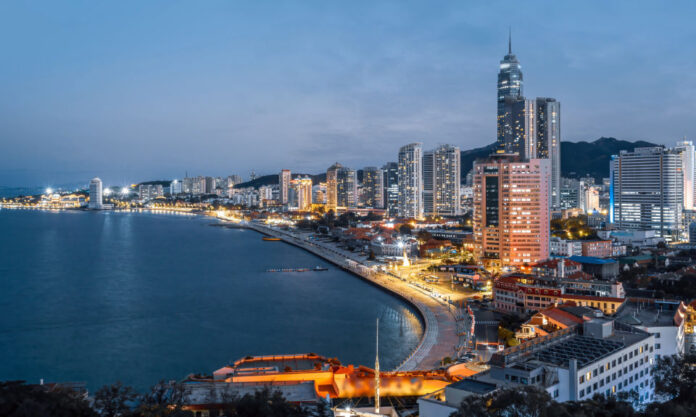



Few Chinese coastal cities have as many identities packed into one frame as Yantai. It is a port, a wine city, a summer resort and a place where modern China’s seaside opening can still be read in the old street names and old stone.
中国沿海城市里,很少有像烟台这样把多重身份装进同一个画框的。它是港口城、葡萄酒城、避暑地,也是一座至今仍能从老街名和旧石头里读出中国近代海岸开放史的城市。
City materials put Yantai’s 2023 permanent population at 7.0322 million, while the city government describes it as one of Shandong’s important coastal open cities. That scale matters because Yantai is not just a holiday coastline; it is a working city with shipping, manufacturing, tourism and a long memory of outward-looking trade.
城市材料显示,烟台2023年常住人口为703.22万人;市政府则把它定位为山东重要的沿海开放城市之一。这个体量很重要,因为烟台并不只是度假海岸;它还是一座真正运转的城市,既有航运、制造、旅游,也有一段很长的对外贸易记忆。
Local historical sources and the city portal say the modern name grew from Yantai Mountain, where watchtowers once sent smoke signals against coastal raids. Earlier, the area was known as Zhifu, and that older name still turns up in the city’s historical vocabulary. In other words, Yantai was named for warning and vigilance, not for glamour.
地方史料和市政府门户网站都提到,烟台这一名称来自烟台山,古时山上设有烟墩台,用来在海防受扰时举烟报警。更早的时候,这一带叫芝罘,而这个老名字至今仍留在城市历史语汇里。换句话说,烟台的名字最初代表的是警戒,不是风情。



Port, Wine And A City Built For The Sea
港口、葡萄酒与一座为海而生的城市
Yantai’s port identity still defines much of its economy and character. The city sits on the Bohai and Yellow Sea rim and looks across water towards Liaodong, Korea and farther out into the maritime world. That location made it a treaty-port-era player, a shipping node and a place where foreign trade and domestic industry grew side by side.
港口身份至今仍在定义烟台的经济与气质。它位于渤海与黄海交界的海岸线上,隔海望向辽东、朝鲜半岛乃至更远的海洋世界。这样的地理位置,使它在通商口岸时代就成为重要节点,也让航运、外贸与本地工业并行发展。
The city’s wine story is equally important. Yantai is widely known as China’s wine capital, and the Zhangyu legacy sits right at the centre of that identity. In local cultural memory, wine is not a side industry here; it is part of the city’s modern brand and one of the reasons outsiders still associate Yantai with refinement as much as salt air.
烟台的葡萄酒故事同样重要。它广为人知的身份是中国葡萄酒城,而张裕的历史正是这一身份的核心。在地方文化记忆里,葡萄酒不是这里的边角产业;它是城市现代品牌的一部分,也是外界至今仍把烟台与“精致”联系在一起的原因之一。
The city is also famous for a different kind of first. It is often cited as one of the birthplaces of modern Chinese postal services, with early customs mail arrangements dating back to the nineteenth century. That makes sense for a port city; where ships come and go, mail and news do the same.
烟台还因另一项“第一”而著名。它常被视作中国近代邮政的发源地之一,相关萌芽可追溯到十九世纪的海关邮务安排。对一座港口城市来说,这很合理;船来船往的地方,邮件和消息也会跟着流动。



History, Climate And A Coast That Still Pulls Visitors
历史、气候与仍在吸引游客的海岸线
Yantai’s coastline remains one of its strongest assets. The city stretches across a long shore with beaches, islands and bays, and its name is often linked to Yantai Mountain, Penglai and the surrounding seafront scenery. But the coast is not just for postcards. It is also the setting for fishing, logistics, marine industry and urban life.
烟台的海岸线仍然是最强的资产之一。城市沿着漫长海岸展开,拥有海滩、岛屿和海湾;人们也常把它与烟台山、蓬莱以及周边海景联系在一起。但这条海岸线并不只是拍明信片用的,它同样承载着渔业、物流、海洋产业和日常城市生活。
The weather helps too. Yantai’s mild coastal climate has long supported its image as a summer retreat, and that image has become part of the city’s economic life. Visitors come for sea air, wine routes, historical sites and the promise of a slower rhythm than inland Shandong can often offer.
气候也帮了大忙。烟台温和的海洋性气候,长期支撑着它作为避暑地的形象,而这一形象又慢慢变成了城市经济的一部分。游客来这里,为的是海风、葡萄酒线路、历史遗址,以及一种比山东内陆更舒缓的节奏。
Local reference pages also give Yantai a strong cultural profile. Qi Jiguang is remembered here, as are the old stone inscriptions, seaside forts and the city’s modern urban waterfront. It is a city that has learned to treat the sea as both memory and opportunity.
地方参考资料还为烟台勾勒出鲜明的文化轮廓。戚继光在这里被铭记,老石刻、海防炮台和现代海滨城市景观也都在这里。这是一座学会把海既当成记忆,也当成机会的城市。
Transport keeps that outward-facing habit alive. Yantai is served by Yantai Penglai International Airport, Yantai Railway Station and Yantai South Railway Station, while rail and ferry links connect it to Qingdao, Weihai and the wider Jiaodong coast. That suits a place whose whole story has always been about arrival, departure and exchange.
交通则让这种外向习惯持续运转。烟台由烟台蓬莱国际机场、烟台站和烟台南站共同服务,铁路和轮渡线路又把它与青岛、威海以及更广阔的胶东海岸连在一起。这很适合一座始终与抵达、出发和交换打交道的城市。
Yantai works because it never needed to choose between business and beauty. It has both, and it has memory as well. That combination gives the city its staying power; a coast that once warned of danger now draws people in.
烟台之所以成立,是因为它从来不必在“生意”和“美景”之间做选择。它两者兼有,还兼有记忆。正是这样的组合,给了这座城市持久的力量;一条曾经用于报警的海岸,如今却在吸引人们走近。