



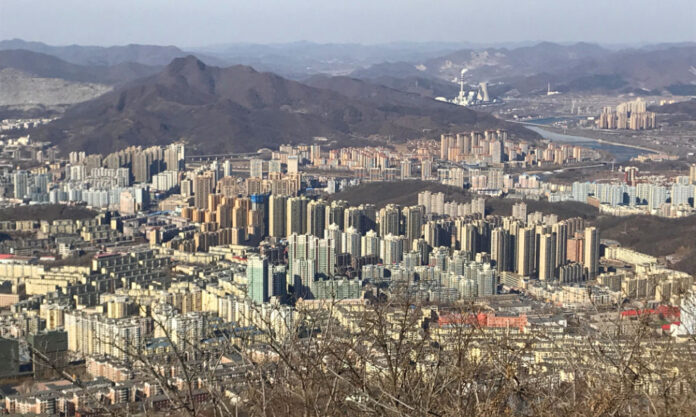



Way long before Liaoning province built its reputation on heavy industry, the hills around Benxi were already doing something quieter; growing the forest that now covers more than three quarters of the city’s land.
早在辽宁把重工业名声做出来之前,本溪周边的山坡就在做一件更安静的事;养出如今覆盖了这座城市四分之三以上土地的森林。
That contrast, between blast furnace and canopy, is the first thing most visitors notice, and the one the city has since turned into its own branding. Officially, Benxi calls itself the green steel city, the pharmaceutical city and the maple-leaf city, three labels that between them cover most of what the place actually does.
高炉和树冠之间的这种反差,是大多数游客最先注意到的东西,也正是这座城后来自己拿来做招牌的。官方上,本溪把自己叫作绿色钢都、中国药都和枫叶之都,这三个称呼合在一起,差不多就把这地方真正干的事都盖住了。
Sitting some two hours north of the Yalu River border with North Korea, and linked by rail and road to both Shenyang and Dandong, Benxi occupies 8,413.96 square kilometres of largely mountainous Liaoning, home to a registered population of 1.347 million. In 2025, the city’s economy produced some ¥100.6 billion in GDP, built on a steel and mining base that has defined Benxi since the industry first took root there in the early 20th Century.
本溪大约在鸭绿江朝鲜边境以北两小时车程的地方,又通过铁路和公路连着沈阳和丹东。它占着辽宁一大片多山的地方,总面积8413.96平方公里,户籍人口134.7万。2025年,这座城市的地区生产总值约为¥100.6亿元;钢铁和采矿是底子,而这底子从20世纪初工业在这里扎根起就一直定型到今天。
Forest cover, meanwhile, stands at 76.31 percent, an unusually high figure for a city whose name is still, to most of China, synonymous with iron and coal.
与此同时,森林覆盖率达到76.31 percent。对大多数中国人来说,本溪这个名字到今天还是很容易和铁、煤连在一起,这个数字就显得格外高。
Water and Rock
水与石
That combination of industry and greenery is nowhere more literal than at Benxi Water Cave, the karst system that has drawn visitors out to the edge of the city, 26 kilometres from the centre, since it first opened in 1983. Unlike most show caves, this one is toured by boat rather than on foot, with visitors poled through a network of underground chambers and rivers that stay a cool, cave-constant temperature whatever the season above ground.
工业和绿意的并存,在本溪水洞这里表现得最直白。这处喀斯特溶洞自1983年开放以来,一直把游客带到城东边,离市中心26公里。和大多数观光洞不同,这里不是走着看,而是坐船进去;游客会被慢慢撑过一条条地下水道和洞厅,不管外头什么季节,洞里始终是那种恒定的凉。
Roughly ninety minutes further out, in Huanren County, Wunv Mountain adds a second, very different attraction; a mountaintop fortress with origins in the ancient Goguryeo kingdom, overlooking the turquoise waters of Huanlong Lake below.
再往外开大约一个半小时,到桓仁县,五女山又给出另一种完全不同的看点;那是一座山顶古城,源头可追到古高句丽王国,俯瞰着下方碧绿的桓龙湖。
Rather less picturesque, but no less a part of Benxi’s identity, is the industrial heritage zone around Benxi Lake, where old mineshafts, factory remains and rail sidings from the city’s mining era have been left largely as they were rather than redeveloped.
没那么好看、却同样属于本溪身份的一部分的,是本溪湖周边的工业遗产区。这里的老矿井、厂房遗存和铁路岔线,大多都保留着矿业时代原来的样子,没有被重新开发掉。
It was here, in 1942, that a coal-dust explosion at the Benxihu colliery killed 1,549 miners, making it one of the deadliest disasters in the history of coal mining anywhere in the world. The site today functions as both industrial ruin and memorial, and Benxi, true to form, has not tried to separate the two.
1942年,本溪湖煤矿就在这里发生了煤尘爆炸,1549名矿工遇难,成为世界煤矿史上最惨重的灾难之一。如今这里既是工业废墟,也是纪念地,本溪一贯如此,并没有费心把这两样分开。
Industry and Memory
工业与记忆
Climatically, Benxi sits firmly in China’s north-east, with four distinct seasons and an average annual temperature of just 7.6C, cold enough that the region’s cuisine leans heavily towards the warming and the hearty.
从气候上看,本溪很标准地落在中国东北,四季分明,年平均气温只有7.6℃,冷到这里的吃食自然也就更偏向暖和、厚实、管饱这一类。
Lamb soup remains the default local answer to a Liaoning winter, sold from steaming stalls across the city; charcoal-grilled rainbow trout, drawn from the clean rivers running down off the surrounding hills, is a summer staple; and laku tofu, made using a small freshwater crayfish found almost nowhere else, gives Benxi something approaching a signature dish.
小市羊汤依然是本地人应付辽宁冬天的默认答案,城里到处都是热气腾腾的摊子在卖;炭烤虹鳟鱼则是从周边山上流下来的干净河水里养出来的夏日常客;而蝲蛄豆腐,用的是一种几乎别处见不到的小淡水螯虾,算是本溪勉强能拿得出手的招牌菜。
None of which makes Benxi an obvious stop on a first trip to Liaoning. But for a city built on steel, sitting under one of the greenest forest canopies in the province, with a cave, a mountain fortress and an unflinching memorial to its own industrial past all within a couple of hours of one another, it rewards precisely the kind of traveller willing to look past the furnaces on the way in.
这并不会让本溪成为第一次去辽宁时最顺手的停靠点。可对于一座靠钢铁立起来、又坐在全省最绿的森林树冠下的城市来说,半天到两小时范围内就摆着溶洞、山城和一座对自己工业往事毫不回避的纪念地,它回报的,恰恰是那种愿意在进城时先把高炉放一边看的人。
For travel, Benxi is easiest to reach from Shenyang by rail or road; Benxi Water Cave is 26 kilometres from the centre, and the tourist train now links Benxi Station with Wunv Mountain. Autumn is the best season if you want the maples, the hills and the city’s steel edges all in one trip.
就出行来说,本溪从沈阳走铁路或公路最方便;本溪水洞离市中心26公里,而现在还有旅游列车把本溪站和五女山连起来。要是想一次把枫叶、山色和本溪那点钢铁棱角都看见,秋天最合适。