



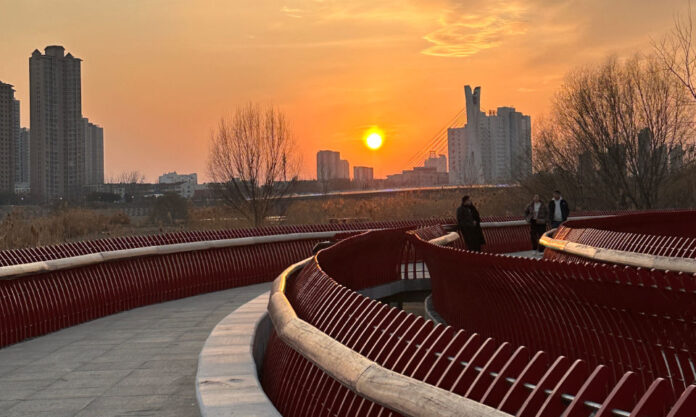



Zhoukou is easy to underestimate; it does not arrive with a single famous skyline or mountain. It is flatter, wider, more agricultural, and at first glance more ordinary than many Henan cities. That’s not a weakness; the place just needs a little longer to introduce itself.
周口很容易被低估,部分原因在于它没有一个特别醒目的天际线,也没有一座立刻压到眼前的名山。它更平、更阔,农业气息也更重,初看起来比许多河南城市普通一些。这不是缺点,只是说明它介绍自己需要多一点时间。
The name goes back to Zhoujiakou, a river settlement that grew where waterways met and trade had reason to stop. In Chuanhui District, the Shahe, Yinghe and Jialu rivers come together, and that simple fact once mattered enormously. Before highways and high-speed rail, water did much of the carrying.
“周口”之名来自“周家口”,一个因河流交汇、商贸停靠而兴起的水运聚落。今天的川汇区一带,沙河、颍河、贾鲁河在此汇合。这个地理事实,曾经非常重要。在高速公路和高铁之前,很多事情都要靠水来运。
So Zhoukou is not really a city that began with monuments. It began with movement. Grain, goods, boats, merchants, ferry crossings, market noise; the kind of history that leaves fewer palace walls behind, but plenty of habit.
因此,周口并不是一座先从纪念碑开始的城市。它更像是从流动开始的。粮食、货物、船只、商人、渡口、集市声;这样的历史未必留下多少宫墙,却会留下很多生活习惯。
From Zhoujiakou to the Older Ground around Huaiyang
从周家口到淮阳一带更古老的土地
The city proper may have a relatively recent commercial story, but Zhoukou’s wider map is far older. Huaiyang is the name to sit with. Around Taihao Mausoleum and Longhu Lake, the city reaches back into the world of Fuxi, ancestor worship, temple fairs and the sort of origin story that in China never stays entirely in the past.
周口城区本身的商业兴起时间不算特别早,但把地图放大一点,它的历史就深得多。最值得停下来的名字是淮阳。太昊陵和龙湖一带,把这座城市带回伏羲、人祖祭祀、庙会,以及那种在中国从来不会完全留在过去的起源叙事之中。
Taihao Mausoleum is not a quiet little memorial. It is a large ritual place, and during the spring temple fair it becomes something much bigger than sightseeing. People come not only to look, but to ask, thank, remember, bargain a little with fate, and place themselves somewhere in a very long family line.
太昊陵不是一处安静的小纪念地。它是一座大型祭祀场所,到了春季庙会,更不只是旅游景点。人们来这里,不只是为了看一看,也是为了祈求、还愿、记住祖先,和命运商量几句,并把自己放进一条很长的血脉里。
Longhu Lake changes the pace. It sits beside the old city with water, lotus, birds and a useful amount of space. After the density of incense and courtyards, the lake lets Huaiyang breathe. That combination, shrine and water, is probably why the place lingers better than expected.
龙湖则把节奏放慢。它贴着古城,有水、有荷、有鸟,也有足够让人走开的空间。香火和院落之后,湖面让淮阳透了一口气。陵与湖放在一起,大概也是这里比想象中更容易让人记住的原因。
Then there is Pingliangtai, which sounds less dramatic until one realises what archaeologists found there. The ancient city site has early planned streets and drainage remains, including ceramic water pipes. That detail is oddly satisfying. Even in prehistory, somebody in this part of Henan was already worrying about where the water should go.
还有平粮台。这个名字乍听不算有戏剧性,直到你知道考古学家在那里发现了什么。古城遗址中有早期规划道路和排水遗存,包括陶制排水管。这个细节很让人喜欢。早在史前时期,河南这片地方就已经有人认真考虑,水到底该往哪里走。
Laozi, Hu La Tang and the Usefulness of Ordinary Things
老子、胡辣汤与普通事物的用处
Zhoukou also stretches north and east into Luyi, the county associated with Laozi. Taiqing Palace keeps that link visible, though Laozi himself is the sort of figure who can disappear into philosophy the moment one tries to pin him down. It is enough, perhaps, to say that Zhoukou’s map holds both Fuxi and Laozi, which is a lot of origin for one prefecture-level city.
周口还向东北延伸到鹿邑,也就是与老子关系最密切的地方。太清宫让这种联系变得可见,尽管老子本人属于那种一旦想把他钉住,就会立刻滑进哲学里的人物。也许只需说,周口的地图上同时有伏羲和老子;对一座地级市来说,这样的“源头”已经不少了。
Food brings everything back down to earth, which is usually where Henan is strongest. Zhoukou has Songhe liquor, Lotus MSG, Xiaoyao Town hu la tang, Dengcheng pig’s trotters, local sesame products, fried snacks and enough county-level specialities to keep argument alive for years.
吃的会把一切重新拉回地面,而河南最擅长的往往正是地面上的东西。周口有宋河酒、莲花味精、逍遥镇胡辣汤、邓城猪蹄、本地芝麻制品、油炸小吃,以及足够多的县域特产,够当地人争上很多年。
Hu la tang is the one that travels best. Xiaoyao Town, in Xihua County, is one of the great names in the history of the soup, and the habit has gone far beyond Zhoukou. It is not delicate food. It wakes you up, fills you up, and leaves no doubt that breakfast has happened.
最能走出去的,还是胡辣汤。西华县逍遥镇,是胡辣汤历史里绕不开的名字,而这碗汤早已走出周口,走到更远的地方。它不是精致路线的食物。它会把人叫醒、填饱,并且明确告诉你,早餐已经发生过了。
Getting there from Nanjing is now much easier than Zhoukou’s old river-port story might suggest. Zhoukou East sits on the Zhengzhou-Fuyang high-speed railway, which opened in 2019 and ended the city’s long wait for high-speed rail. From Nanjing South, the trip is usually a few hours by high-speed train, sometimes direct and sometimes with an easy change at places such as Fuyang West or Huaiyang South. Flying is less natural; Zhengzhou and Fuyang are options, but for most travellers from Nanjing, the train is the cleaner answer.
从南京去周口,如今比它那段老水运历史听起来方便得多。周口东站位于郑阜高铁上,这条线路2019年开通,也结束了周口长期不通高铁的历史。从南京南出发,高铁通常几个小时可达,有时直达,有时在阜阳西、淮阳南等站轻松中转。飞机反而不算最自然的选择;郑州、阜阳都可作为航空入口,但对多数从南京出发的人来说,高铁更干净利落。
A two-day visit should not try to do everything. Spend one day in Huaiyang, with Taihao Mausoleum, Longhu Lake and, if time allows, Pingliangtai. Use the other for old Zhoujiakou traces around Chuanhui, or go out toward Luyi for the Laozi connection. Eat breakfast properly both days. That is not a minor instruction.
两天行程不必贪多。一天留给淮阳,看太昊陵、龙湖,如果时间允许,再去平粮台。另一天可以在川汇一带寻找周家口的旧痕迹,也可以去鹿邑看老子故里相关遗存。两天早饭都要认真吃。这不是小事。
Zhoukou is not flashy Henan. It is river Henan, field Henan, ancestor Henan, breakfast Henan. It has fewer dramatic edges than some places, but plenty of sediment. That may be the right word for it. Things have been carried here, dropped here, buried here, cooked here and remembered here for a long time.
周口不是耀眼型的河南。它是河流里的河南,田地里的河南,祖先叙事里的河南,也是一碗早汤里的河南。它不像有些地方那样棱角分明,但沉积很厚。也许“沉积”正是合适的词。很长时间以来,许多东西被带到这里,停在这里,埋在这里,煮在这里,也被记在这里。